2026 UK Copywriter Job Description: £22k–£100k+, AI Skills & Portfolio

A copywriter writes persuasive, brand-consistent content across web, email, ads, social, and video scripts to drive a specific reader action. This guide covers what the role actually involves day to day, the skills and tools employers expect in 2026, typical pay bands, and how to build a portfolio that gets you hired, whether you're aiming for an agency, an in-house team, or freelance work.
TL;DR:
- Most copywriters interpret incomplete briefs and conduct research before drafting copy across multiple formats such as web pages, emails, and scripts.
- Skills now essential in 2026 include digital fluency, SEO fundamentals, AI literacy, project management, and attention to detail, beyond core writing ability.
- Entry-level UK salaries range from £22,000 to £35,000, with senior roles exceeding £45,000, and freelancers typically set day rates that account for non-billable time.
- A strong portfolio emphasises process, outcomes, and metrics, with clear brief and result descriptions that appeal to hiring managers.
- Employers prioritise portfolios showing real outcomes, clean writing, evidence of AI workflow, and tailored application materials over formal credentials alone.
Find copywriting roles with salaries shown. Explore curated opportunities in social media, content, marketing, and communications with transparent salary listings for your next move. Browse current opportunities
Table of Contents
- Core responsibilities and typical deliverables
- Skills, qualifications and tools employers look for
- Types of copywriter and employment contexts
- A day in the life: from brief to published copy
- Salary expectations and what drives pay
- Building a portfolio, preparing applications, and interview prep
- Career progression and specialisation
- AI-era skills and what employers expect now
- What hiring managers actually check first
- Find copywriter roles with the pay already on the table
- Sources
- FAQ
Core responsibilities and typical deliverables
A copywriter's job starts before a single word gets written. Most briefs arrive incomplete, so interpreting what a stakeholder actually needs, not just what they typed into a form, is part of the job. From there, the work splits into research, drafting, and quality control, repeated across dozens of formats a month.
The National Careers Service and Prospects both list teamwork with art directors, presenting ideas, proofreading, and overseeing production as central to advertising copywriting roles. The output looks different depending on the channel, but the underlying skill, turning a brief into copy that moves someone to act, stays constant.
Typical responsibilities include:
- Interpreting creative briefs and asking clarifying questions before drafting.
- Writing and adapting copy for web pages, email campaigns, paid ads, social posts, and video or audio scripts.
- Maintaining a consistent brand voice across every channel and audience segment.
- Proofreading and checking copy against legal and compliance requirements.
- Collaborating with designers, product managers, and marketing leads on messaging and layout.
- Producing concrete deliverables: headlines, calls to action, landing page copy, and full scripts.
The deliverables are what get judged in performance reviews and portfolios alike. A single project might produce a headline, three subject line variants, and a script, all needing separate tone adjustments for the same core message.
Skills, qualifications and tools employers look for
Writing craft is the baseline, not the differentiator. What separates a hired candidate from a rejected one in 2026 is the combination of editing discipline, technical fluency, and how comfortably they talk about using AI tools without pretending they don't.
The University of Lancashire's guidance on becoming a copywriter highlights digital fluency, SEO basics, and AI literacy as essential skills for the role now, alongside audience research and cross-team collaboration. None of that replaces strong writing. It sits on top of it.
Employers commonly screen for:
- Clean, persuasive writing with an editor's eye for cutting weak lines.
- Working knowledge of SEO fundamentals and CMS platforms like WordPress.
- Basic comfort reading analytics dashboards to see how copy performs.
- The ability to describe an AI-assisted workflow honestly, including where human judgement took over.
- Project management skills to juggle multiple briefs and deadlines at once.
- Sharp attention to detail, since a wrong claim or broken link undermines trust fast.
A degree in English, journalism, or marketing can open doors, but it rarely closes them when it's missing. A strong, metric-backed portfolio frequently carries more weight in hiring decisions than formal credentials, according to Prospects' advertising copywriter profile.
Pro Tip: List AI tools you use the same way you'd list a CMS: name the tool, describe the task it handles, and say what you personally rewrote or verified afterwards.
Types of copywriter and employment contexts
The title "copywriter" covers several distinct jobs, and each shapes your daily work, your pay, and the skills you'll sharpen. Choosing the wrong context for your working style is a common reason people burn out in the first year.
- Advertising and creative agency roles pair a copywriter with an art director, run on tight campaign briefs, and reward big creative swings over incremental testing.
- Digital, content, and performance roles focus on measurable outcomes: conversion rate, click-through, and search visibility drive most decisions here.
- In-house roles mean fewer clients but more stakeholders. You'll spend real time managing internal expectations across sales, product, and legal teams.
- Freelance copywriting trades stability for control. Freelancers manage their own client mix, invoicing, and scope, and successful ones treat every proposal like a mini brief with clear deliverables, according to Prospects' digital copywriter profile.
- Specialist paths like UX writing, technical copywriting, and direct response shift the daily work toward interface microcopy, product documentation, or sales-page persuasion, and often pay differently depending on demand.
Job-profile pages consistently separate agency creative roles from digital copywriting and freelance or in-house routes, each with its own expected skill set. Picking a lane early makes your portfolio easier to build and your job search easier to target. If you're unsure which lane fits, see copywriter vs content writer.
A day in the life: from brief to published copy
Most copywriting work follows a loop: brief, draft, review, publish, measure. The loop repeats constantly, often with several projects at different stages on the same day.
A typical cycle includes:
- A briefing or scoping call where objectives, audience, and constraints get clarified.
- Research and drafting, frequently starting with an AI-assisted first pass that gets rewritten for voice and accuracy.
- Version tracking as drafts move through internal review, especially when legal or compliance sign-off is required.
- Handoff to design or engineering once copy is approved, followed by a check that the final layout matches intent.
- Performance review once the copy is live, using A/B test results and analytics to see what worked.
The measurement step is often skipped by junior writers and prized in senior ones. Knowing that a shorter subject line lifted open rates by a specific margin, and being able to explain why, is what turns a writing task into a repeatable skill. Time management matters just as much as craft, since most copywriters juggle three or four active briefs with different deadlines at any given point.
Salary expectations and what drives pay
Entry-level UK copywriter salaries typically run from £22,000 to £35,000, midweight roles (three-plus years) from £27,000 to £45,000, and senior or lead positions from £45,000 to over £100,000 depending on specialisation and company size, according to Prospects' advertising copywriter profile. In-house marketing creative teams report minimum copywriter salaries around £25,000, with lead copywriters closer to £60,000. For a fuller breakdown, see our UK copywriter salary guide.

Function matters more than title. Copywriters hired to protect brand voice tend to sit on the lower end of a band, while those hired for measurable performance, think conversion-focused landing pages or paid ad copy, often command more because the impact is easier to prove in pounds. Company size and sector shift the range too: a scaling tech company chasing growth metrics will often pay differently than a heritage brand focused on consistency.
Freelancers work in day rates rather than salaries, and building a realistic rate means accounting for non-billable time, not just the hours spent writing. If you're pricing freelance work, a day rate calculator built for UK content hires is a useful starting point.
When negotiating, bring proof points rather than a case for effort. A specific conversion lift, a completed test result, or a named client outcome does more for an offer than years of experience alone.
Building a portfolio, preparing applications, and interview prep
A portfolio that gets interviews shows process and outcome, not just finished copy. Employers want to see the brief you were given, the constraints you worked within, and, where possible, what happened after the copy went live.
- Structure each portfolio piece around brief, role, process, and result, including a metric when you have one.
- Label spec work honestly. If a piece was never published or paid for, say so, and be clear about your role on collaborative projects.
- Assemble an application checklist: an up-to-date CV, a short cover letter, working portfolio links, and, where useful, a Notion or GitHub page showing drafts and revisions.
- Prepare for standard interview questions, such as how you'd approach an unclear brief, how you've used AI tools in past work, or how you measure whether copy succeeded.
- Bring one metric-backed story to the interview: a test result, an open rate change, or a client outcome you can explain in under a minute.
For channel-specific examples, a set of social media portfolio templates and marketing portfolio templates show how other candidates have structured this. For a deeper look at what interviewers actually ask, a breakdown of interview questions by role level is worth reviewing before you walk in.
Career progression and specialisation
Progression in copywriting usually moves from execution to ownership. A junior copywriter drafts against a brief. A senior copywriter writes the brief, mentors junior writers, and defends creative decisions with data when a stakeholder pushes back.
Specialist tracks branch off along the way: UX copy for product teams, technical copywriting for regulated or complex industries, direct response for sales-driven brands, or a shift into content strategy that sets direction rather than producing every piece personally. Each path rewards a slightly different mix of the same core skills.
Building a case for promotion works the same way building a portfolio does: gather the metrics tied to your work, collect endorsements from the stakeholders you've supported, and show a pattern of judgement calls that paid off, not just a pile of finished projects.
AI-era skills and what employers expect now
Employers no longer ask whether you use AI tools. They ask how, and whether you can tell when a draft needs a human hand. Lancashire's guidance describes senior copywriters increasingly presenting themselves as "editor-hybrids," able to shape AI-generated drafts into copy that actually sounds like a person wrote it for another person.

Framing this well in an application means describing your workflow: which tool handled the first pass, what you changed, and why. Vague claims of "AI skills" convince no one. A curated job board that lists transparent salary ranges alongside each posting also helps candidates match their skill level and pay expectations to roles before they apply, cutting down on wasted interviews for jobs that were never a fit.
What hiring managers actually check first
Hiring managers move fast, and most rule candidates out before finishing a portfolio review. Here's what tends to matter, in order: a portfolio with real outcomes attached, clean writing samples with no typos, evidence of editing AI drafts rather than pasting them, a clear answer to "why this brief mattered," references or endorsements, and a cover letter that shows you read the actual job post.
The most common mistake is submitting a portfolio of only finished, polished pieces with no context. Add one line of process to each sample this week: what the brief asked for and what result followed. It's a small change that answers the first question every hiring manager has.
— Sam
Find copywriter roles with the pay already on the table
Job hunting as a copywriter usually means digging through vague listings with no salary range, applying blind, and hoping the number matches your rent. Sam's Social Media Club takes a different approach: every listing on the platform comes with a transparent salary range attached, and the roles are curated for social media, content, marketing, and communications work specifically, so you're not sorting through postings that have nothing to do with your skill set.
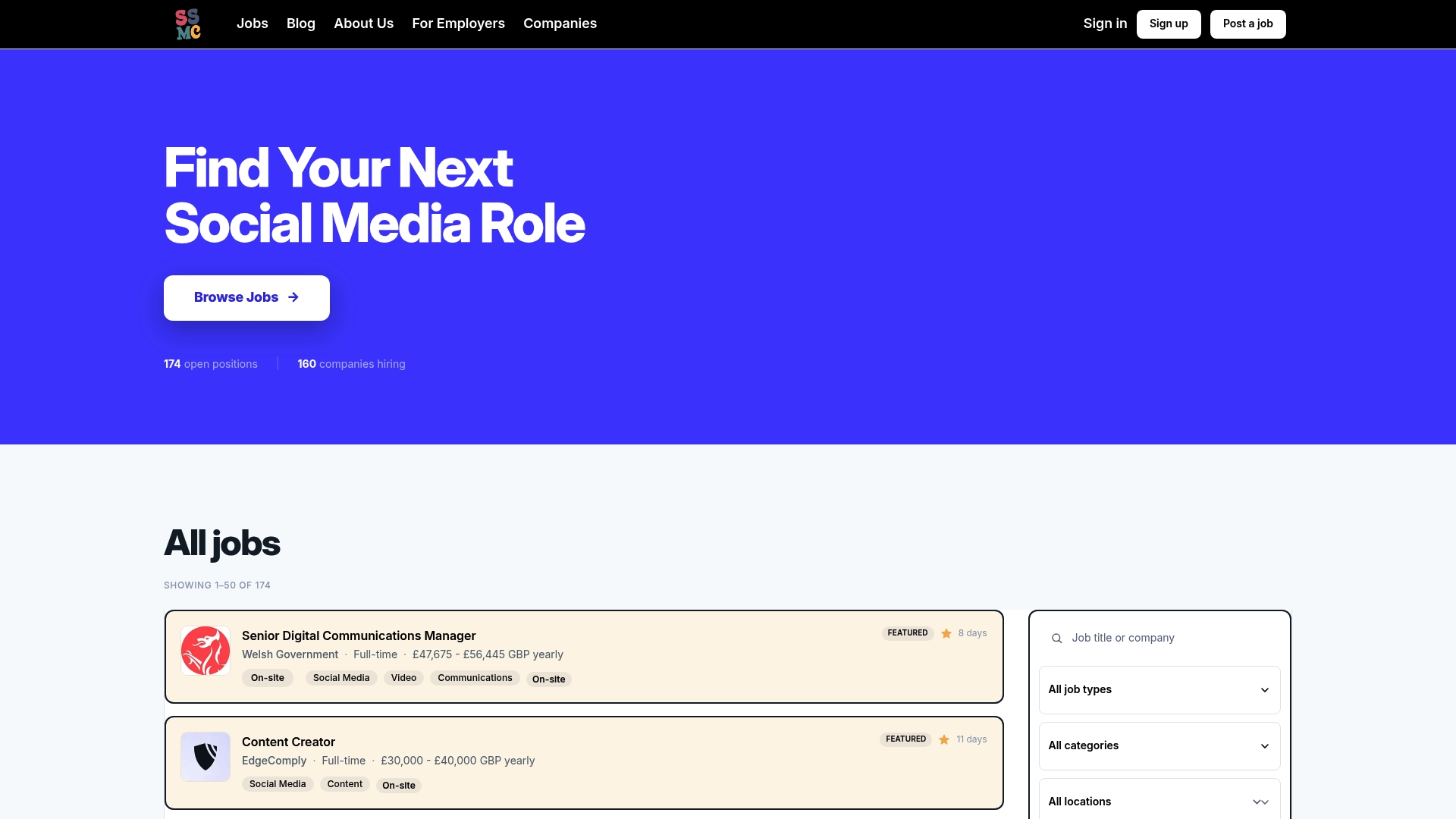
That curation cuts the guesswork out of deciding which roles are worth your time before you even open the application. Employers who advertise with SSMC are committing to salary transparency, which means what you see is what's actually on offer. Browse current listings to find a copywriter role that matches your experience and your pay expectations, or get in touch through our enquiry page if you're an employer looking to post one.
Sources
Role definitions and responsibilities in this guide draw on Prospects' advertising copywriter and digital copywriter profiles, plus the University of Lancashire's guidance on 2026 skills. Salary bands come from the same Prospects data. For agency workflow context, Tekforth offers a useful outside view on integrated creative collaboration.
- Advertising copywriter job profile | Prospects
- How to become a copywriter | University of Lancashire
- Advertising copywriter | National Careers Service
FAQ
What skills do you need as a copywriter?
You need strong writing and editing craft, basic SEO and CMS knowledge, and the ability to read analytics well enough to judge whether copy is working. Increasingly, employers also expect comfort using AI tools for drafting while keeping firm editorial control over the final copy, according to Lancashire's guidance.
Is copywriting a difficult job?
Copywriting is demanding in ways that aren't always visible: interpreting vague briefs, hitting tight deadlines, and defending creative choices with data all take practice. It gets easier with a repeatable process for research, drafting, and revision, but the pressure to produce measurable results doesn't go away as you get more senior.
What does a copywriter actually do?
A copywriter turns a creative or marketing brief into persuasive copy for web pages, emails, ads, social posts, or scripts, then works with designers and marketing teams to get it published. The job also includes proofreading, maintaining brand voice, and checking copy against legal or compliance requirements, per the National Careers Service.
Is copywriting a well paid job?
Pay varies widely by experience and specialisation: entry-level UK roles typically start between £22,000 and £35,000, while senior and lead copywriters can earn £45,000 to over £100,000, according to Prospects. Copywriters hired for measurable performance, such as conversion-focused work, often see higher offers than those hired mainly for brand voice.