
4 Role Levels: UK Content Marketing Interview Questions That Show ROI

This guide breaks down the content marketing interview questions you’ll actually face, organized by expertise level from entry-level to strategy leadership. You’ll find sample answers built around the STAR method, a portfolio checklist, and question sets covering strategy, creation, distribution, SEO, and behavioral fit, all tied back to measurable business outcomes. Rehearse the sections closest to your target role first, then work outward.
TL;DR:
- Candidates must connect content decisions to measurable business outcomes like leads, customer acquisition cost, or conversion rate, especially for senior roles.
- Preparation should include framing strategy answers around real frameworks and metrics, avoiding vague responses like “it depends.”
- Demonstrating ownership in content creation workflows and using specific tools for governance and measurement signals operational competence.
- STAR method answers should focus on concrete actions and quantifiable results, with juniors emphasizing execution and seniors highlighting strategic judgment.
- Portfolio and test projects should include measurable results, process artifacts, and examples of improvement, showing the ability to operate systems and meet deadlines.
Table of Contents
- How Content Marketing Interviews Are Structured
- Content Strategy Questions Candidates Should Prepare For
- Content Creation Questions: Ideation, Briefs, and Quality Control
- Distribution and Social Amplification Questions
- SEO, Analytics, and Measurement Questions
- Behavioral and Culture-Fit Questions Using the STAR Method
- Sample Answers You Can Adapt to Your Own Experience
- Test Projects, Portfolio Presentation, and a Prep Checklist
- What Actually Stands Out When Sam Reviews Candidates
- Find Roles That Match the Skills You Just Rehearsed
- Sources
- FAQ
How Content Marketing Interviews Are Structured
Most content marketing interviews run on four pillars: strategic planning, content execution, technical measurement, and behavioral fit. Junior interviews lean hard on execution and culture questions because hiring managers want to know you can produce good work reliably. Senior interviews flip that ratio, spending most of the conversation on strategy and measurement because leadership roles get judged on business impact, not output volume.
Here’s how to prioritize your prep by role level:
- Entry-level and coordinator roles: focus on creation questions and behavioral fit.
- Content manager and specialist roles: balance creation, distribution, and measurement.
- Content strategist and senior manager roles: prioritize strategy and KPI fluency.
- Director and head of content roles: strategy, cross-functional leadership, and budget ownership dominate.
Content Strategy Questions Candidates Should Prepare For
Strategy questions test whether you can connect content decisions to revenue, not just traffic. Interviewers want proof that you think in terms of audience needs and business outcomes, a framing the Content Marketing Institute treats as the foundation of the discipline itself.
Expect variations on these:
- “Walk me through how you’d build a content strategy for a product launch.”
- “How do you decide which content topics to prioritize when resources are limited?”
- “What KPIs would you set for a B2B content program, and why those specific ones?”
- “How do you balance short-term lead generation against long-term brand authority?”
Tie every strategy answer to a metric a hiring manager actually cares about: lead generation, customer acquisition cost, retention, or conversion rate. A strong answer structure looks like this: state the business problem, explain how you researched the audience, name the content approach you chose, and close with the metric that proved it worked.
Pro Tip: Never answer a prioritization question with “it depends.” Pick a real framework, like scoring topics by search volume against sales-team feedback, and walk through one concrete example.
Content Creation Questions: Ideation, Briefs, and Quality Control
Creation questions probe whether you can run a repeatable process, not just write well on a good day. Interviewers ask about the machinery behind the output because a single great blog post proves less than a system that reliably produces good ones.
Common prompts include:
- “How do you generate content ideas when the well feels dry?”
- “Walk me through how you write a content brief for a freelancer or subject-matter expert.”
- “How do you maintain a consistent brand voice across multiple writers?”
- “Describe your editing process from first draft to publish.”
- “Tell me about a time you had to push back on a stakeholder’s content request.”
Talk about ownership specifically: who approves briefs, how you track revisions, and what tools you use to keep a content calendar from collapsing under its own weight. Mid-level and senior candidates should mention governance details, like style guides or editorial review workflows, since operating that machinery at scale is one of the clearer signals that separates a manager from a coordinator, according to Indeed’s interview guide for content strategists.
Distribution and Social Amplification Questions
Distribution questions reveal whether you think past publish day. A piece of content that never reaches its audience delivers zero value, and interviewers know it.
You’ll likely hear:
- “How do you decide which channels to prioritize for a new piece of content?”
- “What’s your approach to repurposing one asset across multiple formats?”
- “How do you align your content calendar with paid social or email campaigns?”
- “How do you measure whether a distribution channel is actually working?”
A solid answer names the channel, the reason it fits the audience, and the metric that proved it.
SEO, Analytics, and Measurement Questions
This is where technical fluency gets tested directly. Interviewers expect you to speak comfortably about keyword research, on-page optimization, and how you read a dashboard without someone walking you through it.
Typical questions:
- “How do you approach keyword research for a new content piece?”
- “What’s the difference between organic traffic growth and organic traffic that converts?”
- “Walk me through how you’d set up goal tracking in GA4 for a content campaign.”
- “How do you handle attribution when a buyer touches five pieces of content before converting?”
- “What tools do you use for competitive content analysis?”
Name your tools specifically: Google Analytics (GA4), Google Search Console, and platforms like Ahrefs or SEMrush for keyword and backlink research. Hiring managers expect familiarity with attribution modeling too, since multi-touch attribution tools are how most teams now connect content touchpoints to closed revenue rather than crediting the last click alone.
Traffic alone rarely satisfies a strong interviewer. Practice explaining the causal chain from a specific SEO change (a title rewrite, a new internal linking structure, a rework based on current on-page and video SEO practices) to a downstream business metric like qualified leads or pipeline value.
Behavioral and Culture-Fit Questions Using the STAR Method
Behavioral questions test emotional intelligence and stakeholder management, not your resume. The industry-standard way to answer them is the STAR method: Situation, Task, Action, Result.
- Situation: Set the scene in one or two sentences. Who was involved, what was the context?
- Task: State your specific responsibility or the problem you needed to solve.
- Action: Describe exactly what you did, not what “the team” did.
- Result: Close with a measurable outcome, ideally a number.
Expect prompts like “Tell me about a time you received harsh feedback on your writing” or “Describe a conflict with a stakeholder over content direction.” Mention specific stakeholders (a sales director, a product manager), a real timeline, and a concrete result. Vague answers about “learning and growing” tell an interviewer nothing they can use.
Sample Answers You Can Adapt to Your Own Experience
These short STAR templates give you a starting shape. Swap in your own details, but keep the metric in the Result and the specific change in the Action, since interviewers consistently rate examples with before-and-after numbers as more persuasive than output-only descriptions.
- Strategy example: “Our blog had traffic but no leads. I audited our top 20 posts, rewrote calls-to-action around a gated resource, and restructured the content calendar around bottom-funnel topics. Leads from organic content rose within the following quarter.”
- Recovery from failure: “A product launch campaign underperformed because we targeted the wrong persona. I re-ran audience interviews, rebuilt the messaging around a different pain point, and relaunched the campaign with revised copy and creative.”
- SEO-driven win: “A cornerstone guide ranked on page two for months. I rewrote the title, restructured headers around search intent, and added internal links from three high-traffic pages. It moved into the top five results within weeks.”
- Distribution-to-conversion: “We had strong content but weak distribution. I built a repurposing workflow turning each guide into five social assets and two email sequences, which increased downstream conversions from that content category.”
The pattern in every strong answer is the same: name what was broken, name the specific change you made, and end with a number that proves it worked.
Junior candidates should lean on the Action step (what you personally did); senior candidates should spend more time on the Situation and Task, showing you understood the business stakes before you acted.
Test Projects, Portfolio Presentation, and a Prep Checklist
Take-home tasks usually test whether you can follow a brief and match a brand voice under a deadline, not whether you’re a brilliant writer in isolation. Asking clarifying questions before you start is a strong signal, not a weakness.
Build your portfolio around these elements:
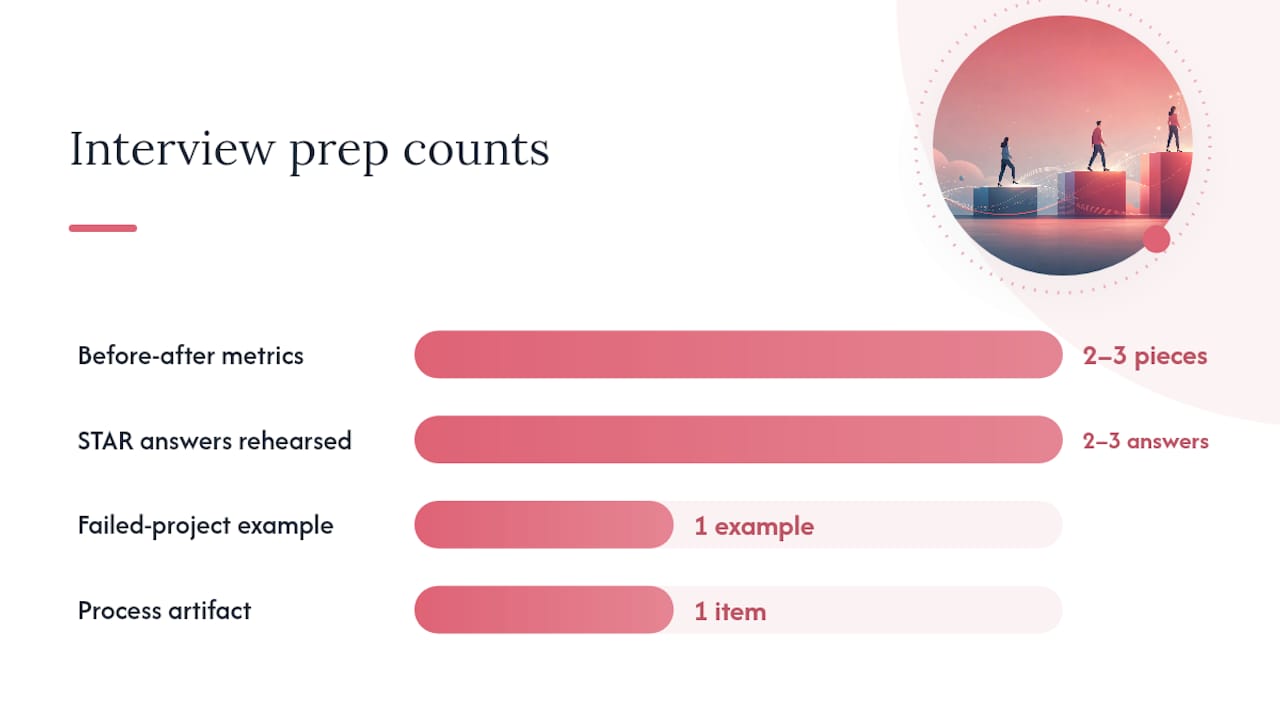
- Before-and-after metrics for at least two or three pieces of work.
- The original brief alongside the finished piece, showing your process.
- A short note on your specific role if the work was collaborative.
- One example of a project that didn’t work initially and how you fixed it.
Pro Tip: Bring one process artifact, like a content calendar template or a brief format you built, even if nobody asks for it. It demonstrates you can operate a system, not just produce individual pieces.
Before the interview, rehearse two or three STAR answers out loud, review the job description against your portfolio for direct overlaps, and prepare one question about how the team measures content success.
What Actually Stands Out When Sam Reviews Candidates
Three things separate strong candidates in my experience reviewing content roles: they connect their work to a business metric without being prompted, they can explain a failure honestly instead of dodging it, and they show one area of real depth, whether that’s SEO, video, or lifecycle email, layered on top of general marketing competence. That’s the T-shaped marketer pattern hiring managers keep coming back to. Candidates chasing quick wins over durable quality tend to stand out for the wrong reasons in hiring processes that value long-term brand credibility over short-term output.
Update one portfolio item with a real metric today, or rehearse a single STAR answer out loud before you do anything else on this list.
— Sam
Find Roles That Match the Skills You Just Rehearsed
There are platforms available as alternatives to generic job boards where salary ranges are hidden until late in the process. Some job boards feature listings with transparent pay to help candidates understand if a role matches their worth before proceeding.
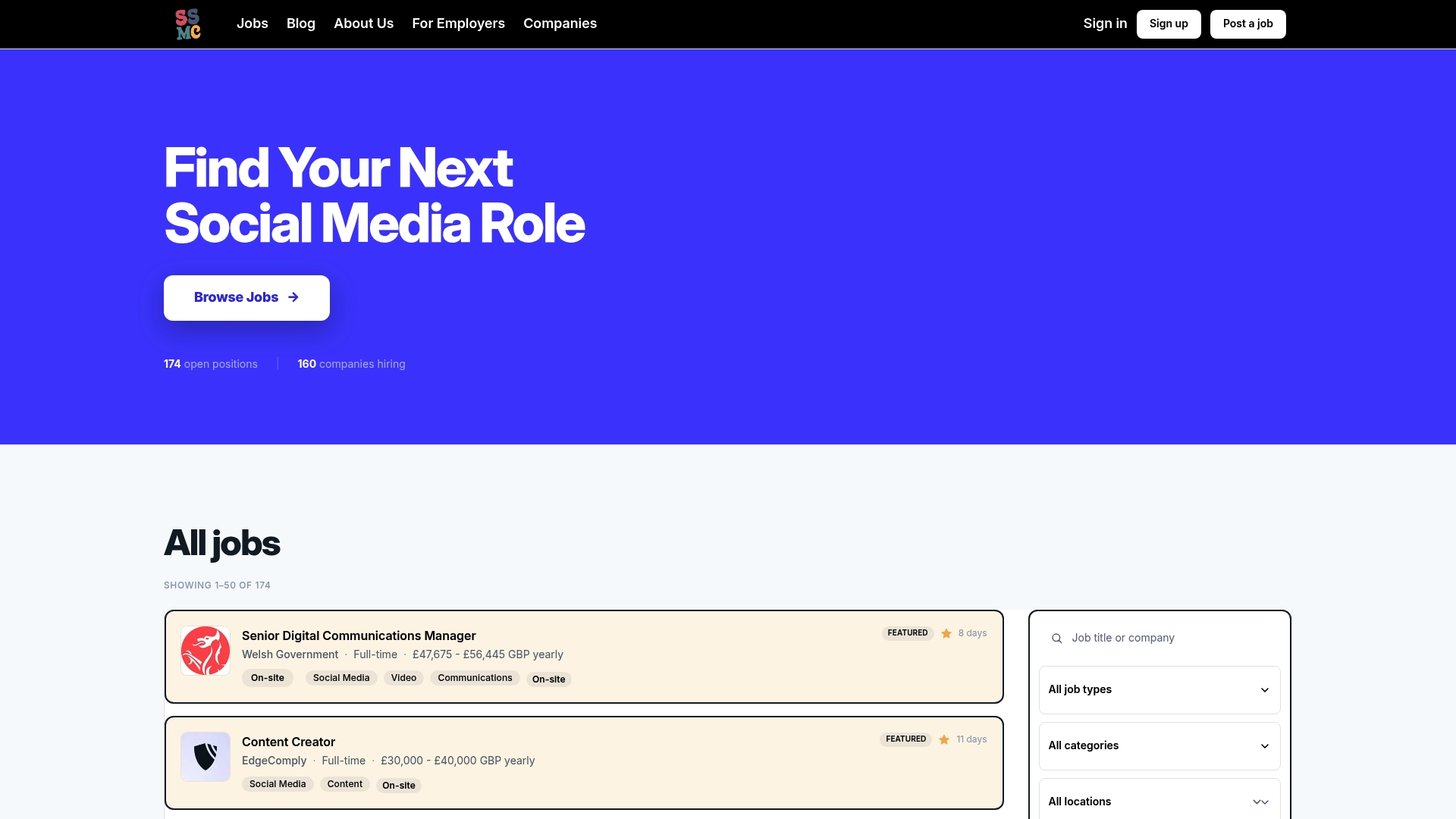
Some job boards curate roles for social media, content, marketing, and communications work specifically, which can help reduce time spent filtering out irrelevant postings and allow more focus on roles fitting the candidate’s experience. Openings like the Content Marketing Manager role at GoCardless or the Content Strategist position at HP give you a real job description to rehearse your STAR answers against before you ever schedule a call. If you’re serious about landing your next content role, reach out through Sam’s Social Media Club’s enquiry page and start browsing listings built around the exact skills this guide just covered.
Sources
- Content Strategist interview questions and answers | Indeed
- What is content marketing? | Content Marketing Institute
FAQ
What are the 5 C’s of interviewing?
Definitions vary across sources, but a common version covers Competence, Character, Communication, Culture fit, and Career direction. In content marketing interviews, Competence and Communication carry the most weight since you’re being hired partly on your writing and speaking clarity.
What is the 30-60-90 rule in an interview?
It refers to outlining what you’d accomplish in the early weeks and months on the job, a framework often requested for content manager and strategist roles. A strong answer names a quick win early on (an audit or quick-fix), a mid-term project, and a measurable outcome to show progress.
What are the 5 hardest content marketing interview questions?
The toughest prompts usually involve defending a strategy that failed, prioritizing content with limited resources, explaining attribution across a long buyer journey, justifying a KPI choice to skeptical stakeholders, and describing how you’d sunset underperforming content. Each one tests judgment under ambiguity, not memorized facts.
How should junior candidates answer differently than senior candidates?
Junior candidates should emphasize the Action step in STAR answers, showing hands-on execution skill, while senior candidates should spend more time on Situation and Task to prove strategic judgment. Both should still end every answer with a measurable Result.
Does Sam’s Social Media Club help with interview preparation directly?
Sam’s Social Media Club focuses on connecting candidates with curated, salary-transparent content and marketing roles rather than coaching services. Reviewing the real job descriptions on live listings is still one of the most effective ways to tailor your interview answers to what a specific employer expects.