Hire for KPIs: Copywriter vs Content Writer for UK Employers

A copywriter writes to prompt a specific action, like a click, a sign-up or a sale, and gets measured on conversion. A content writer writes to inform or engage an audience over time, building traffic and trust, and gets measured on reach and rankings. The hiring rule is simple: pick your primary KPI first. If you need conversions, hire a copywriter. If you need audience growth, hire a content writer.
TL;DR:
- Hiring a copywriter is essential when the primary goal involves immediate conversion metrics like click-through rates and revenue, especially for product pages or ad campaigns.
- Content writers are better suited when the focus is on organic traffic, search rankings, and long-term engagement through long-form content or SEO-driven articles.
- The distinction depends on the task objective rather than word count or format, with copy supporting advertising and response, while content fosters search visibility and audience growth.
- Evaluating candidates requires analysing their process, metrics, and outcome evidence, such as conversion figures for copywriters and traffic or ranking improvements for content writers.
- AI acts as a drafting tool in 2026, with human judgement still crucial for strategic positioning, editing, and brand voice, making the right role choice based on KPIs more important than ever.
Find your next marketing opportunity. Sam's Social Media Club connects job seekers with curated roles in social media, content, marketing, and communications, with transparent salary listings. Explore marketing roles
Table of Contents
- Copywriter vs Content Writer: A Side-by-Side Comparison
- When to Hire a Copywriter Versus a Content Writer
- Skills, Tools and Career Paths for Both Roles
- How to Evaluate Portfolios and Interview Candidates for Each Role
- AI in 2026: What It Changes and What It Does Not
- A Publisher's View on Hiring the Right Writer
- Post Your Next Writing Role With Sam's Social Media Club
- Sources
- FAQ
Copywriter vs Content Writer: A Side-by-Side Comparison
The clearest way to separate these roles is to look at what each one gets judged on. A copywriter's work is measured against click-through rates, cost per acquisition and revenue, while a content writer's output is judged on organic traffic, time on page, backlinks and search rankings. One is built for a moment of decision, the other for a longer relationship with a reader.
Typical outputs make the split concrete. A copywriter tends to produce ad copy, landing pages, product descriptions, email campaigns and taglines built around a single call to action. A content writer tends to produce blog posts, long-form guides, ebooks, white papers and newsletters designed to educate or entertain rather than close a sale.
Word count is where a lot of people get confused, and it is not a reliable way to separate the two. A landing page can run to thousands of words of persuasive copy, and a single social post can be pure content marketing in twelve words. The dividing line is the assignment's objective, not its length or the writer's job title.
A few patterns repeat across both roles:
- Copywriting supports advertising, product positioning and immediate response.
- Content writing supports organic search, education and long-term audience development.
- Classification depends on what the piece is asked to do, not how long it runs or what it is called.
When to Hire a Copywriter Versus a Content Writer
Start with one question: what is the primary KPI for this piece of work? If the answer is conversion, revenue or leads, you want a copywriter. If the answer is qualified traffic, search visibility or long-term engagement, you want a content writer. Most confusion in hiring comes from skipping this question and going straight to a job title.
A few scenarios make the split obvious:
- Launching a product page or running a PPC campaign calls for a copywriter focused on measurable click and conversion lifts.
- Building an email flow that needs to close a sale is a copywriting job, not a content one.
- Publishing evergreen SEO articles or thought leadership calls for a content writer building search equity over months.
- Nurturing leads with a newsletter series that educates before it sells sits closer to content writing.
- Needing a fast CTR or CPA improvement on an existing campaign is a signal to bring in a copywriter, not to rewrite the blog.
Many businesses need both roles working in sequence rather than choosing one over the other, since content earns the attention that copy later converts.
Pro Tip: Run content first to attract and warm up an audience, then bring in copy to convert that attention into action, rather than asking one writer to do both jobs at once.

Skills, Tools and Career Paths for Both Roles
Copywriters build their craft around persuasion: headline testing, direct-response structures, A/B testing literacy and an ear for the phrase that moves someone to click. Content writers build theirs around research, SEO fundamentals, content management systems and editorial planning that keeps a publishing calendar on track. The overlap is smaller than most job ads suggest.
Day to day, both roles work from briefs, collaborate with designers and marketers, and rely on analytics to judge whether the work is doing its job. A web content editor role, for instance, often folds in user research and accessibility checks alongside the writing itself.
Career routes for both are more structured than people expect. The National Careers Service lists apprenticeship routes for advertising copywriters, typically starting at Level 3 for junior creatives and content creators, with progression toward senior copywriter or creative director. A similar path exists on the content side, moving from junior writer to content strategist or editor. For current pay at each level, see our UK copywriter salary guide.
On a CV, seniority looks different for each track:
- A senior copywriter's CV leans on conversion lifts, revenue attributed to campaigns and A/B test wins.
- A senior content writer's CV leans on organic traffic growth, ranking improvements and audience retention metrics.
- Both should show a progression from execution to owning strategy, not just a longer job title.
Readers early in either track can map out next steps in more detail through a structured career plan.
How to Evaluate Portfolios and Interview Candidates for Each Role
Polished writing samples alone tell you very little. What separates a strong copywriter from a strong content writer, and either from a mediocre one, is evidence of process and outcome.
For copywriters, ask for conversion figures, A/B test summaries or annotated copy that shows the reasoning behind a headline or CTA choice. For content writers, ask for bylines tied to ranking improvements, traffic growth or engagement metrics rather than just a list of published links.
Two quick tests reveal a lot:
- Assign a short copy brief (a landing page section or an email) and judge it on clarity of the call to action and persuasive structure.
- Assign a short content brief (an outline for a guide) and judge it on research depth, structure and SEO awareness.
In interviews, ask candidates to walk through how they interpret a brief, how they fact-check claims and how they know a piece performed well. Watch for these red flags:
- No metrics attached to any sample, only finished copy or articles.
- Generic samples that could apply to any brand or product.
- A brief interpreted loosely, ignoring the stated goal or audience.
More structured questions by role level are covered in this breakdown of content marketing interview questions, and portfolio formats worth requesting are laid out in these marketing portfolio examples.
AI in 2026: What It Changes and What It Does Not
AI has become a normal part of the writing workflow, not a replacement for it. A recommended pattern is to use AI for ideation and first drafts, then have a human writer edit for accuracy, structure and brand voice before anything ships. AI variant generation works well for headline testing or draft volume, but strategic positioning, originality and compliance checks still need a person accountable for the result.
79% of 2,256 marketers reported using AI for copywriting or written content in 2026, and 91% said they often edit AI-generated copy before publishing, according to a Typeform survey. The gap between those two numbers is the whole story: AI drafts, humans still decide what ships. The skills that hold up best are strategy, editing judgement and niche expertise that a general model cannot fake, a dynamic also visible in adjacent fields like AI voice generation versus human voice work.

A Publisher's View on Hiring the Right Writer
The best hires I have seen come from a brief that names the KPI before it names the job title. Curated, transparent listings help because they force employers to state the goal upfront, which naturally filters for the specialist skill the role actually needs rather than a generic writing generalist.
— Sam
Post Your Next Writing Role With Sam's Social Media Club
Once you know whether the job is a conversion role or an audience-growth role, the next step is getting the brief in front of the right specialists. Sam's Social Media Club is a curated job board for social media, content and marketing roles, and every listing shows the salary, so candidates can assess opportunities based on disclosed numbers rather than guesswork.
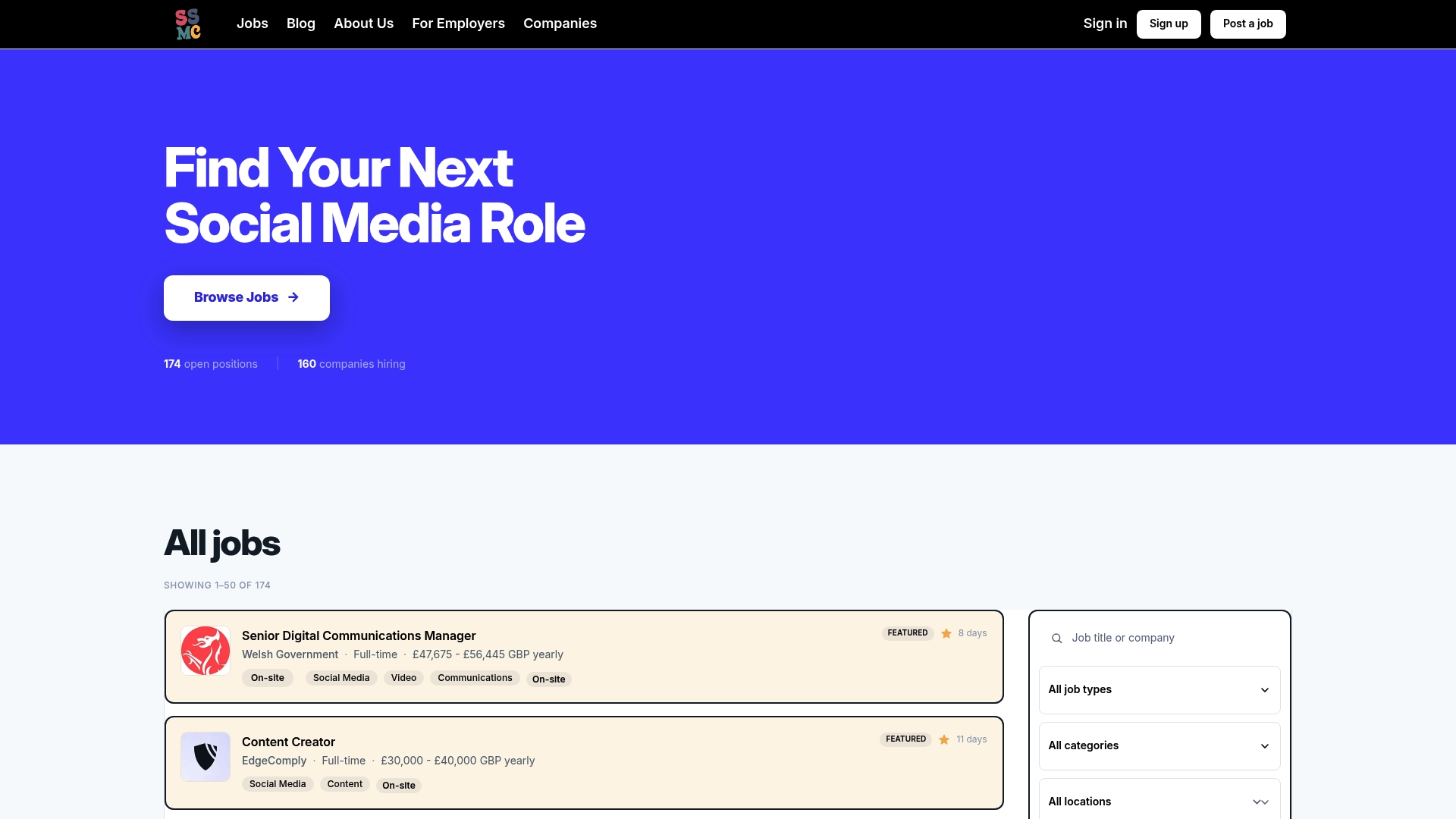
Post a role with SSMC and pair the listing with one of the sample briefs above to see how candidates actually handle a KPI-driven test before you commit to a hire.
Sources
- Copywriting vs. Content Writing: What is The Difference? - Neil Patel
- Copywriting vs. Content Writing: Differences & Similarities - Ahrefs
- 2026 Trends in Generative AI and the Marketer | Typeform
FAQ
Which is better, copywriter or content writer?
Neither is inherently better since each is built for a different KPI: copy for conversion, content for audience growth. The right choice depends on whether your immediate goal is measurable action or long-term reach, as outlined in Ahrefs's comparison.
Is a copywriter an entry level job?
Copywriting can be entered at a junior level, often through apprenticeship routes such as the Level 3 pathways listed by the National Careers Service. Progression typically moves from junior creative toward senior copywriter or creative director roles over time.
Is AI replacing copywriters?
Not outright: a 2026 survey found that while 60% of marketers viewed copywriters as at risk, only 40% of copywriters felt that way about their own jobs. Most writers now use AI for drafting and still edit the output themselves before it ships.
Is copywriting still worth it in 2026?
Copywriting remains worth pursuing because conversion-focused writing is still judged on measurable outcomes that general AI drafts alone rarely deliver without human editing. Writers who pair persuasive skill with strategy and measurement tend to stay in demand, as the AI adoption patterns in the Typeform survey suggest.