Copywriter Salary UK: Use ONS and ProCopywriters Data to Boost Pay

UK copywriters typically earn between £24,000 and £55,000 as employees, with a median in-house income of £48,000 according to the 2026 ProCopywriters survey. Freelancers report a lower median of £33,000, though day rates vary widely. Three factors move that number more than anything else: how many years you have worked, which sector you work in, and whether you are employed or freelance.
TL;DR:
- Most UK copywriters earn between £20,000 and £50,000, with higher salaries at senior levels and in sectors like finance or tech.
- In-house roles at large firms and in London typically pay more, especially for senior and management positions, compared to small agencies or startups.
- Freelance copywriters with technical or performance expertise can charge daily rates of £400 to £600, but their annual income usually falls below the equivalent salary due to unbillable time.
- Employers now demand AI literacy, with skills like strategy, measurement, and conversion-focused writing increasing pay prospects.
- Salary transparency helps candidates self-select more accurately, leading to better matches and higher-quality applications for copywriting positions.
Find transparent marketing roles. Explore curated opportunities across social media, content, marketing, and communications, with transparent salary information for better career decisions. Explore open roles
Table of Contents
- Official UK statistics and what they mean for copywriters
- Salary bands by experience and role
- Freelance and contractor rates: hourly, day rates, and annual income
- How sector and location change pay
- What employers are asking for in 2026
- Negotiation and career moves to increase your pay
- Why pay transparency changes the hiring conversation
- Post a transparent copywriting role or find one
- Sources
- FAQ
Official UK statistics and what they mean for copywriters
The Office for National Statistics publishes the most reliable earnings baseline in the country through its annual ASHE release, which tracks employee earnings across occupations and industries. Copywriting sits inside broader marketing and media occupation groups rather than as its own isolated line, so figures need a little interpretation.
Full-time figures tend to run higher than all-employee averages because they exclude part-time workers, who are more common in creative and content roles. Sector mix matters too: a dataset that leans heavily on smaller agencies or charities will pull the average down compared to one dominated by finance or tech employers.
The ONS annual earnings survey provides the official baseline for UK employee pay across occupations, and it's worth checking the latest release directly if you want figures broken down by region or industry rather than relying on secondhand summaries.

Salary bands by experience and role
Pay climbs steadily with experience, and job titles shift to reflect scope rather than just tenure. The National Careers Service lists a starter salary of around £20,000 rising to roughly £80,000 for experienced advertising copywriters, which lines up with what most employers advertise.
- Junior copywriter: typically £20,000 to £28,000, usually drafting under supervision and learning brand tone.
- Content copywriter (mid-level): typically £28,000 to £38,000, often owning a content calendar or specific channel.
- Senior copywriter: typically £38,000 to £50,000, expected to shape messaging strategy and mentor junior writers.
- Lead or head of copy: typically £50,000 to £80,000, managing a team and tying copy performance to commercial results.
Moving up a band usually comes down to evidence rather than time served: a portfolio that shows measurable impact, ownership of a campaign from brief to result, or the ability to train and review other writers' work. Readers weighing a related marketing move can compare figures in our UK junior marketing salary guide for context beyond copy-specific roles.
Freelance and contractor rates: hourly, day rates, and annual income
Freelance copywriting pay in the UK works on a wide spread, and the 2026 ProCopywriters survey put the median freelance income at £33,000, below the employed median despite often higher headline day rates.
- Junior freelancers commonly charge £150 to £250 a day while building a client base.
- Mid-level freelancers commonly charge £250 to £400 a day once they have a track record and referrals.
- Senior or specialist freelancers commonly charge £400 to £600 a day, particularly in technical, financial, or conversion-focused niches.
Turning a day rate into an annual figure means accounting for unbilled time. Most freelancers only bill 30 to 40 weeks a year once you factor in admin, pitching, and gaps between contracts, so a £400 day rate does not translate directly into a five-figure multiple. Our day rate calculator and checklist walks through a more realistic annualised estimate based on your own billable capacity.
How sector and location change pay
Where you work and who you work for can matter as much as your title. In-house roles at tech companies, B2B software firms, and large financial services brands tend to pay above the median because copy is tied directly to revenue and lead generation. Charities, small independent publishers, and early-stage startups often pay less, trading salary for mission alignment or flexibility.
- London roles typically carry a premium over the rest of the UK, reflecting both cost of living and the concentration of large agencies and finance-sector employers.
- Remote-first roles increasingly offer London-level pay without requiring relocation, particularly at larger digital-native companies.
- Agency work often pays less at junior level than in-house equivalents but can offer faster exposure to varied briefs and bigger brands.
- In-house senior roles frequently outpace agency senior roles once you factor in bonuses tied to commercial targets.
If you are weighing a move into a broader marketing function, the social media and marketing pay guide breaks down adjacent roles that sometimes offer a faster route to a pay rise than staying purely on the copy track.
What employers are asking for in 2026
Job-ad analysis of 230 UK postings shows employers now expect AI literacy as a baseline skill, not a differentiator. The role is expanding rather than shrinking: writers who can direct AI tools while owning strategy and measurement are the ones commanding higher offers. Separate industry analysis found near-universal AI engagement in UK advertising, though evidence of clear business impact remains mixed, which means employers are prizing judgment over raw drafting speed.
Skills that reliably increase pay include performance-focused copywriting tied to conversion metrics, UX writing, content strategy, and the ability to brief and audit AI-generated drafts rather than just produce them. A useful complementary source on structuring persuasive narratives is this storytelling and AI templates guide, which applies well beyond its original pitching context.

Pro Tip: List one metric next to every portfolio piece, such as a conversion lift or open-rate improvement, so a hiring manager sees impact before reading a word of the copy.
Negotiation and career moves to increase your pay
Timing and evidence matter more than confidence alone.
- Ask at natural checkpoints: after a successful launch, at your annual review, or when taking on new responsibilities without a title change.
- Build your case with numbers: pull together conversion data, campaign results, and comparable market rates rather than relying on tenure.
- Specialise where demand outpaces supply: technical, financial, or performance copywriting tends to command higher rates than general brand writing.
- Move into management or strategy: taking ownership of a content function or team is one of the fastest ways to break into the top of the pay bands.
A simple script works better than a long pitch: state the achievement, name the market rate you have researched, and ask directly for the adjustment.
Why pay transparency changes the hiring conversation
Salary ranges hidden until the final interview waste everyone's time, and copywriters lose the most because their pay varies so widely by sector and skill. When a listing states the number upfront, candidates self-select more accurately and employers get applicants who actually want the role at that price. That's the principle Sam's Social Media Club builds every listing around, and it's why we require salary transparency rather than treating it as optional.
— Sam
Post a transparent copywriting role or find one
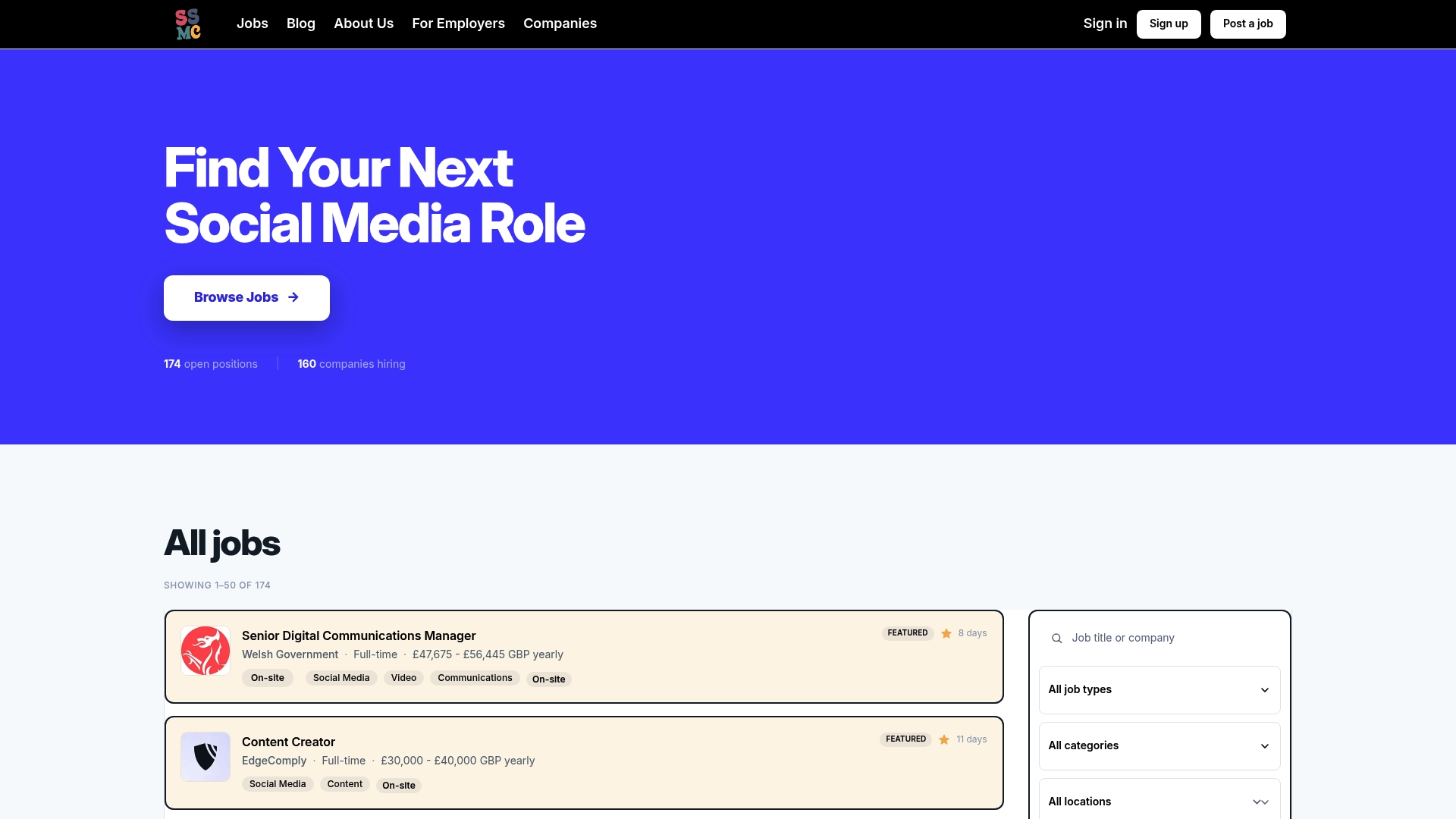
Hiring managers get higher-quality applicants when a listing states the pay upfront instead of "competitive salary." Sam's Social Media Club curates listings for social media, content, and marketing roles and requires salary transparency on every one.
- Employers get access to a targeted, quality-checked pool of creative and content professionals.
- Candidates get to see the real number before applying, not after three interview rounds.
Check current plans and post a role through Advertise with SSMC, or browse open copywriting and content roles.
Sources
These figures combine official government data with profession-specific surveys and current job-ad signals. The ONS supplies the national earnings baseline, the National Careers Service provides occupational salary ranges, and the 2026 ProCopywriters survey contributes profession-specific median incomes from 573 respondents. WhatDoIEarn aggregates similar sources for a practical cross-check, though we treat it as background rather than a primary figure.
- Employee earnings in the UK: 2025
- Copywriter Survey 2026: AI, Earnings, Gender Pay Gap - ProCopywriters
- Advertising copywriter | Explore Careers
- What 230 job adverts reveal about AI and the changing role of the copywriter | The AI Journal
- AI in UK Advertising 2026: Evidence, Rules and Tactics | Spicy Advisory
Sam's Social Media Club maintains its own pay transparency resources for the wider marketing and content field, built on the same principle of citing sources rather than guessing.
FAQ
How much can you earn as a copywriter in the UK?
Employed copywriters in the UK have a median in-house income of £48,000, while freelancers report a lower median of £33,000. Pay ranges roughly from £20,000 for starters to £80,000 for experienced advertising copywriters according to the National Careers Service.
Is AI replacing copywriters?
No, AI is changing the role rather than replacing it. Analysis of 230 UK job adverts shows employers now expect copywriters to direct AI tools and oversee output while owning strategy and measurement, which tends to raise pay for those who can do it well.
Is £70,000 a good salary in the UK?
For a copywriter, £70,000 fits comfortably within the experienced salary band, typically requiring a senior or lead-level role with team management or direct commercial ownership. The National Careers Service places experienced advertising copywriters up to £80,000.
What qualifications do I need to be a copywriter?
There is no single required qualification. Most employers care more about a strong portfolio and demonstrated results than a specific degree, though a background in English, marketing, or journalism can help, and government apprenticeship listings offer one structured route in.