
Five Job Ready Social Media Portfolio Examples With Copyable Templates

The most effective social media portfolios lead with a few short case studies that show strategy, creative, and measurable results, not a resume in disguise. Pair those case studies with a short bio, a services menu, a couple of testimonials, and clear contact details, then publish it as a website or PDF with live links to posts and visible metrics. Skip the format wars: the structure matters more than whether you build it in Squarespace or a Notion page.
TL;DR:
- Short case studies should focus on explaining the strategy and decision-making behind the work, not just showcasing finished content.
- Use a format that highlights measurable impact, such as a one-page website, PDF pack, clickable grid, video reel, or Notion page, depending on your experience and time.
- Emphasize results with clear baseline metrics, the change achieved, and the reasoning for tactics, and include a learnings statement to demonstrate strategic thinking.
- Tailor your portfolio to the role by prioritizing role-relevant metrics and work, especially on curated platforms that filter for specific skills and impact.
- Avoid over-relying on follower counts and instead showcase decision trails and repeatable wins to convincingly demonstrate your capabilities.
Table of Contents
- Five Social Media Portfolio Examples That Actually Get Interviews
- How to Write a Social Media Case Study That Sells Your Work
- Which Platform Should You Build Your Portfolio On?
- Copyable Portfolio Templates and How to Handle NDA Work
- What Hiring Teams Actually Look for in a Social Media Portfolio
- The Overrated Metric in Most Social Media Portfolios
- Ready to Put That Portfolio to Work?
- Sources
- FAQ
Five Social Media Portfolio Examples That Actually Get Interviews
Hiring managers scan portfolios the way they scan resumes: fast, looking for a reason to keep reading. The format you choose determines whether they get that reason in ten seconds or give up after three. Here are five formats that consistently work, based on patterns across dozens of well-reviewed social media portfolio examples.
- One-page highlight reel website. A single scrolling page with a hero metric up top (follower growth, engagement lift, campaign reach), then two or three case studies below. Best for candidates whose strongest asset is a handful of standout campaigns, since there’s nowhere for weak work to hide.
- PDF case-study pack. A tight, five-to-eight-page document built for direct outreach or attaching to job applications. It travels well by email and works when you’re pitching a specific brand or applying to a specific posting rather than fishing for general attention.
- Clickable tiles site (grid layout). A homepage of thumbnail tiles sorted by industry or content type, so a recruiter hiring for a beauty brand can click straight to your beauty work instead of scrolling past unrelated projects. Portfolio collections built on Squarespace, Wix, and WordPress use this layout constantly, and it scales well once you have ten or more projects.
- Campaign highlight-reel video. A 60 to 90 second cut of your strongest short-form work, useful mainly for creative-heavy roles like TikTok or Reels management where the work is inherently visual and static screenshots undersell it.
- Notion or link-in-bio portfolio. The fastest, cheapest option: a linked page with sections for bio, samples, and contact info. It’s the right call for early-career marketers who need something live today and will rebuild it properly once they have three or four real case studies to show.
None of these formats beats the others on its own. What separates a portfolio that lands interviews from one that gets ignored is whether it “shows rather than tells.” Hootsuite’s guidance on this is blunt: the strongest portfolios explain the thinking behind a campaign, not just the finished graphic. A recruiter can see a nice Instagram carousel anywhere. What they can’t get anywhere else is your reasoning for why you built it that way.
How to Write a Social Media Case Study That Sells Your Work
Every strong case study follows roughly the same five-step skeleton, whether the project ran for a week or a year. Use it as a fill-in-the-blank template rather than starting from a blank page each time.
- Context and goal. One sentence: what was broken, and what number were you trying to move? (“The brand’s Instagram had flat growth for six months; the goal was 20% follower growth in Q1.”)
- Role and timeframe. State plainly who you were on the project (sole social manager, part of a three-person content team) and how long you ran it. Vague role descriptions make recruiters assume you’re overselling your contribution.
- Strategy and tactics. The actual idea: the content pillars, the channels, the creative approach, and why you chose them over the obvious alternative.
- Results. Baseline, metric, and timeframe, stated as a percent change or an absolute number. Portfolio examples built around measurable impact consistently use phrasing like “impressions up 62% quarter over quarter” instead of a bare, unexplained number.
- What you learned. One line a recruiter could quote back to you in an interview. This is the step almost everyone skips, and it’s the one that makes you sound like a strategist instead of a poster of content.
Pro Tip: Write the “what you learned” line first, before you write anything else. If you can’t state a real takeaway in one sentence, the case study probably needs a stronger result or a sharper angle, not more detail.
The pattern that separates memorable case studies from forgettable ones isn’t the metric size. It’s whether the narrative explains a decision. “We switched from static posts to Reels” is forgettable.
Which Platform Should You Build Your Portfolio On?
Your platform choice comes down to speed versus polish. Canva, Notion, and PDF exports get you live in an afternoon and cost nothing, which makes them the right call when you need something to send out this week. Squarespace, Wix, and WordPress take longer to set up but give you a custom domain, a brandable design, and room to grow as your case-study count increases.
- Fast and cheap: Canva (design templates), Notion (linked pages), PDF (email attachments). Good for early-career candidates or anyone applying under time pressure.
- Custom and brandable: Squarespace, Wix, WordPress. Better for candidates with five or more solid case studies who want a portfolio that also functions as a personal brand asset.
- Live evidence: embed actual posts where the platform allows it, or use annotated screenshots with the permalink visible so a recruiter can verify the post is real and still up.
Whatever you pick, add a recent work section and revisit your metrics every quarter. A portfolio showing 2024 follower counts in 2026 signals neglect faster than an outdated design ever will.
Copyable Portfolio Templates and How to Handle NDA Work
You don’t need to write portfolio copy from scratch. Steal these structures and swap in your own numbers.
- Project headline: “[Platform] growth campaign for [Industry] brand” or “Launch strategy for [Content Type] on [Platform].”
- Two-sentence summary: “Rebuilt the brand’s TikTok content strategy around [tactic] after [problem]. Result: [metric] over [timeframe].”
- Metric callout: “Organic engagement up 48% versus the prior quarter, measured by platform analytics, excluding paid reach.”
- Portfolio-item checklist: pick the outcome you’re proving, write two sentences of context, attach an annotated screenshot, and link to the live post if you’re allowed to.
Confidential client work doesn’t have to sit unused in a drive folder. Anonymize the brand name, focus the write-up on strategy and process instead of raw numbers, and lean on percent change over a defined baseline rather than proprietary totals.
What Hiring Teams Actually Look for in a Social Media Portfolio
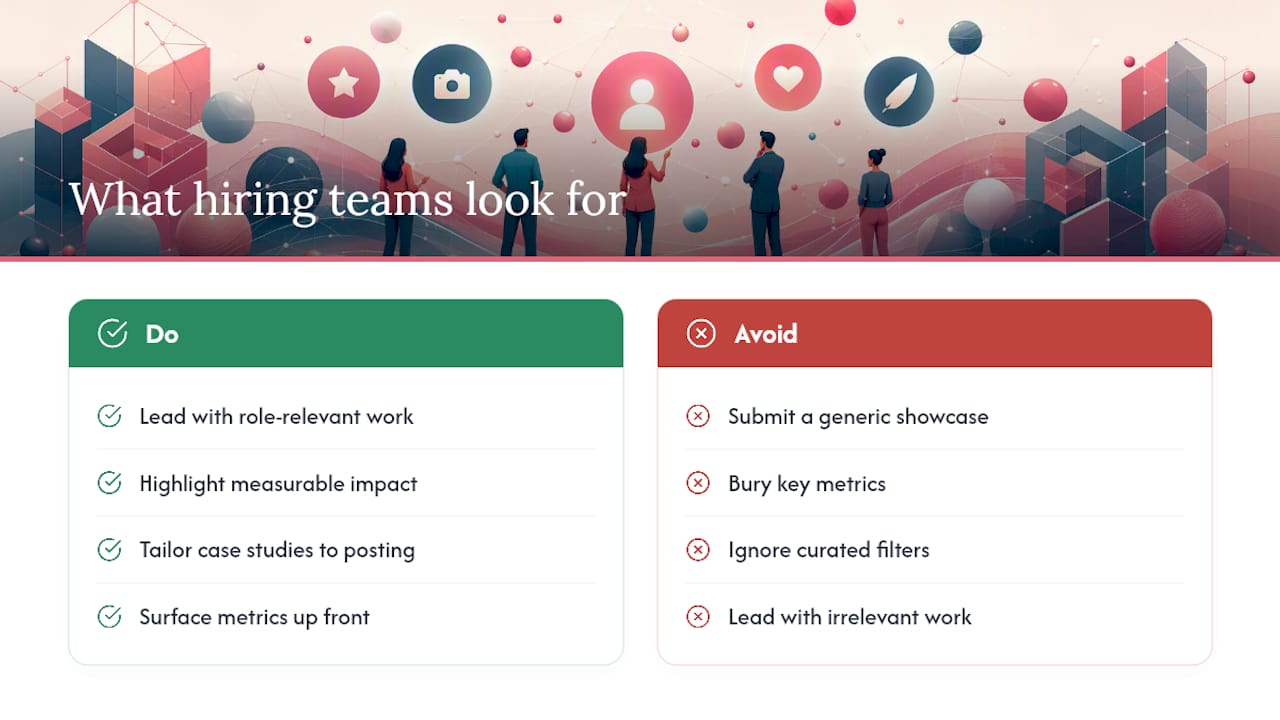
Recruiters reading dozens of portfolios a week aren’t grading for creativity alone. They’re checking for clarity, measurable impact, and a tight fit to the specific role in front of them. A portfolio built as one generic showcase for every application undersells you against a candidate who reshuffled their case studies to match the posting.
On curated platforms, that fit matters even more. Some curated platforms screen listings for transparent salary ranges and matched skills before an employer sees an application, so portfolios that surface role-relevant metrics up front tend to perform better than ones that bury them. If you’re applying to a role that lists community management as the top priority, lead with your community work, not your best-looking graphic.
The Overrated Metric in Most Social Media Portfolios
Follower count gets more attention than it deserves. A portfolio built around raw growth numbers looks impressive for about five seconds, then leaves a hiring manager wondering what actually happened to earn it. What convinces someone you can do the job is the decision trail: the test you ran, the thing that didn’t work, the pivot you made because of it.
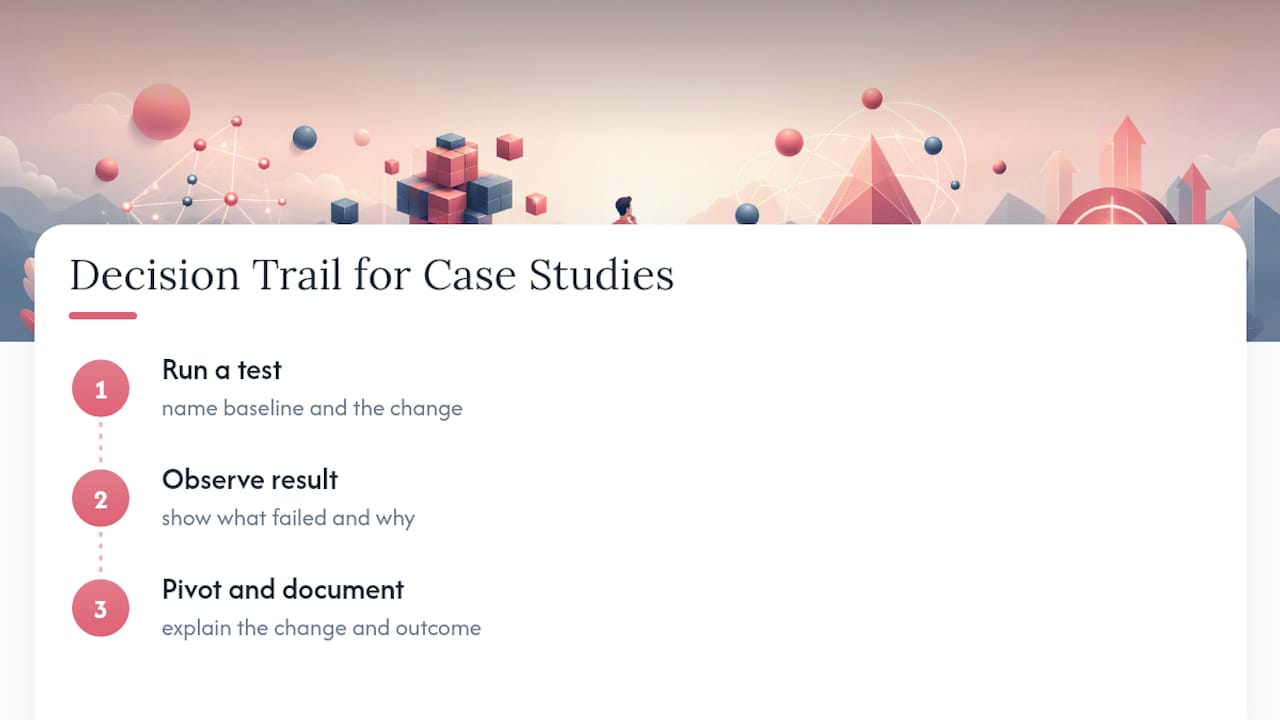
Most advice on this topic tells candidates to “show your best work.” That’s incomplete. Your best-looking post and your best-evidenced result are frequently two different projects, and the case study you should lead with is the one where you can name a baseline, a change, and a cause.
The other gap in conventional advice: most guides treat the portfolio as a static asset you build once before a job search. Treat it instead as something you touch every quarter, even when you’re not applying anywhere. The case study you add in a slow month is the one that saves you when a role you actually want opens up next week.
— Sam
Ready to Put That Portfolio to Work?
A polished portfolio is only half the equation. It needs to land in front of employers who actually value transparent salary ranges and a portfolio that fits the role, not a job board flooded with mismatched listings. Some job boards curate roles in social media, content, marketing, and communications with salary transparency built into listings, helping match your case studies against suitable jobs.
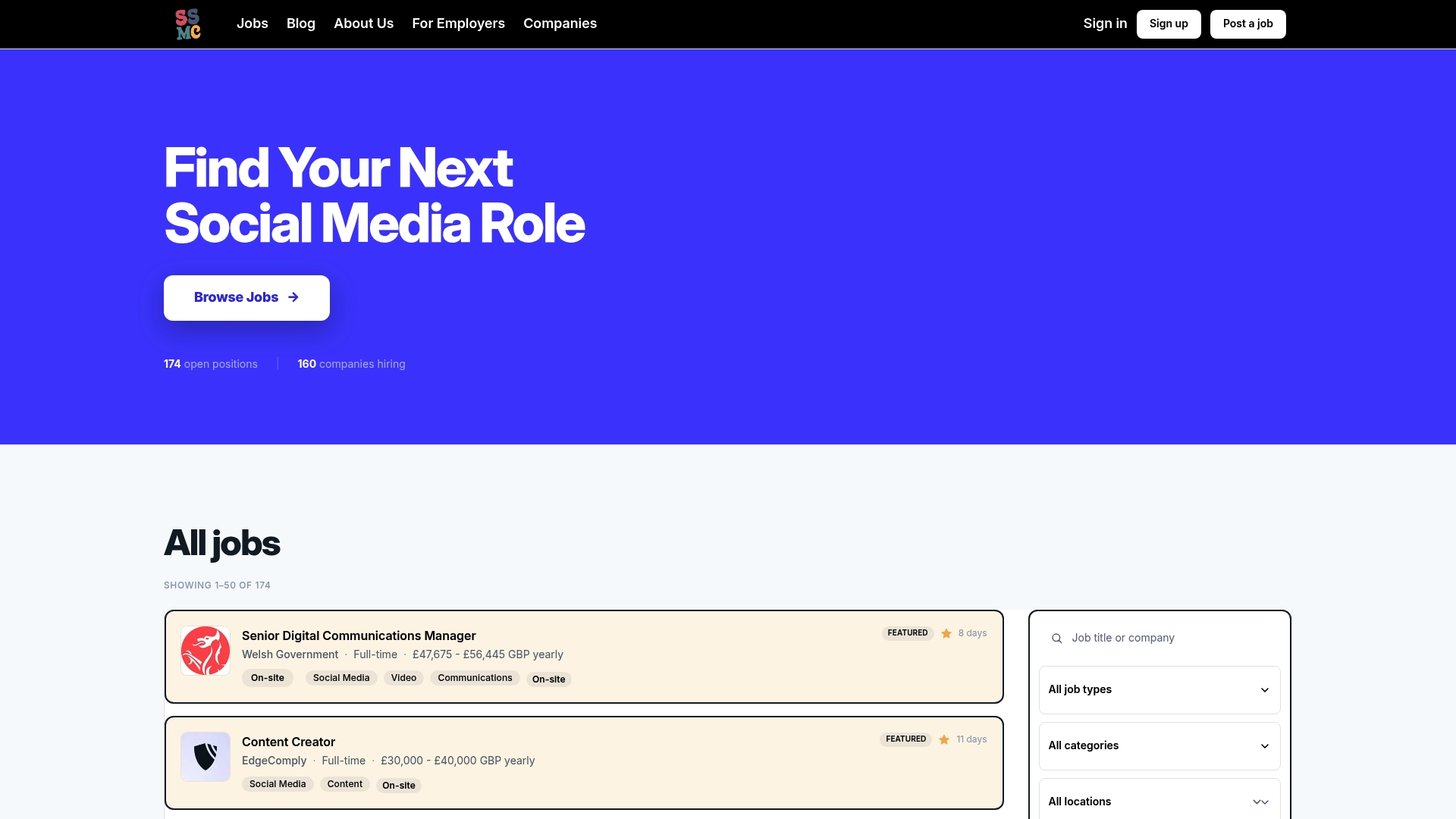
Some job boards apply a selection process to listings before publishing, which helps ensure applications reach employers seeking candidates with specific skill sets. If you’re not sure which case studies to lead with for a particular role, or how to frame a portfolio item around a salary band listed on a posting, use the enquiry page to ask directly. It’s a faster path than guessing which version of your portfolio to send.
Sources
For deeper templates and examples, see Hootsuite’s portfolio guide and Copyfolio’s example collection.
- How to create a social media portfolio (free template + examples)
- Social Media Portfolios: 20+ Well-Designed Examples (2026)
- Social Media Management — Nicole Basha Sabilia
FAQ
What should you include in a social media portfolio?
Include a professional bio, a services menu, two to four case studies with metrics, content samples, a testimonial or two, and clear contact information, following the core structure Hootsuite recommends.
Can you show an example of a strong social media portfolio?
Yes: portfolio pages that pair a hero metric with clickable case-study tiles sorted by industry consistently rank among the best-reviewed formats, since they let recruiters jump straight to relevant work.
What is the 70/20/10 rule for social media?
Applying the same ratio to your portfolio, most of your case studies should show reliable, repeatable wins, with a smaller share showcasing experimental work.
What makes a portfolio stand out to hiring managers?
Portfolios that name a specific goal, show the strategy behind a campaign, and back results with a percent change or clear metric stand out over ones that show only finished graphics. Tailoring your strongest case studies to match a specific job listing, the way curated platforms like Samssocialmediaclub encourage, improves your odds further.