Metric Driven Answers for Marketing Interview Questions by Role

This page gives you the marketing interview questions that come up most, organized by career level and specialty, along with a practical method for answering them: the STAR method paired with a metric chain that proves business impact. Pick the questions that match your target role, then adapt the sample templates below with your own numbers and examples.
TL;DR:
- Most interview questions are consistent across roles, with seniority determining the depth of answers but not the core inquiries.
- Candidates should prepare specific, measurable examples using the STAR method, emphasizing actual results and personal contributions.
- Role-specific questions will often focus on digital channels, content strategy, or analytics, requiring concrete evidence like dashboards or campaign summaries.
- Researching the company's marketing channels, recent campaigns, and employer branding enhances credibility and helps formulate insightful questions.
- Effective answers link actions to clear metrics, and flexibility in storytelling is more valuable than memorized scripts, especially for handling unexpected questions.
Find marketing roles with clear salaries. Explore curated opportunities in social media, content, marketing, and communications, with the salary listed on every job. Explore marketing roles
Table of Contents
- 1. Common Questions From Entry-Level to Senior Roles
- 2. Which Questions Come Up in Digital, Content, or Analytics Interviews
- 3. How to Structure a Standout Answer Using STAR and Metrics
- 4. Sample Answers You Can Edit for Your Own Interview
- 5. What to Expect From Different Interview Formats
- 6. What Hiring Panels Actually Notice
- 7. How to Handle Curveball or Unexpected Questions
- 8. Common Pitfalls That Undercut Strong Candidates
- 9. How to Research the Company's Marketing Before You Walk In
- 10. Why Metric-Driven Answers Beat Generic Preparation
- 11. Finding Roles Where Salary and Fit Are Clear From the Start
- Sources
- FAQ
1. Common Questions From Entry-Level to Senior Roles
Every marketing interview draws from a shared pool of questions, and interviewers vary the depth based on seniority rather than the topic itself. An entry-level candidate might be asked to describe a class project, while a director gets asked to defend a channel strategy in front of a budget committee, but the underlying question often stays the same.
Preparation works best when you match your example's scope to the role you want, not the role you currently hold. According to Coursera's rundown of common marketing interview questions, interviewers frequently ask about past campaign experience, budget limitations, and how candidates stay current on marketing trends, so concrete examples matter more than general opinions.
- Tell me about yourself: tests how clearly you connect your background to the role; prepare a two-minute summary that ends on your most relevant win.
- Describe a successful campaign you led or supported: tests ownership and outcome awareness; bring one metric that shows before-and-after performance.
- How do you measure marketing ROI: tests analytical fluency; name the specific metrics you track and why they matter for the channel in question.
- How would you handle a shrinking budget: tests prioritization under constraint; explain which channels you would protect and why.
- How do you choose which channels to invest in: tests strategic reasoning; reference audience data or past performance, not instinct.
- Tell me about a campaign or project that failed: tests honesty and growth; focus on what you changed afterward, not just what went wrong.
- What do you know about our industry or competitors: tests commercial awareness; show you researched the company's actual position.
- How do you manage disagreements with stakeholders: tests communication under pressure; describe a specific negotiation and its resolution.
- How do you set and communicate a marketing strategy (senior roles): tests leadership and vision; connect strategy to a revenue or growth target.
- How have you built or scaled a marketing team (senior roles): tests people management; mention team size, structure, or a hiring decision you made.
Match your example's scale to the job posting: a manager-level answer references a team and a budget, while an entry-level answer references a task and a result.
2. Which Questions Come Up in Digital, Content, or Analytics Interviews
Role-specific interviews layer technical and channel questions on top of the common set above, and interviewers use these to check whether your day-to-day skills match the job description. Bring evidence, not just explanations: screenshots of dashboards, campaign summaries with metrics, or a short case study you can walk through in two minutes.
- Digital marketing: Which channels have you managed budgets for, and how do you allocate spend across paid search, paid social, and display?
- Content marketing: How do you plan a content calendar around business goals, and can you show a piece that drove measurable traffic or leads?
- Social media: How do you decide what to post on each platform, and how do you report social performance to non-marketing stakeholders?
- SEO: Walk me through how you would audit an underperforming page, and what tools do you use for keyword research and rank tracking?
- Analytics: How do you build a dashboard that non-technical stakeholders can act on, and which metrics do you flag as vanity versus meaningful?
- Email marketing: How do you segment a list, and what's an example of a test that improved open or click-through rates?
- Demand generation: How do you define and hand off a marketing qualified lead, and how do you work with sales on attribution?
For a portfolio or case walkthrough, include the KPI you were measured on, the baseline number, and the result, rather than just describing the tactics you used. Senior candidates in any of these functions should expect follow-up questions on scaling a strategy across markets or leading a team through a platform change. Our social media interview questions and hiring rubric breaks down what interviewers score for that function specifically, and our content marketing interview questions guide does the same for content roles across four levels.
3. How to Structure a Standout Answer Using STAR and Metrics
The STAR method gives you a repeatable structure: Situation sets the context, Task defines your specific responsibility, Action describes what you did, and Result states the outcome. A marketing example might sound like this: your team's email open rates had stalled (Situation), you were asked to improve engagement without increasing send volume (Task), you redesigned subject lines and tested send times (Action), and open rates rose over the following quarter (Result).
To make each answer sharper, fold a metric chain into the STAR structure:
- State the baseline metric before you got involved.
- Explain your diagnosis, meaning why performance was below or above expectation.
- Describe the specific action you took and why you chose it over alternatives.
- Close with the numeric result and one thing you learned.
Choose examples that match the seniority of the role, show a measurable outcome, and honestly reflect your individual contribution rather than your whole team's work. Guidance from Ofqual's STAR application advice recommends picking examples at or above the level you're interviewing for and being ready to describe your personal role in detail.
Pro Tip: Prepare two or three flexible "go-to" examples in advance so you can adapt the same story to different questions instead of improvising under pressure.
4. Sample Answers You Can Edit for Your Own Interview
These templates follow the metric chain above. Swap in your own numbers, channel, and role level before you practice them aloud.
- Competency (campaign success): "Our paid social campaign was underperforming at a cost-per-lead above target. I diagnosed weak creative testing, ran three ad variants against a control, and cut cost-per-lead while increasing lead volume over the following month."
- Competency (handling failure): "I launched a content series that got low engagement because I hadn't validated the topic with our audience first. I switched to a data-backed topic selection process for future series and saw engagement improve on the next release."
- Strengths-based: "I'm most energized by turning raw customer data into a story a sales team can act on, which is why I gravitated toward analytics roles even before it was my formal title." Strengths-based interviews are designed to surface this kind of fit, not just your competency history.
- Technical (SEO audit example): "I audited a page with declining organic traffic, found thin content and slow load speed as the likely causes, rewrote the copy and compressed images, and recovered lost rankings within two months."
Adjust the scale of the numbers and the scope of the "I" versus "we" language to fit the seniority of the role you're targeting.
5. What to Expect From Different Interview Formats
Marketing interviews vary by format as much as by question, and knowing what each format tests helps you prepare the right materials. Panel interviews test how you communicate under multiple viewpoints; task or case interviews test applied problem-solving; presentations test how you sell an idea; take-home assignments test independent execution; remote interviews test communication without in-person cues.
- Assemble a portfolio with screenshots, dashboards, and one-page campaign summaries that show metrics.
- Draft a 30-60-90 day plan if you're interviewing for a leadership role, covering your first priorities and how you'll measure early impact.
- Test your camera, microphone, and internet connection ahead of any remote interview.
- Practice your STAR stories aloud so they sound natural rather than memorized.
- Prepare a few questions for the interviewer about how success is measured in the role and who you'd report to.
Our marketing portfolio examples guide has templates you can adapt for a case presentation or take-home assignment.
6. What Hiring Panels Actually Notice
Hiring panels consistently reward clarity over polish: candidates who state a metric and its context in one breath stand out more than those who describe a campaign in vague terms. Cultural alignment matters too, since interviewers increasingly probe whether your working style fits the team, not just whether you can do the job. Transparent salary listings and pre-vetted roles can shorten your search by ruling out mismatches before you ever reach the interview stage.
— Sam
7. How to Handle Curveball or Unexpected Questions
Marketing interviews often include a question designed to test how you think on your feet rather than what you already know, such as being asked to critique a competitor's recent campaign or estimate a market size you've never researched. The goal isn't a perfect answer, it's a structured one.
When you hit an unfamiliar question, narrate your thinking out loud instead of guessing silently. Say what assumptions you're making, walk through your logic step by step, and land on a reasonable conclusion even if it's not the "correct" one. Interviewers are watching your process more than your final number.
If a question genuinely stumps you, it's fine to ask for a moment to think or to ask a clarifying question before answering. A brief pause reads as thoughtful, not unprepared. Avoid bluffing your way through a technical question you don't know, since a confident wrong answer damages trust more than an honest "I haven't worked with that tool, but here's how I'd approach learning it."
Finally, keep a mental list of two or three flexible stories from your career that you can bend to fit an unexpected angle, whether the question is about ethics, a hypothetical budget cut, or a disagreement with a manager. Preparation for curveballs isn't about memorizing more answers, it's about practicing a calm, structured way to reason through the ones you can't predict.

8. Common Pitfalls That Undercut Strong Candidates
The most common mistake in marketing interviews is describing a campaign without ever naming its result. Interviewers hear "we ran a social campaign that did really well" far more often than a specific number, and the vague version rarely lands. Always tie your actions back to a metric or business outcome, even an approximate one.
Another frequent pitfall is claiming credit for team results without clarifying your individual role. Interviewers want to know what you specifically did, so practice separating "the team achieved" from "I was responsible for."
Overpreparing to the point of sounding rehearsed is a subtler problem. Answers that sound like a script rather than a conversation can make interviewers question whether you can think flexibly. Practice your stories enough to know the shape of them, not the exact wording.
Candidates also frequently skip research on the company's actual marketing, then default to generic praise like "I love your brand." That reads as filler rather than insight. Finally, avoid badmouthing a previous employer or team, even when the story is true. Focus on what you learned rather than who was at fault.
9. How to Research the Company's Marketing Before You Walk In
Before your interview, spend time on the company's own marketing channels: its website, blog, social profiles, and any recent commercial voice over campaigns you can find. Note what tone, channels, and campaign types they seem to prioritize, and be ready to reference something specific rather than a general impression.
Read recent press coverage or the company's own announcements for context on new product launches, rebrands, or leadership changes, since these often shape what the marketing team is currently focused on. If the company is public or publishes investor updates, a quick scan of recent earnings commentary can reveal what leadership is prioritizing in terms of growth or spend.
Look at how the company positions its employer brand, too. According to CIPD's employer brand factsheet, 81% of organizations reported taking specific action to improve their employer brand, which means interviewers increasingly expect candidates to reference culture and values alongside technical skill. Our guide on employer branding strategy explains what that activation typically looks like from the inside.
Use this research to shape one or two questions you ask the interviewer, which shows you did the work rather than just skimmed a homepage.

10. Why Metric-Driven Answers Beat Generic Preparation
The advice to "organize your prep by level and function" sounds obvious once you hear it, yet most candidates still walk in with one generic story stretched across every question. That's the real gap: not a lack of effort, but a failure to build examples that flex to fit strengths-based, competency-based, and technical prompts alike.
The conventional wisdom oversells rehearsal and undersells specificity. A candidate who memorizes five polished stories often loses to one who can quote a real number under follow-up questioning, because interviewers probe for the diagnosis behind the result, not just the result itself. If you take one thing from this page, prioritize the metric chain over the narrative polish: a rough but honest number beats a smooth story with nothing to measure.
Where preparation guides fall shortest is on curveballs and culture fit, treating them as separate skills from technical readiness. They aren't. The same structured thinking that gets you through a budget-cut hypothetical is what gets you through a live SEO audit question. Build one flexible reasoning habit, not ten memorized scripts.
11. Finding Roles Where Salary and Fit Are Clear From the Start
Once you've prepared your answers, the next challenge is finding roles worth interviewing for in the first place. Sam's Social Media Club lists social media, content, marketing, and communications roles with the salary upfront on every posting, so you can avoid applying to roles that don't meet your pay expectations.
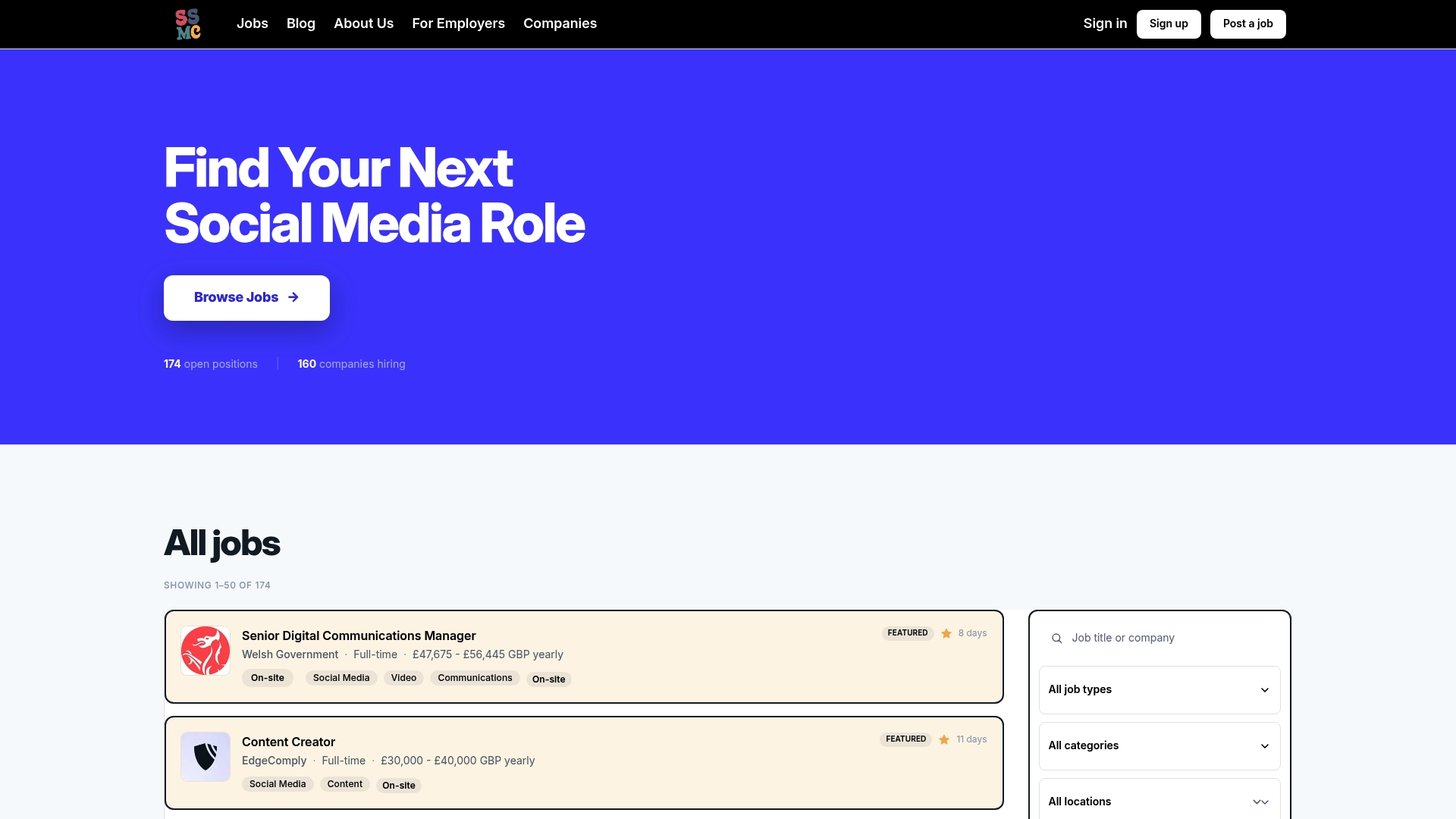
If you want your next interview to be for a role you'd actually want, browse the latest jobs on Sam's Social Media Club and see what's currently listed with transparent pay.
Sources
The National Careers Service STAR method guide covers structuring answers, CIPD's selection factsheet explains structured interview formats, and Coursera's marketing interview roundup offers additional role-specific prompts.
- Employer brand (CIPD factsheet)
- The STAR method | National Careers Service
- Using S.T.A.R. effectively in your job application and interviews (Ofqual)
- 8 Common Marketing Interview Questions and How to Answer Them | Coursera
FAQ
What are the 5 P's of an interview?
There isn't one official, universally agreed definition of "5 P's" for interviews; the term is used inconsistently across different guides. A more reliable framework for marketing interviews specifically is the STAR method, which structures answers around Situation, Task, Action, and Result.
What is the 30-60-90 rule in an interview?
A 30-60-90 day plan is a document candidates for leadership or management roles prepare to show what they'd prioritize in their first 30, 60, and 90 days on the job. It signals that you've thought concretely about early wins, team relationships, and how you'd measure your own progress.
What are 5 interview questions?
Five questions that come up across nearly every marketing interview are: tell me about yourself, describe a successful campaign you led, how do you measure ROI, tell me about a project that failed, and how do you handle disagreements with stakeholders. Interviewers vary the depth of these based on the seniority of the role.
What are the top marketing interview questions with answers?
The top questions span common prompts like campaign success and ROI measurement, plus role-specific ones for digital, content, SEO, and analytics positions, all covered with editable answer templates earlier on this page. The best answers follow the STAR structure and include a specific metric, diagnosis, action, and result rather than a general description.
How should I prepare for a marketing interview in the days before it?
Build a portfolio with metrics and dashboards, practice your STAR stories aloud, prepare a 30-60-90 plan if you're interviewing for a leadership role, and research the company's own marketing and employer brand. According to Coursera, candidates should also be ready to discuss recent marketing trends relevant to the role.