Content Team Structure: 3 Moves to Turn a Reactive Team Strategic

Start with a small central core of strategy, editing, and operations, then add a hub-and-spoke model as you scale, because hybrid structures balance control with execution capacity. Three moves to make this week: name one decision body for prioritization, assign or hire an editor to own quality, and fix your most critical workflow bottleneck. These three steps, backed by Content Marketing Institute research on governance, turn a reactive team into a strategic one faster than hiring alone ever will.
TL;DR:
- Small teams of two to five can handle basic publishing and light SEO, but require effective governance to avoid duplication and inconsistency.
- The ideal content team structure varies from centralized for small organizations to federated for large, multi-unit enterprises, emphasizing clear governance regardless of model.
- Hiring should follow a sequence from a generalist lead to specialized roles like editors, SEO, and content ops only after workload justifies it, preventing unnecessary headcount.
- Implementing a content orchestration council and clear workflows reduces bottlenecks and streamlines decision-making without increasing team size.
- Use transparent salary benchmarks and targeted job boards to attract qualified candidates and avoid mismatched applicants during hiring for content roles.
Find Your Next Content Role. Explore curated social media, content, marketing, and communications roles with transparent salary listings. Explore open roles
Table of Contents
- Common organizing structures for content teams
- Core content team roles and a practical hiring order
- What different team sizes can realistically own
- Governance and the content orchestration council
- Workflows, handoffs, and tooling that reduce bottlenecks
- When to grow the team and how to prove it was worth it
- What hiring managers get wrong about content hires
- Where Sam's Social Media Club fits into your hiring plan
- FAQ
- Sources
Common organizing structures for content teams
Four models cover almost every content team you will encounter, and each splits strategy and execution differently.
A centralized structure puts one team in charge of planning, creation, and quality for the whole organization. It works well in smaller companies where a single editorial voice matters more than departmental speed. A decentralized structure embeds writers and creators inside individual departments or product lines, which speeds up local output but often causes duplicated work and inconsistent messaging. A hybrid or hub-and-spoke model keeps a central team setting standards, templates, and strategy while spokes in other departments handle execution. Lauren Pope's research on content organizing structures identifies hub-and-spoke as the most common setup because it keeps governance centralized while letting execution scale. A federated model pushes that further, giving departments their own budgets and priorities while the center still owns brand and quality standards. Holacratic structures, rare in content teams but worth naming, distribute decision rights across self-organizing circles rather than a fixed hierarchy, trading speed of coordination for flexibility.
Here is how to match structure to context:
- Centralized fits small to mid-size organizations with one brand voice and limited departmental complexity.
- Decentralized suits large, multi-brand or multi-region companies willing to trade consistency for speed.
- Hub-and-spoke fits growing companies that need central standards but can't staff every department with its own writers.
- Federated works for enterprises with distinct business units that each need ownership over their own content calendar.
- Holacratic structures suit flat, experimental organizations comfortable without a fixed content hierarchy.
The common pitfall across all of them is skipping the governance layer. A hub-and-spoke model without clear service agreements between the center and the spokes collapses into the same silos a decentralized structure produces.
Core content team roles and a practical hiring order
Most content functions boil down to four layers: strategy (what to say and why), creation (making it), distribution (getting it seen), and operations (keeping the machine running). The roles that fill those layers are a head of content or strategist, an editor, a content manager, creators and writers, an SEO or distribution specialist, a content ops producer, and someone who owns analytics.
A sensible hiring sequence looks like this:
- One person (generalist lead): a strategist-editor hybrid who plans, writes, and edits. This person sets voice and priorities from day one.
- Two to three people: add a dedicated creator or writer and a part-time operations or project management function so the lead stops chasing logistics.
- Four to nine people: bring in an editor separate from the strategist, since Harvard Business Review argues every content organization needs a dedicated editor to protect quality and voice as volume grows. Add an SEO or distribution specialist around this stage too.
- Ten or more people: split generalists into specialists: a content ops producer to manage workflow and tooling, an analytics owner to track impact, and channel-specific creators (video, long-form, social) rather than one person covering everything.
Replace generalists with specialists only when the generalist's time is dominated by one task category, not before. Hiring a specialist too early adds headcount without adding capacity, because there isn't enough specialized work to fill their week.
Pro Tip: Map handoffs explicitly, strategist to editor to creator to distribution, so no asset sits waiting for a decision nobody owns; unclear handoffs waste more time than any missing role.
For more detail on what to test for at each level, our interview question bank for content roles breaks down what to ask at each stage, and our content strategist job description guide helps set realistic compensation bands for the first strategic hire.

What different team sizes can realistically own
Headcount sets a hard ceiling on what a content function can produce, and most teams are smaller than leadership expects.
- A one-person team can own a content calendar and basic distribution but will struggle with consistent quality control and any real measurement.
- A two-to-five person team can run a steady publishing cadence and light SEO, which matches the norm: 82% of technology marketers report having a dedicated content team or person, and most of those teams fall in the two-to-five range.
- A six-to-nine person team can support multiple channels and start building a governance layer, assigning a dedicated editor and ops role instead of folding those duties into the strategist's week.
- A ten-plus person team can run specialized pods by channel or product line and sustain a formal orchestration council.
96% of technology marketers say they have a content strategy, but only 29% call it highly effective, which points to an execution gap rather than a planning gap. Small teams can close part of that gap without adding headcount by cutting approval steps, reusing existing assets into new formats, and assigning one person clear ownership of prioritization instead of letting requests arrive ad hoc.
Governance and the content orchestration council
A content orchestration council is a small, standing group with real authority over what gets made and in what order. It typically includes the content lead, a representative from sales or product, and whoever owns the budget, meeting biweekly or monthly to review requests against strategic themes. Content Marketing Institute describes this governance layer as the mechanism that moves teams out of reactive "content factory" mode and into deliberate orchestration, often without adding a single new hire.
To stand one up:
- Write a one-page charter naming what the council decides (priorities, themes, resource allocation) and what it doesn't (day-to-day execution).
- Pick three to five members who represent the demand side (sales, product) and the supply side (content, design).
- Build a simple scoring model for incoming requests, weighing reach, strategic fit, and effort, so the council isn't arguing from instinct.
- Set a cadence and a decision log so requests get a yes, no, or "later" within a fixed window instead of sitting in limbo.
Pro Tip: Give the council explicit authority to say no; a prioritization framework with no veto power is just a suggestion box.
The practical payoff shows up fast: fewer one-off requests landing on the strategist's desk, editorial themes that hold for a full quarter instead of shifting weekly, and modular content packages built once and reused across channels. CMI's case pattern shows a five-person team adding a council and modular workflows can scale its output without new hires, which matters most for teams who can't simply hire their way out of chaos.

Workflows, handoffs, and tooling that reduce bottlenecks
Most content bottlenecks aren't caused by missing people. They're caused by unclear briefs, undefined review timelines, and assets scattered across five different folders.
Fix these first:
- Standardize briefs with a fixed template covering audience, goal, format, and deadline, so creators stop guessing at intent.
- Set service-level agreements for review turnaround, for example a 48-hour cap on editor feedback, so drafts don't sit untouched.
- Keep one source of truth for assets and brand guidelines rather than letting each spoke keep its own copy.
- Build content modularly: write a core research piece once, then cut it into social posts, an email, and a slide deck instead of starting from scratch each time.
On tooling, prioritize project management (to track where each asset sits in the pipeline), review and approval software (to kill the email-chain bottleneck), a CMS with clear governance rules, and an analytics dashboard that ties content to outcomes rather than just traffic. For teams managing heavy review cycles with external collaborators, a structured creative ops workflow can cut the back-and-forth that typically eats the most time.
Track cycle time (brief to publish) and reuse rate (how many formats one core asset becomes) as your two efficiency metrics. A reuse rate that stays flat quarter over quarter is a sign your modular content approach exists on paper but not in practice.
When to grow the team and how to prove it was worth it
Hire when you see repeat missed deadlines despite reasonable workloads, sustained demand growth from sales or product that the current team can't absorb, or a clear line from content to pipeline that justifies the cost.
- Track the blended cost of a hire against outsourcing the same work to freelancers or an agency before committing to a full-time role.
- Prioritize roles that remove the biggest bottleneck first, not the role that sounds most senior.
- Use a simple scoring framework, similar to the council's prioritization model, to rank competing headcount requests against each other.
To justify the hire to leadership, track asset reuse rate, audience growth, pipeline contribution, and time-to-publish. Only 29% of technology marketers consider their content strategy highly effective despite near-universal adoption of a strategy, which makes a documented, metric-backed case for headcount far more persuasive than volume alone. Our guide on hiring a marketing manager and our breakdown of the first marketing hire founders should make both walk through this decision in more detail.
What hiring managers get wrong about content hires
Salary transparency speeds up hiring more than any other single change we've seen in listings for content roles: candidates self-select faster when they know the range upfront, which cuts wasted interview cycles on both sides. When interviewing, test for planning (can they prioritize a messy backlog), editing judgment (can they cut their own weakest paragraph), and basic analytics literacy (can they read a dashboard and act on it), not just writing samples.
— Sam
Where Sam's Social Media Club fits into your hiring plan
Building the structures above only works if you can fill the roles with people who actually fit. There are curated job boards for social media, content, marketing, and communications roles where listings often include transparent salary information, which can help attract more serious candidates.
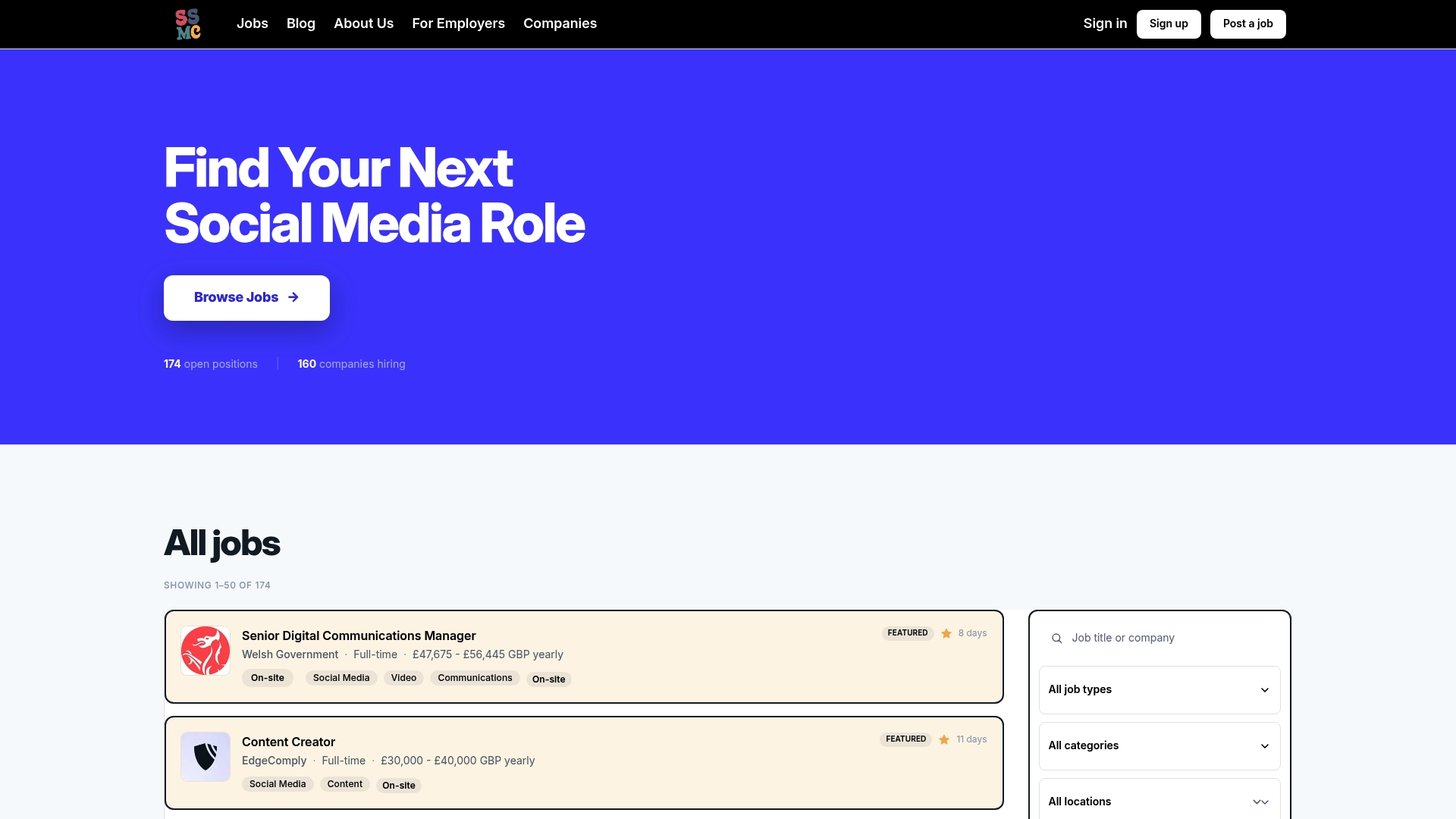
- Every listing is screened before it goes live, so you are reaching a targeted pool rather than a generic jobs feed.
- Mandatory salary transparency filters out mismatched applicants before they ever reach your inbox.
- Distribution reaches a dedicated community of creative and social media professionals actively looking for their next role.
If you are ready to post your next content hire, view pricing and listing options, or reach out with questions about what fits your hiring stage.
FAQ
What are the 5 C's of a team?
Different frameworks define the "5 C's" differently depending on the source, so there is no single agreed version specific to content teams. For content teams specifically, the practical equivalents worth tracking are clarity of roles, consistency of voice, coordination through a shared calendar, capacity planning, and a clear chain of decision rights.
What is the 70 20 10 rule in content marketing?
It splits effort roughly 70% on proven content that already performs, 20% on variations of what works, and 10% on new experiments. It helps teams balance consistency with room for innovation without betting the whole content calendar on unproven formats.
What are the pillars of content creation?
Most frameworks group content creation around strategy, creation, distribution, and measurement, the same four layers that define content team roles. Treating these as pillars rather than sequential steps helps teams build feedback loops instead of a one-way production line.
What are the steps of content creation?
Content creation generally moves through research, strategy and planning, creation, editing and review, distribution, and measurement, with the cycle feeding back into the next round of planning. Teams that skip the measurement step tend to repeat the same mistakes because nothing routes performance data back into planning.
How do I know when my content team needs a dedicated editor?
A dedicated editor becomes worth hiring once your strategist is spending more time editing drafts than planning strategy, since Harvard Business Review argues every content organization benefits from a role focused purely on quality and voice. This typically happens somewhere between four and nine team members, depending on publishing volume.
Sources
- Organising structures for content teams: a guide — Lauren Pope
- The 4 Stages of Content-Led Marketing Maturity — Content Marketing Institute
- Every content marketer needs an editor — Harvard Business Review