
Hire a Content Strategist in the UK: Job Description Template & Salary
A content strategist decides what content gets made, why it exists, and how success gets measured, leaving execution to writers, designers, and editors. Hire one when your team produces content without clear results to show for it. Apply for the role if you enjoy research, planning, and connecting content to business outcomes more than writing copy all day. The sections below cover a full job description template, a UK salary benchmark, and the deliverables that separate this role from content manager or writer positions.
TL;DR:
- Content strategists who own measurable goals and clear deliverables can better align content efforts with business outcomes, especially when managing audits, roadmaps, and governance.
- Candidates should demonstrate experience with audience research, content mapping, performance analysis, and stakeholder management, preferably through sample work like audits and roadmaps.
- Hiring is most effective when job postings include transparent salary figures and specific scope, such as SEO, product focus, or editorial remit, to attract suitable candidates.
- Most senior strategists develop from three to five years of experience, with pay increasing significantly when they add technical or product responsibilities to their role.
- Companies should hire a content strategist when content volume exists but purpose, measurement, and governance are lacking, with options including in-house, agency, or fractional arrangements.
Table of Contents
- Content Strategist Job Description: Core Responsibilities
- Content Strategist Skills and Qualifications to Include
- What Deliverables Should a Content Strategist Own?
- How to Write a Content Strategist Job Description
- Content Strategist Salary and Career Progression
- When Should You Hire a Content Strategist?
- Why Job Postings Undersell This Role
- Post a Clearer Job and Hear from Better Candidates
- Sources
- FAQ
Content Strategist Job Description: Core Responsibilities
The UK government’s capability framework groups the role into five clusters: research, planning, governance, execution enablement, and performance analysis. That structure holds up well in practice, whether you’re writing a job posting or trying to figure out what this job actually involves day to day.
On a typical week, a content strategist splits time between:
- Running audience research and content audits to find gaps and duplication
- Building topical strategy and mapping how pieces of content relate to each other
- Setting the editorial roadmap, tone guidelines, taxonomy, and metadata standards
- Briefing writers and designers, then reviewing drafts against strategic goals, not just grammar
- Aligning stakeholders across marketing, product, and support on what content should accomplish
- Reviewing performance data and adjusting the roadmap based on what actually works
That last point is where confusion creeps in. A content manager usually owns the production calendar and keeps things moving on schedule. A writer executes against a brief. The strategist sits above both, deciding what gets prioritized and why, and answering for the results. Job descriptions that blur these three roles are the single biggest reason companies hire the wrong person.
Content Strategist Skills and Qualifications to Include
The strongest job descriptions ask for a specific mix rather than a vague “strong communication skills” line. According to Brain Traffic’s overview of the role, content strategy is a “big tent” field. No single person masters every subskill, so the posting should name the actual remit: SEO-heavy, product-focused, or editorial.
List these competencies, adjusted for seniority:
- Strategic planning and the ability to tie content decisions to business goals
- Working knowledge of analytics platforms and how to interpret engagement and conversion data
- SEO fundamentals, including keyword research and technical basics like metadata and structured content
- Stakeholder management across departments that don’t naturally agree on priorities
- Content modeling and governance, including taxonomy and style guide maintenance
For experience level, three to five years usually gets you a strategist who can run a mid-size content program independently. Ask candidates to walk through a past audit or roadmap rather than just listing tools on a resume.
Pro Tip: Ask for a work sample instead of a cover letter. A short audit or roadmap exercise reveals how someone thinks about priorities far faster than a resume ever will.

What Deliverables Should a Content Strategist Own?
Job postings that list actual deliverables attract candidates who already know how to produce them. Six outputs define the role’s impact and double as fair interview tests:
- Audience research outputs — personas, interview summaries, and jobs-to-be-done notes that ground every other decision
- A content strategy document — the guiding logic for what gets created and why, including topic cluster maps that show how pieces connect
- An editorial roadmap — the prioritized plan for what ships, when, and who owns it
- A performance framework — the metrics and reporting cadence that prove the content is working
- Content audits — periodic reviews that flag what to keep, update, or retire
- Governance and voice guidelines — the rules that keep dozens of contributors sounding like one brand
A growing seventh item worth naming in newer job descriptions: guidance for making content usable by AI answer engines, which means structuring content in clear, citable blocks with explicit metadata rather than just optimizing for keyword density.
How to Write a Content Strategist Job Description
Copy this structure and you’ll cover what candidates and hiring managers both need:
- Role summary — two sentences on what the strategist owns and who they report to
- Key responsibilities — five to seven bullet points, ordered by time spent, not by importance
- Required skills and experience — split into “must have” and “nice to have”
- Reporting line — who they report to and who reports to them, if anyone
- KPIs — the two or three metrics they’ll be judged against
- Salary and benefits — a real number, not “competitive”
For a junior strategist, phrase duties around supporting existing frameworks: “Maintain the content calendar and apply established brand voice guidelines across blog and email.” For a senior hire, phrase it around ownership: “Define the content strategy for three product lines and build the measurement framework from scratch.”
If the role sits inside a product or UX team, add specifics: content design systems, working with product managers on in-app copy, or partnering with research on usability testing.
Before the interview, build a short checklist: ask for a sample audit, a roadmap excerpt, or a case study with real numbers attached. A candidate who talks entirely in generalities, with no artifacts to show, is a red flag worth taking seriously, regardless of how polished their resume reads.
Content Strategist Salary and Career Progression
Salary benchmark: UK content strategist base pay tracks against national averages reported by PayScale, which provides current benchmark data by experience level and region.
Progression typically runs junior strategist to senior strategist to head of content, with some professionals moving sideways into content operations lead or content design leadership roles. Alternate titles worth including in your search: content strategy manager, content ops lead, and digital content strategist. Pay climbs fastest for strategists who add technical remit (structured content, CMS architecture) or product remit (working inside a UX team) rather than staying purely editorial.
When Should You Hire a Content Strategist?
Three signals mean it’s time: you’re publishing steadily but can’t tie any of it to revenue or retention, your brand voice shifts depending on who wrote the piece, and nobody owns governance decisions. Brain Traffic’s research frames this clearly: hire when volume exists but purpose and measurement don’t.
Consider your options:
- In-house gives you deep product knowledge but costs the most long term
- Agency works for short bursts of strategic work without a permanent headcount
- Fractional splits the difference, good for companies not ready for a full-time hire
Most strategists report into marketing or product, working closely with design, engineering, and customer support to keep messaging consistent everywhere it appears.
Why Job Postings Undersell This Role
Most job postings for this role read like a content manager listing with a fancier title stapled on. That’s the biggest hiring mistake I see repeated across the industry: companies advertise for a strategist and then interview for a production coordinator, wondering later why the hire never delivered the roadmap they expected.
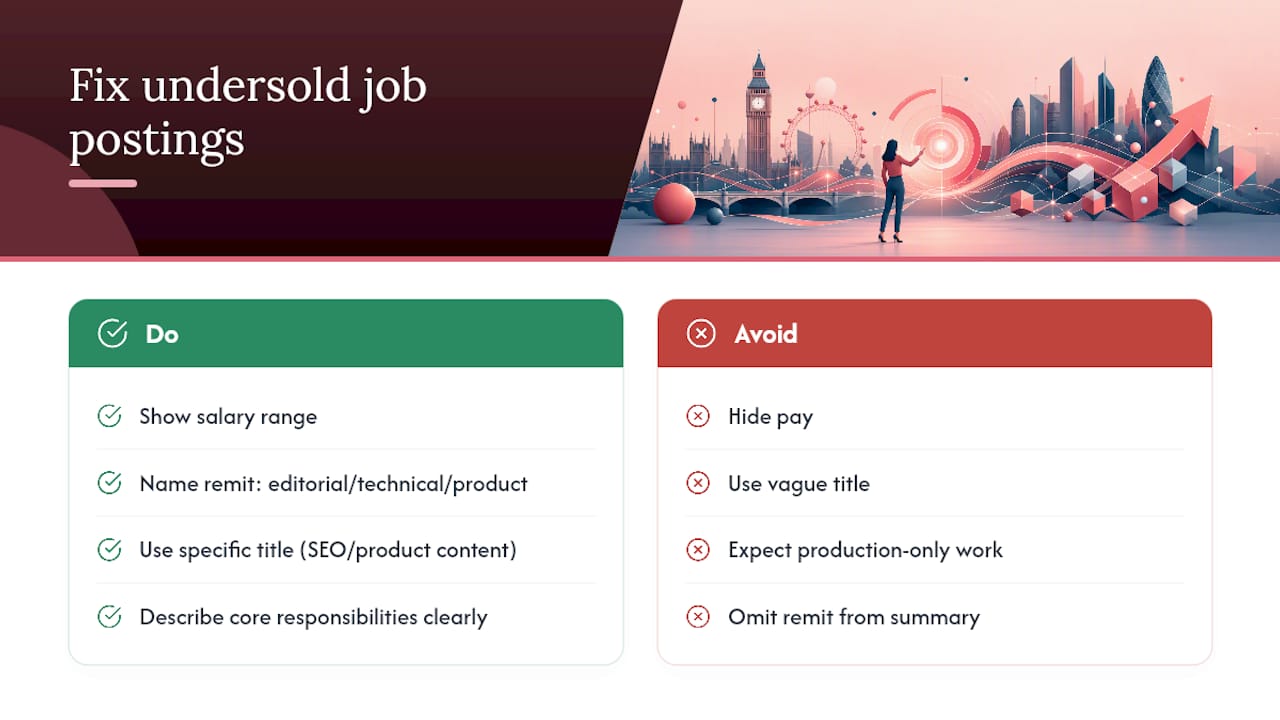
Transparent salary listings fix more of this than people expect. When a posting hides pay, it also tends to hide scope, and candidates respond by assuming the worst on both counts. State the number, state the actual remit (editorial, technical, or product), and you filter out mismatched applicants before the first call ever happens.
Pro Tip: Name the specific remit in your title and summary, “SEO content strategist” or “product content strategist,” instead of a generic label. It attracts people who already have the right instincts.
— Sam
Post a Clearer Job and Hear from Better Candidates
Some job boards include real salary information in their listings rather than placeholders. That single change filters out applicants who would have wasted a hiring manager’s week negotiating pay expectations from scratch, and it puts your posting in front of a curated pool of marketing and content professionals who are actually qualified for the remit you named.
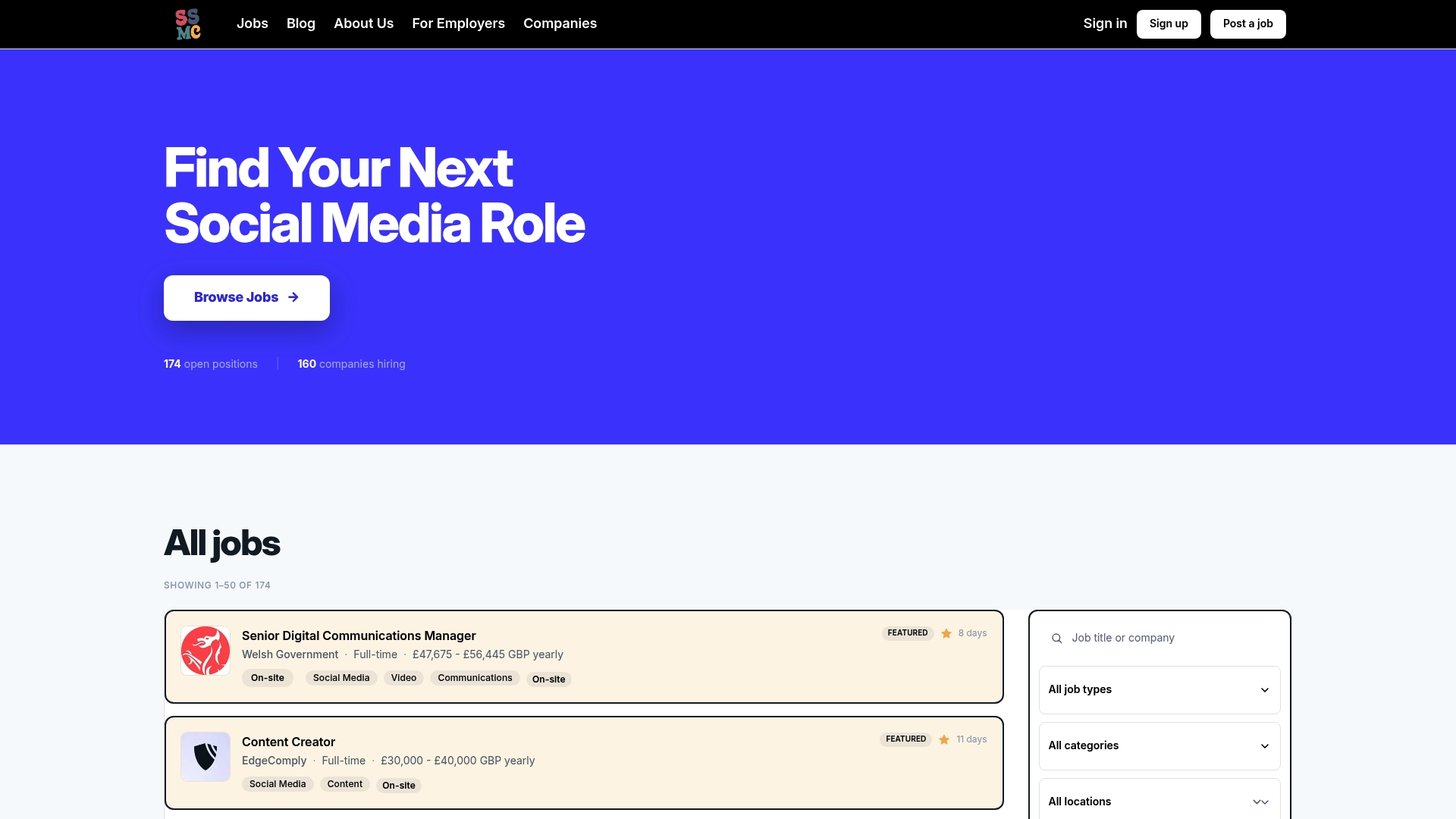
Use the template above to nail down the responsibilities, skills, and KPIs before you post. A tighter job description paired with a transparent salary line does more to improve applicant quality than any amount of extra screening later in the process. You can browse live examples of content strategist postings to see how the structure looks in practice, or compare a senior-level listing against a junior one before writing your own.
When you’re ready, check pricing for Advertise with SSMC and SSMC SUPER to see which listing option fits your hiring timeline, or send us an enquiry if you want help tailoring the job description before it goes live.
Sources
- Content Strategist Salary in United Kingdom | PayScale
- Content strategist
- What Does a Content Strategist Do?
FAQ
What Are the Five Pillars of Content Strategy?
Most frameworks converge on a similar set: audience research, governance, workflow, structure (or taxonomy), and measurement. The UK government’s capability framework groups these into research, planning, governance, execution enablement, and performance analysis, which maps closely onto the same idea.
Do You Need a Degree to Become a Content Strategist?
No formal degree is required. Career guides consistently note that demonstrable process work, like audits, roadmaps, and case studies, matters more to hiring managers than a specific academic background.
What Skills Does a Content Strategist Need?
The core mix includes strategic planning, analytics literacy, SEO fundamentals, and stakeholder management across departments. Governance and content modeling round it out, since someone has to keep dozens of contributors consistent over time.
Is Content Strategy a Good Career Path?
It’s a strong path for people who like connecting research and planning to measurable business outcomes rather than daily production work. Progression runs from junior strategist through senior roles into head of content or content operations leadership, and pay benchmarks from PayScale show clear upward movement with seniority and technical or product remit.
How Much Does It Cost to Post a Job on Sam’s Social Media Club?
Current pricing for job listings, including the standard and SSMC SUPER options, is available on the Sam’s Social Media Club pricing page. Every listing includes mandatory salary transparency as part of the platform’s core model.