Land a UK Role in 12–24 Months: Content Designer Job Description & Pay

A content designer turns complex service requirements into clear, usable content that helps people complete tasks quickly. The role spans associate to head level, covers everything from microcopy to full service journeys, and succeeds when content is clear, accessible and backed by evidence rather than guesswork.
TL;DR:
- Content designers use research and analytics to shape accessible, evidence-based content before service solutions are defined, emphasising consistency and usability.
- Seniority expands scope from individual tasks to full service ownership and includes team management, cross-team influence, and strategic content planning.
- Effective collaboration is integral, involving stakeholders, UX designers, developers, and ongoing monitoring to refine content after launch.
- Success metrics include task completion, form abandonment, readability, and accessibility scores, with deliverables like microcopy, content patterns, and prototypes.
- Salary and career progression range from associate to head, requiring demonstrable impact, mentoring, and cross-disciplinary skills, with current roles clearly listing pay ranges.
Find your next content role. Browse curated opportunities with transparent salaries across social media, content, marketing, and communications. Browse available roles
Table of Contents
- What does a content designer actually do day to day?
- Skills and experience: matching your CV to the person specification
- Role levels from associate to head: what changes at each stage
- How content designers work with the rest of the team
- Outputs, tools and how success gets measured
- Pay by level and how to progress your career
- Turning this job description into a stronger application
- What actually impresses hiring managers right now
- Finding content design roles through Sam's Social Media Club
- FAQ
- Sources
What does a content designer actually do day to day?
Most job adverts describe the same core loop: write, edit and publish content for user journeys, forms, letters and other communications, then test whether it works and refine it. Content designers scope content as part of service design and discovery, which means getting involved before a single line is written, when a team is still figuring out what the service needs to do. Decisions about tone, structure and wording are informed by user research and analytics rather than personal preference, and accuracy, accessibility and plain English are treated as non-negotiable baselines rather than nice-to-haves. Over time, most content designers also build and maintain reusable patterns and templates so teams stop solving the same problem twice.
The Government Digital and Data Profession capability framework sets out this scope clearly, framing content designers as advocates for users who must justify every choice with evidence.
- Write, edit and publish content across digital journeys, forms and service communications.
- Shape content requirements during discovery, before solutions are decided.
- Use research findings and analytics to choose structure, wording and format.
- Check content for accuracy, accessibility and plain English at every stage.
- Build reusable content patterns so teams do not duplicate effort.
Skills and experience: matching your CV to the person specification
Person specifications tend to group skills into four buckets, and mapping your experience against them before you apply saves time later. Craft skills cover plain-English writing, editing and microcopy, the daily tools of the job. Evidence skills cover user research, usability testing and analytics, the proof that your content choices work. Technical familiarity usually means comfort with a content management system, basic HTML and CSS, and accessibility standards such as WCAG. Soft skills, often underweighted by applicants, include stakeholder management, advocacy and collaboration, since content designers spend a lot of time persuading others rather than typing.
- Craft: plain-English writing, editing, microcopy for buttons, errors and confirmations.
- Evidence: user research participation, usability testing, reading analytics dashboards.
- Technical: CMS platforms, basic HTML/CSS, WCAG accessibility standards.
- Soft skills: stakeholder management, advocacy, cross-team collaboration.
- Desirable: prototyping tools, content architecture, sector-specific knowledge.
Pro Tip: List one example per skill bucket on your CV, with a measurable outcome attached, instead of a flat list of adjectives.
Role levels from associate to head: what changes at each stage
Seniority changes three things: scope, strategic input and people responsibilities. An associate content designer typically owns single tasks within a page or form, working under close review. A content designer handles a full journey or small service independently. A senior content designer leads content strategy for a service area and reviews the work of others. Lead and head roles add team management, cross-programme influence and accountability for measurable outcomes across multiple services.
- Associate: single tasks, close supervision, learning research methods.
- Content designer: owns a journey or service end to end.
- Senior: sets content strategy, reviews peers, works across teams.
- Lead/head: manages people, owns outcomes across several services.
Public-sector job ads often map these levels to civil service grades, while private-sector titles vary more by company, so look at the actual duties listed rather than the job title alone.
How content designers work with the rest of the team
Content design rarely happens in isolation. The role sits inside a cycle of discovery, delivery and iteration, with handoffs at each stage.
- During discovery, content designers work alongside user researchers to understand what people struggle with and why.
- In design, they pair with UX and interaction designers to shape journeys, flows and prototypes together.
- Before release, content goes through review with developers and policy experts to check feasibility and accuracy.
- After launch, content designers monitor analytics and research findings to decide what needs iterating.
- Throughout, they advocate for users by presenting evidence to product managers and stakeholders, not opinions.
Outputs, tools and how success gets measured
Typical deliverables include content briefs, reusable content patterns, microcopy, full transactional content and low-fidelity prototypes. Day-to-day tools usually include a CMS, analytics platforms such as GA4, research repositories and sometimes a basic HTML or CSS editor for small fixes. Success is measured through task completion rates, form abandonment, readability scores, A/B test results and accessibility compliance.
- Deliverables: content briefs, patterns, microcopy, transactional content, prototypes.
- Common tools: CMS platforms, GA4 analytics, research repositories, HTML/CSS editors.
- Metrics: task completion, form abandonment, readability, test results, accessibility compliance.
The strongest applications follow a simple structure: state the problem, the test, the result and the measurable outcome, a sequence the capability framework explicitly calls out as the mark of strong candidates.
Pay by level and how to progress your career
Pay varies by sector and region, so treat any figure as a range rather than a fixed number, and check current adverts like the Manchester Digital GDS listing for live examples tied to specific grades. Progression generally runs from content designer to senior, then lead, then head, with some people moving sideways into content strategy or product roles instead. Hiring managers promoting into senior roles look for evidence of mentoring junior colleagues, measurable impact on key metrics and influence across teams, not just years in post.
- Progression path: content designer, senior, lead, head, or a move into content strategy.
- Promotion evidence: mentoring, measurable impact, cross-team influence.
- Pay varies by sector, region and organisation size, so compare current adverts rather than averages.
For a fuller view of how roles and pay evolve over time, our guide to content career progression walks through a realistic 12 to 24 month plan.
Turning this job description into a stronger application
A job description only helps if you use it to shape your CV, portfolio and interview answers.
- Mirror the language from the advert in your CV, and quantify outcomes wherever you can.
- Build a portfolio that shows discovery, the decisions you made, prototypes, testing and the resulting outcome, linking to live examples where possible.
- Prepare two or three short stories for interviews: one about convincing a stakeholder with evidence, one about a testing result that changed your approach, one about fixing an accessibility issue.
- Adapt bullet examples such as "Redesigned a confirmation page based on usability testing, reducing user queries" or "Built a reusable error-message pattern adopted across three services."
Our marketing portfolio templates and interview question guide by role level go into more detail on both steps.
What actually impresses hiring managers right now
Salary transparency changes how candidates behave: when the number is visible upfront, people stop wasting time on roles that were never going to fit and spend that energy sharpening their application instead. What separates strong candidates in 2026 is rarely raw writing ability. It is a portfolio that shows the research behind a decision, a clear account of what changed when the content changed, and comfort working across research, design and development rather than staying in a content lane.
— Sam
Finding content design roles through Sam's Social Media Club
We built Sam's Social Media Club around one frustration: good content design roles get buried in generic job boards, often without any indication of pay until the final interview. Our board features listings with transparent salary information, and roles are vetted before being posted to help ensure relevance to your level and skills.
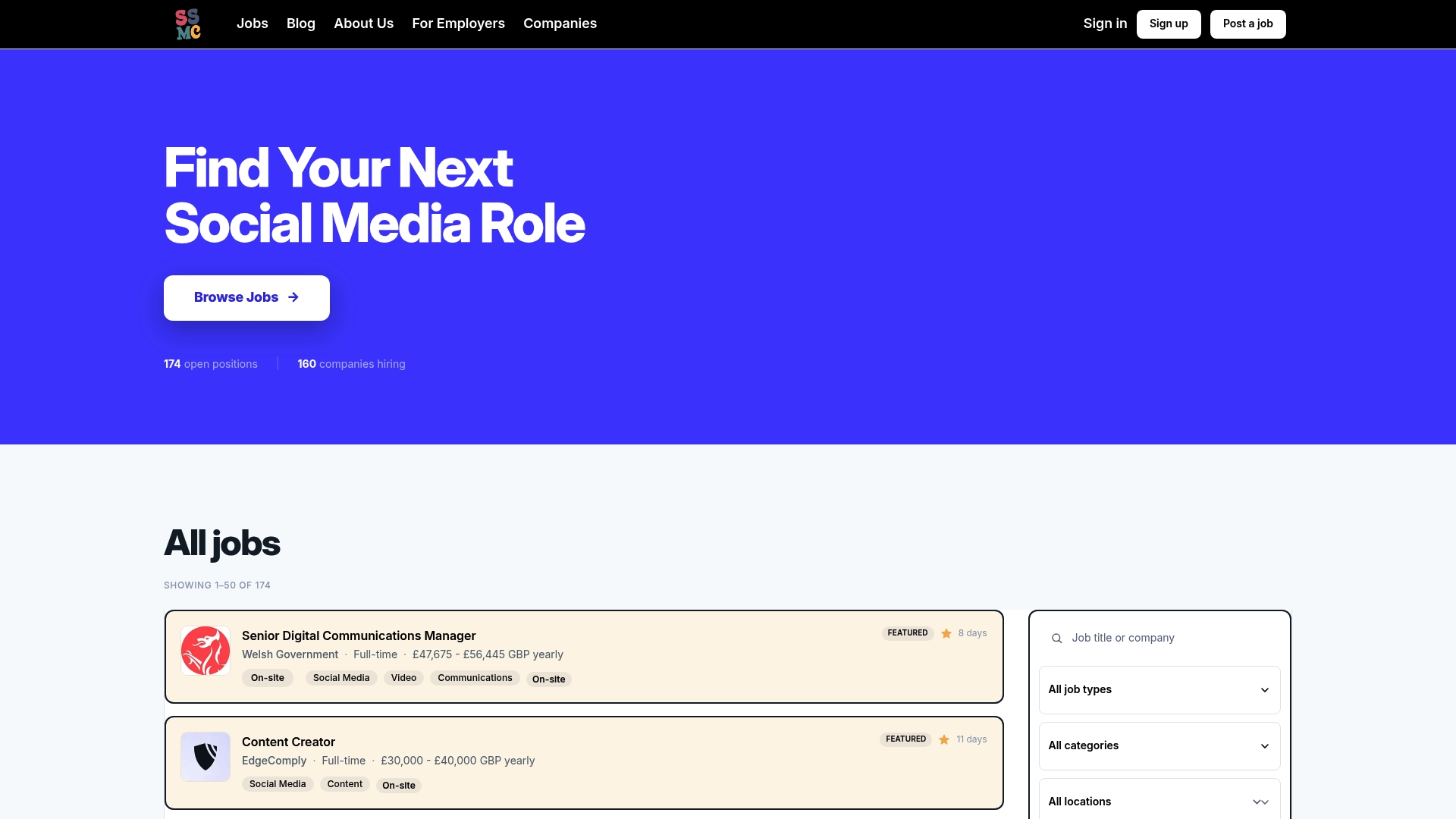
- Browse curated content and marketing roles with mandatory salary ranges attached.
- See the level and pay on every listing before you apply.
- Apply directly to employers who have chosen to post through our board.
If you are hiring rather than applying, our pricing page covers how to advertise with us, including options for wider reach, and our enquiry form is the fastest way to ask about a custom package. Job seekers can start browsing current openings any time through our jobs club.
FAQ
What does a content designer do?
A content designer writes, tests and refines content across digital services, from forms to full user journeys, so people can complete tasks without confusion. The work is guided by user research and analytics rather than personal style, following the scope set out in the Government Digital and Data Profession capability framework.
How much does a content designer get paid?
Pay depends heavily on sector, region and seniority, so it is best checked against current live adverts rather than quoted as a single figure. Postings such as the Manchester Digital GDS role show how pay is tied to specific grades and responsibilities.
What are the essential skills for a content designer?
The core skills are plain-English writing and editing, the ability to use user research and analytics to inform content decisions, and familiarity with a CMS, basic HTML and CSS, and accessibility standards such as WCAG. Stakeholder management and advocacy matter just as much, since much of the role involves making the case for content changes with evidence.
What are the typical responsibilities of a content creator?
Content creator and content designer are related but distinct roles: a content designer focuses on service journeys, forms and transactional content rather than marketing or social content. Typical content design responsibilities include scoping content during discovery, writing and testing microcopy, and building reusable content patterns, as outlined in GOV.UK's content designer guidance.
Sources
- Content designer - Government Digital and Data Profession Capability Framework
- Content designer - GOV.UK service manual (GitHub)