£38k–£45k: UK Communications Manager Job Description with 2 Templates

A communications manager plans and protects an organisation's public and internal messaging, and employers expect this role to deliver consistent media coverage, engaged staff and a steady flow of clear, on-brand content. The title shows up in-house, across public-sector bodies, and inside agencies. Salaries vary by sector and seniority, typically averaging around the low-to-mid £40,000s.
TL;DR:
- Communications managers typically earn around £40,500 annually, with higher salaries in larger organisations or sectors like finance and tech.
- Critical duties include briefing spokespeople, managing internal channels, planning campaigns, and acting as first responders in crises, with crisis response explicitly prioritised in job specs.
- Success metrics focus on media coverage volume and tone, response times, staff engagement rates, and stakeholder satisfaction, with clear targets helping justify budgets.
- Proficiency in media monitoring, content publishing, analytics, and using shared content libraries are key technical skills, especially for senior roles.
- Advancement pathways include moving into strategic director roles, specialising in areas like public affairs, or transitioning into broader marketing leadership.
Find communications roles with clear pay. Explore curated opportunities in communications, content, marketing, and social media, with transparent salary listings for informed career decisions. Explore current opportunities
Table of Contents
- What does a communications manager actually cover?
- What should go on the core responsibilities checklist?
- What skills and qualifications belong in the job spec?
- How does seniority change the remit and the pay?
- How do you write a job description that actually works?
- How should hiring teams run the interview and score it?
- What do interviewers usually check for beyond the answers?
- Is a communications manager a high-pressure job?
- Which KPIs show a communications manager is succeeding?
- Which tools should a communications manager know?
- Where can this role lead next?
- How much budget and authority does the role typically hold?
- What legal and ethical lines does the role need to respect?
- What we've learned reviewing hundreds of comms job posts
- Find or list a comms role with clear pay from the start
- Sources
- FAQ
What does a communications manager actually cover?
The role usually sits between the leadership team and the outside world, with one foot in press and public messaging and the other in staff communication. Media relations mean fielding journalist enquiries, briefing spokespeople and issuing statements. Internal communications cover staff newsletters, intranet updates and messages that keep employees aligned with strategy. External and stakeholder comms stretches to partners, regulators, donors or investors depending on the sector.

Most communications managers also own the editorial calendar: what gets published, when, and through which channel, whether that is a press release, a LinkedIn post or an internal memo. Reporting lines vary widely. In a small charity, the communications manager might report directly to the chief executive and run the function alone. In a larger organisation, they typically report to a director of communications or marketing and manage one or two officers or executives.
What should go on the core responsibilities checklist?
A job description earns its keep when it lists duties a candidate can picture doing on a Tuesday morning, not vague ambitions. The following covers what most comms manager roles ask for, drawn from public and private sector postings.
- Brief spokespeople ahead of interviews and write, edit and issue press releases and statements.
- Manage internal communications channels, including staff newsletters, intranet content and town hall materials.
- Plan and run external campaigns, stakeholder events and community or partner engagement activity.
- Act as first responder for crisis communications, including out-of-hours cover on a rota basis.
- Own the editorial calendar and publishing governance across web, social and print channels.
Crisis response deserves its own line in any job description rather than a buried mention, since it often defines the difference between a calm week and a genuinely hard one. A detailed NHS Trust job specification built around a Band 7 communications manager role lists media relations, internal and external communications, editorial governance, event and VIP visit management, and budget responsibility as core duties, giving a useful benchmark for how thorough a public-sector-style JD can get.
What skills and qualifications belong in the job spec?
Essential and desirable requirements should map to what the person will actually do in month one, not a wish list copied from a template. A degree in a relevant subject helps, but demonstrable writing and media experience carries more weight in most hiring decisions.
- Essential: strong writing and editing, confident media briefing, social publishing across major platforms, and basic analytics reading.
- Desirable: stakeholder management experience, event management, and hands-on intranet or web content system use.
- Typical entry point: three to five years in communications or PR, rising to seven-plus for senior or director-level roles.
- Soft skills that matter: calm decision-making under pressure, sound judgement on what to escalate, and the ability to translate technical or sensitive material into plain language.
How does seniority change the remit and the pay?
Titles blur across organisations, but remit tends to widen in a predictable order: single-channel officer, then generalist manager, then a head of communications role covering strategy, budget and a small team. A "communications manager" and a "corporate communications manager" often do similar work, though the corporate title usually adds investor relations, regulatory messaging or board reporting to the mix.
The average communications manager salary generally falls around £40,500 a year, according to PayScale's salary research, though this varies with sector, company size, and level of strategic responsibility. Public-sector bands, like the NHS Band 7 example above, tend to sit closer to the middle of that range with clearly defined progression points. Private-sector pay, particularly in tech, finance or larger retail groups, can run higher once the role includes executive communications or a direct budget line. For a fuller breakdown across social, content and marketing titles, see what social media and marketing jobs pay.
How do you write a job description that actually works?
A job description that gets the right applicants states outcomes, not just tasks. Instead of "manage media relations," try "build relationships with five to ten key trade journalists and secure regular coverage." That kind of wording tells a candidate exactly what success looks like before they apply.
- Open with a two-sentence purpose statement: what the role exists to achieve, not a list of duties.
- List responsibilities in order of time spent, starting with the biggest chunk of the week.
- State essential versus desirable requirements separately and keep the essential list short.
- Include salary or a salary band, working pattern, and reporting line near the top, not buried at the bottom.
- Add one line on inclusive language: avoid gendered phrasing, unnecessary jargon and inflated experience requirements that discourage strong candidates from applying.
A mid-level sample block might read: "Communications Manager, £38,000 to £45,000, reports to Head of Communications. Own media relations, staff newsletter and event support for a 200-person organisation." A senior sample, closer to the Cisco-style enterprise communications manager listing, would add executive communications, cross-functional planning with product and legal teams, and ownership of a content library with version control.
Pro Tip: Review and republish your job description every quarter, not just when a vacancy opens, since stale wording and outdated salary bands quietly repel strong applicants.
How should hiring teams run the interview and score it?
Behavioural questions reveal more than a portfolio review alone. Ask a candidate to walk through a real crisis they managed, a time they had to influence a senior stakeholder without formal authority, and an example of translating a technical or legal issue into plain language for a general audience.
- Ask for a specific crisis example: what happened, what they decided, and what they would change with hindsight.
- Ask how they persuaded a resistant stakeholder, focusing on the argument they used rather than the outcome alone.
- Set a short task: draft a 300-word external statement or a two-paragraph internal memo on a hypothetical issue, timed to 20 minutes.
Strong answers include specific numbers, named channels and a clear decision trail. Weak answers stay abstract ("I improved communication") without naming what changed or how it was measured. Watch for candidates who cannot describe a mistake or a piece of pushback they received, since that often signals limited real-world exposure to pressure.
What do interviewers usually check for beyond the answers?
Interview panels typically score against a short rubric covering writing sample quality, composure under a timed task, and evidence of judgement rather than just activity. A written test, such as drafting a press statement or an internal memo under time pressure, reliably shows how a candidate thinks and writes when the clock is running rather than how well they rehearsed. For a broader bank of level-specific prompts, see content marketing interview questions across four role levels.

Panels also probe for stakeholder maturity: how a candidate describes disagreements with legal, HR or senior leadership tells you more about fit than a polished answer about "collaboration." Questions that ask for a specific number, a channel name or a deadline tend to separate candidates who have done the job from those who are describing it in theory. A candidate who cannot name a single metric they were judged against in a previous role is worth a follow-up question before moving forward.
Is a communications manager a high-pressure job?
The role carries real workload spikes tied to news cycles, product launches or internal incidents rather than a steady nine-to-five pace. Out-of-hours crisis cover is common, particularly in public-facing organisations or regulated sectors, and a rota system is the usual way employers manage that fairly across the team.
Day-to-day pressure tends to come from competing deadlines rather than any single dramatic event: a press release due the same morning as a staff newsletter and a stakeholder briefing. Organisations that publish clear escalation paths and share out-of-hours duty fairly tend to retain communications staff longer than those that leave the role to absorb everything informally. Candidates weighing an offer should ask directly about on-call frequency and how crisis response is staffed outside office hours.
Which KPIs show a communications manager is succeeding?
Good job descriptions name the metrics a candidate will be judged against rather than leaving success undefined. Common measures include the volume and tone of press mentions, average response time to media enquiries, staff newsletter open rates, and stakeholder satisfaction scores gathered through short surveys.
Setting a concrete target, such as increasing press mentions over a quarter or cutting media response time to a set number of hours, gives both the hiring manager and the candidate a shared definition of a good first year. A guide to measurable campaign KPIs offers useful framing for setting these kinds of outcome-based targets rather than activity counts alone. Communications teams that track a small set of consistent metrics quarter over quarter tend to have an easier time justifying budget and headcount at review time.
Which tools should a communications manager know?
Most roles expect comfort with a mix of media monitoring, publishing and analytics tools rather than deep expertise in any single platform. Media relations work often runs through a press contact database and monitoring service, while internal comms depends on an intranet platform or a dedicated employee communications tool.
Content teams increasingly manage a shared content library with version control and tagging, a practice the Cisco communications manager listing calls out directly alongside AI-assisted drafting and editorial workflow tools. Social publishing schedulers, a basic analytics dashboard and a shared editorial calendar round out the standard toolkit. Employers hiring for a senior role should specify which systems the successful candidate will inherit, since ramp-up time drops sharply when a new hire is not learning three new platforms at once.
Where can this role lead next?
Communications managers typically move in one of three directions: up into a head of communications or communications director role, sideways into a specialist track like public affairs or internal communications leadership, or into a broader marketing director position where communications sits alongside brand and demand generation.
A director-level job description for communications usually adds board reporting, budget ownership across the full function, and line management of multiple managers rather than individual officers. Related roles worth knowing include public relations manager, which leans more heavily toward media and less toward internal audiences, and corporate affairs manager, which adds regulatory and investor-facing work. Employers hiring a manager who is clearly on a director track should say so in the job description, since ambitious candidates read remit and growth potential as closely as salary.
How much budget and authority does the role typically hold?
Budget responsibility scales with seniority and sector rather than following a fixed formula. A mid-level communications manager might control a modest events or agency spend, while a senior manager or director often signs off on PR retainers, media buys and larger campaign budgets. The NHS Trust example cited earlier explicitly assigns budget signatory duties at Band 7 level, showing that budget authority is not reserved for the most senior titles alone.
Scope of authority also covers who has final sign-off on external statements during a crisis, a detail that should be spelled out in the job description rather than left to be worked out under pressure. A job spec that states the spending limit and the sign-off chain saves both the employer and the candidate a difficult conversation after the offer is accepted.
What legal and ethical lines does the role need to respect?
Communications managers regularly handle information that touches data protection, employment law and financial disclosure rules, so knowing when to loop in legal counsel matters as much as writing skill. Statements involving personal data, ongoing investigations or share-price-sensitive information typically require sign-off from a specific function before release, and a job description should name that escalation point.
Honesty in messaging is a professional standard as well as a legal one: overstating results, hiding a material fact from staff, or issuing a statement that misrepresents a situation can expose an organisation to real legal and reputational risk. A well-written job description sets this expectation early, stating that the role holds shared responsibility for accuracy and disclosure rather than treating it as an unwritten assumption.
What we've learned reviewing hundreds of comms job posts
The most common mistake in a communications manager job description is listing tasks without outcomes, which attracts applicants who can perform the activity but cannot show they moved a metric. Clarity on what "good" looks like in month six filters out mismatched candidates before either side wastes time in an interview.
Transparent salary bands and a tightly curated shortlist benefit both sides: employers spend less time on candidates who would have walked away at offer stage, and job seekers stop guessing whether a role is worth their application.
— Sam
Find or list a comms role with clear pay from the start
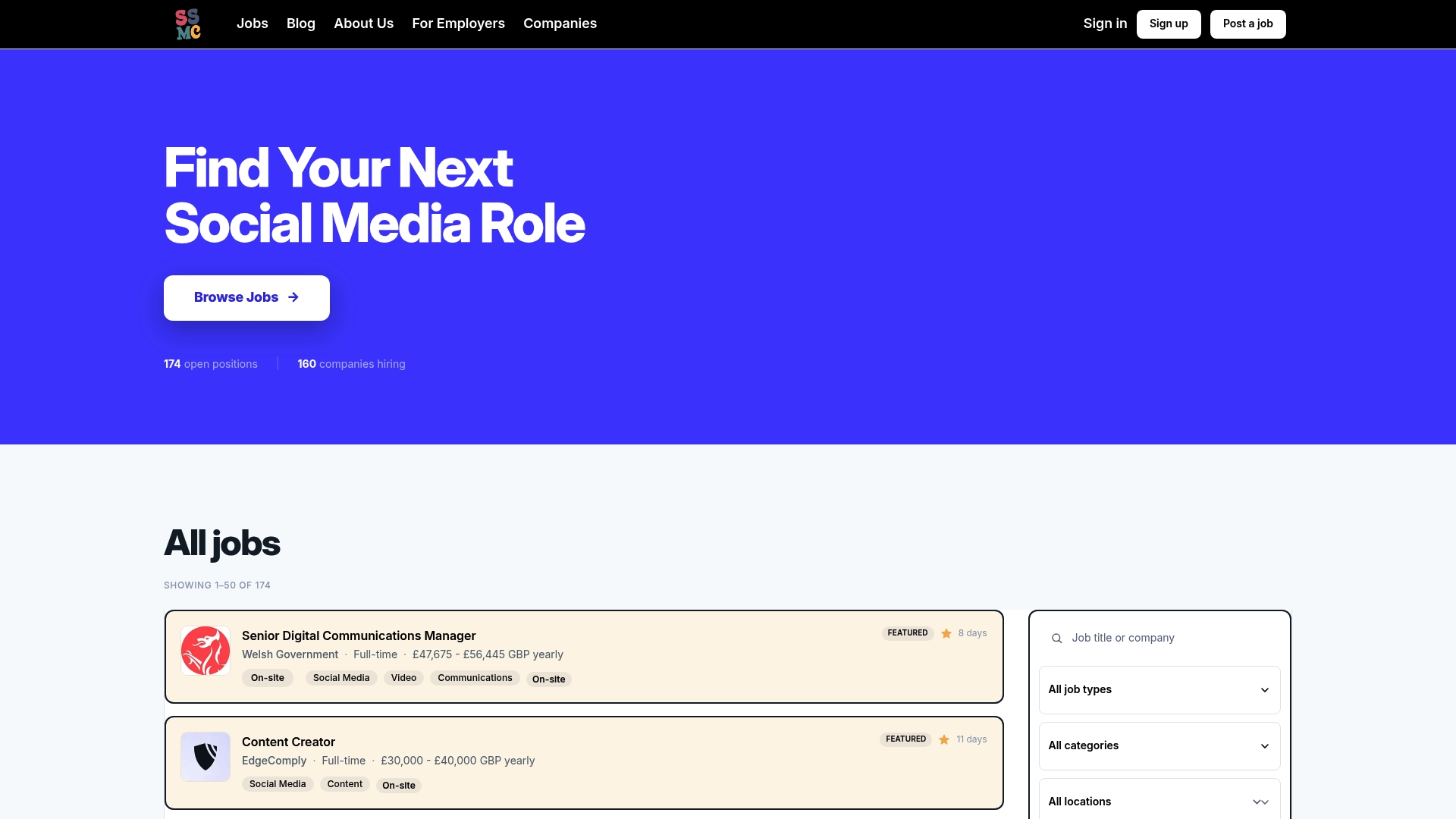
Sam's Social Media Club lists communications, content and marketing roles with the salary shown on every posting, so you know the range before you send an application, and employers get applicants who already know what the role pays.
| What you get | Detail |
|---|---|
| Job seekers | Curated communications roles with salary shown on every listing |
| Employers | Listing options for targeted reach to comms and marketing talent |
| Questions | Enquire about listing a vacancy |
Browse current communications and marketing roles to see how listings look with salary included, or check our pricing if you're hiring and want applicants who already know what the role pays. For a step-by-step hiring process, see how to hire a marketing manager.
Sources
- Communications Manager Salary in United Kingdom | PayScale
- Communications Manager at Cisco — job listing
FAQ
How much do communications managers get paid?
The average communications manager salary is approximately £40,500 a year, according to PayScale's salary data. Pay varies with sector, organisation size and how much strategic or budget authority the role carries.
What is PR manager salary?
PR manager pay tracks closely with communications manager pay since the roles overlap heavily in media-facing duties. Sector, company size and seniority level drive most of the difference between two similarly titled postings.
Is a communications manager a stressful job?
The role includes real pressure points tied to news cycles, launches and crisis response rather than constant stress throughout the year. Out-of-hours cover on a rota basis is common, and organisations that share this load fairly tend to see better retention.
What are the 5 key responsibilities of a manager?
For a communications manager specifically, the core responsibilities are media relations, internal communications, external and stakeholder engagement, crisis response, and editorial calendar ownership. Definitions vary by organisation, but most job descriptions build around this set of five areas.