£38,000–£44,000: Lines to Replace “Competitive Salary” for UK Marketers

Say a specific salary or a narrow, justified range, then list three non-salary benefits such as flexible working, pension contribution and a training budget. The CIPD and GOV.UK both point to this combination as the stronger route to serious applicants, and some job boards now build salary transparency into the listing itself. Below you'll find copy-ready wording and a fillable template.
TL;DR:
- Listing a precise salary or narrow, justified range with clear negotiation terms builds trust and attracts better candidates.
- Including concrete benefits like pension contributions, training budgets, and flexible work options directly in the ad increases application quality and diversity.
- Overly wide salary bands or vague language about pay and flexibility can discourage or mislead candidates, undermining trust.
- Explicit descriptions of flexible arrangements and benefits, rather than generic mentions, significantly boost applicant numbers and inclusivity.
- Replacing "competitive salary" with specific figures and benefits shortens filtering time and results in applicants who are more aligned with the role.
Hiring for a marketing role? Every listing on Sam's Social Media Club shows the salary upfront, so you reach candidates who already know the number works for them. Advertise a role
Table of Contents
- Pay-disclosure wording and examples employers can copy
- Benefits and rewards worth putting front and centre
- How to build salary ranges people actually trust
- Small ad tweaks that widen your applicant pool
- A checklist and template you can paste into your ATS
- What total compensation looks like beyond the base number
- How to talk about pay so candidates believe you
- How different employers are already doing this
- Why I push employers toward specifics, not adjectives
- Post a transparent listing and reach marketing talent directly
- Sources
- FAQ
Pay-disclosure wording and examples employers can copy
Vague phrasing gets vague candidates. Replace "competitive salary" with an actual number or a tight band, then follow it with your best non-salary hooks. Here's how that looks in practice for different levels:
- Entry-level social media coordinator: "£26,000, non-negotiable, reviewed after a six-month probation."
- Mid-level content marketer: "£35,000 to £42,000, depending on portfolio and platform experience."
- Senior marketing manager: "£55,000, negotiable for candidates bringing paid media budgets over £500,000."
A narrow range that tells candidates what separates the bottom from the top of the band works better than leaving a large gap open to guesswork. Save wider bands for roles where the scope of the job itself is still being defined.
Whether pay is negotiable or fixed matters more than most job ads admit. CIPD's inclusive recruitment guidance recommends stating that salaries are non-negotiable as a way to support fairer outcomes, since negotiation tends to favour candidates who are already confident asking for more. If you do allow negotiation, say so plainly and track who ends up where in the band.
Three snippets you can adapt directly:
- "£38,000, fixed. Includes a 6% matched pension and a £1,000 annual training budget for courses or conferences."
- "£45,000 to £50,000 depending on experience with paid social campaigns. Salary is open to discussion for the right specialist skill set."
- "£30,000, non-negotiable. Four-day week, fully remote, plus dedicated creative time built into every sprint."
Benefits and rewards worth putting front and centre
Pay is one line in a job ad. Everything around it is where you actually win a strong content or marketing hire, especially when your salary is honest rather than inflated.
- Pension contributions: state the exact figure, such as "employer pension contribution: 6% matched," instead of "generous pension scheme."
- Flexibility: name the format directly, for example "fully remote," "core hours 10am to 4pm," "compressed four-day week," or "job share considered."
- Training and development: quantify it, such as "£1,500 annual learning budget" or "one paid conference per year plus dedicated portfolio time."
- Bonuses and OTE: describe the structure and cadence, for example "OTE £5,000 per year, quarterly bonus tied to campaign KPIs," so candidates aren't left guessing what "on target" means.
- Creative-role perks: mention equipment allowances, paid time for personal creative projects, or genuine editorial freedom over tone and format.
GOV.UK's guidance on advertising flexible working points to employer case studies where naming specific flexible arrangements, rather than a generic mention of "flexibility," led to more applications from women. Vague language reads as a hedge. Specific language reads as a commitment.
Pro Tip: List your training budget as a number, not a promise: "£1,000 per year" earns more trust than "we invest in your development."

How to build salary ranges people actually trust
Range width is where most job ads quietly undermine themselves. A band that spans £30,000 to £60,000 tells a candidate almost nothing about where they'd actually land, and legal guidance on pay transparency warns that overly wide bands backfire, inviting follow-up questions and risking a sense of unfairness once someone is hired.
Typical justifications for where someone lands in a band include:
- Specialist tools or platforms the candidate already knows (Sprout Social, Hootsuite, Adobe Premiere at an advanced level).
- Years of directly relevant experience in the specific channel or industry.
- A portfolio that demonstrates measurable campaign results.
CIPD's own research on pay transparency found that only 41% of organisations always share salary ranges in external job adverts, which means most candidates are still applying blind. Publishing a band, even a narrow one, already puts you ahead of most competitors for talent.
A sample sentence to include in the advert itself: "This role sits within a £38,000 to £44,000 band; placement depends on platform experience and campaign portfolio, and the band is reviewed annually."
Small ad tweaks that widen your applicant pool
The wording around your job ad matters as much as the number inside it. A government-run trial on advertising flexible working found that adding prompted-choice fields, meaning a simple checkbox or line asking "Is this role open to flexible working?", increased both the likelihood employers advertised flexibility and the number of applicants, with a notable rise among women. Try these changes one at a time so you can see what moves the needle:
- Add a prompted-choice line to your job template: "This role is open to: full-time / part-time / job share / compressed hours (select all that apply)."
- Include one inclusive sentence that removes stigma from flexible or part-time applicants, such as "We assess all applications on the strength of the work, regardless of the hours pattern chosen."
- A/B test three versions of the same ad: one mentioning flexibility explicitly, one stating salary is negotiable, and one showing applicant counts to date, then compare application volume and candidate diversity across all three.
Prompted-choice fields and explicit flexible-working descriptions increased the likelihood employers advertised flexibility and increased applicant numbers, particularly from women. BEIS research on advertising jobs as flexible
A checklist and template you can paste into your ATS
Consistency across job ads matters more than any single clever line. Use this checklist to brief hiring managers before a role goes live:
- Publish a specific salary or a narrow, justified range.
- State clearly whether pay is negotiable or fixed.
- List every flexibility option that genuinely applies to the role.
- Name pension contribution and training budget as concrete figures.
- Add one inclusive sentence covering flexible or part-time applicants.
- Signpost any development budget or conference allowance.
A short template to adapt:
- Salary: [amount or range]
- Negotiable: [yes / no, and on what basis]
- Flexibility: [remote / hybrid / core hours / job share]
- Pension: [employer contribution %]
- Training budget: [amount per year]
- Bonus/OTE: [amount and cadence]
- Inclusive statement: [one sentence on flexible or part-time applicants]
Our own guide on radical transparency in job postings walks through a longer version of this template if you're briefing multiple hiring managers at once.
What total compensation looks like beyond the base number
Base salary is only part of the picture, and for smaller companies or startups it's often not the most persuasive part. Equity, profit sharing and performance bonuses can matter as much as the headline figure, provided you describe them honestly rather than gesturing at "upside."
If you offer equity, state the mechanism: is it share options with a vesting schedule, or a profit-sharing pool distributed annually? Vague mentions of "equity available" tend to be discounted by candidates who have seen the term used loosely before. The same goes for profit sharing: state whether it's tied to company-wide performance, team targets or individual KPIs, and roughly how often it pays out.
For marketing and content hires specifically, total compensation conversations often include things salary tables don't capture, such as creative ownership over a brand's voice, or a guaranteed say in campaign direction. These aren't monetary, but they influence whether a candidate sees the role as a step up. Framing base salary alongside these other levers, rather than in isolation, gives candidates a fuller picture of what they're actually being offered and avoids the trap of overselling a number that doesn't tell the whole story on its own.
How to talk about pay so candidates believe you
Transparency only works if it reads as trustworthy rather than performative. Candidates have seen enough padded job ads to recognise the difference between a genuine commitment and a line inserted to sound progressive.
The most reliable way to build that trust is specificity applied consistently, not just in the salary line but everywhere pay-adjacent claims appear. If you say training budgets exist, name the amount. If you say a bonus is achievable, name the KPI it's tied to. If you say a range is based on experience, say what kind of experience moves the needle.
There's also a legal dimension worth naming plainly: the UK government has been consulting on requiring employers to publish salary information in job adverts or provide it before interview for roles that aren't otherwise advertised. Getting ahead of that shift now, rather than scrambling to comply later, tends to read to candidates as genuine rather than reactive. Consistency across your careers page, job ads and interview conversations matters too: a candidate who sees one number in the ad and hears a different one at interview will assume the worst, even if the discrepancy was accidental.
How different employers are already doing this
The shape of a competitive alternative to "competitive salary" changes depending on who's hiring. A five-person startup rarely has the cash reserves to top market rate, so the honest move is naming a modest salary and being explicit about equity, autonomy and speed of career growth instead of dressing up a low number.
Mid-sized marketing agencies tend to lean on structured progression: a narrower salary band paired with a clearly stated review cadence, plus named training budgets, since agency talent often moves for skill development as much as pay. Larger organisations, including big-name employers referenced in GOV.UK's own case studies, have used flexible-working case studies from companies like Zurich and John Lewis to show that naming specific arrangements, rather than a vague nod to "flexibility," draws in more applicants.

For content and social media roles specifically, the alternative that tends to land best combines a fixed or narrow salary with creative-specific perks: equipment stipends, paid time for personal projects, or a stated say over brand voice. None of these approaches require a bigger budget than "competitive salary" implies. They just require naming what's actually on offer.
Why I push employers toward specifics, not adjectives
Every transparent listing I've watched go live gets a different kind of applicant: people who already know the number works for them, so the conversation moves straight to fit. That's why Sam's Social Media Club requires salary disclosure on every listing: it narrows the applicant pool to people who are actually qualified and interested.
If you only change one thing this week, change the salary line and watch what happens to applicant quality.
— Sam
Post a transparent listing and reach marketing talent directly
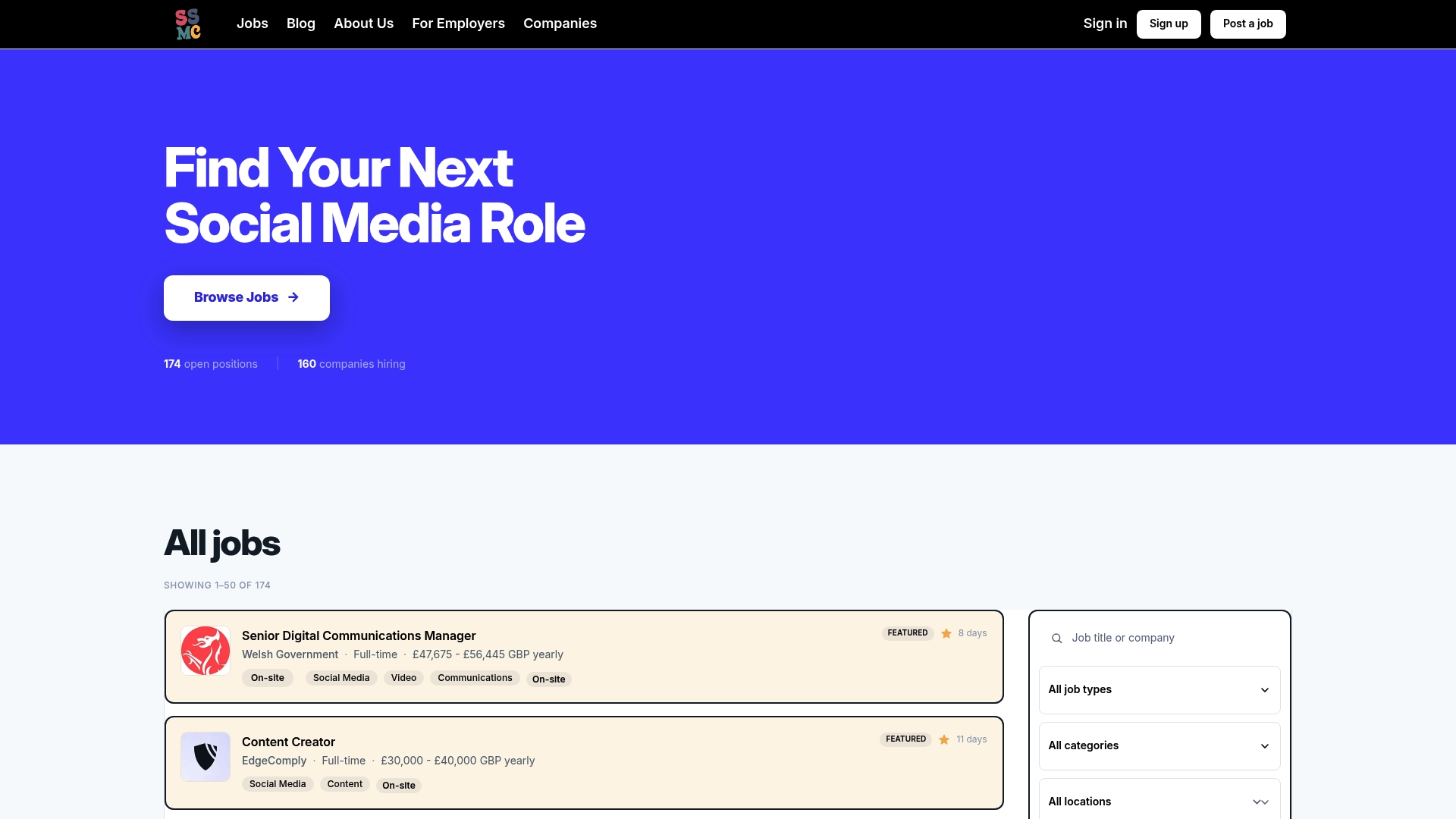
Every listing on Sam's Social Media Club requires a real salary or range, so employers who follow the wording in this article are already set up to post well. That means less time filtering out mismatched applicants and more time talking to candidates who already know what the role pays and chose to apply anyway.
- Use the checklist and template above to draft your next ad before you post it.
- See listing options, including wider-reach packages, on our pricing page.
- Not sure where to start? Send us a quick enquiry and we'll help you get the listing live.
If you're also hiring outside the UK, Expand to South Africa's pricing guidance is a useful reference for structuring offers across borders.
Sources
- Encouraging employers to advertise jobs as flexible - BEIS research
- Advertise flexible working arrangements in job adverts - GOV.UK
- Pay performance and transparency - CIPD
- Salary transparency in job adverts - Barker Booth & Eastwood Solicitors
- Inclusive recruitment guidance - CIPD
FAQ
What should I write instead of "competitive salary" in a job ad?
State a specific salary or a narrow, justified range, then note whether it's negotiable and list a few concrete non-salary benefits. This gives candidates enough information to self-select, which improves the quality of who applies.
How wide should a salary range be in a job posting?
Keep it narrow enough that a candidate can see roughly where they'd land, and explain what moves someone up the band. Legal guidance on pay transparency warns that overly wide bands invite disputes and damage trust once someone is hired.
Does advertising flexible working actually increase applications?
Yes. A government trial on advertising jobs as flexible found that naming specific flexible arrangements increased applicant numbers, with a particular rise among women.
Should salary be negotiable or fixed in a job listing?
Both approaches work, but CIPD's inclusive recruitment guidance suggests fixed salaries support fairer outcomes, since negotiation tends to favour already-confident candidates. If you allow negotiation, track outcomes to check for disparities.
How does Sam's Social Media Club handle salary transparency?
Sam's Social Media Club requires every employer to publish a real salary or range on their listing before it goes live. Pricing for posting a listing is available on the pricing page.