Six Social Media Skills Employers Screen for on Resumes (UK Validated)

Six skill clusters cover what employers screen for on a social media resume: strategy and planning, content and creative production, community and communications, paid social and partnerships, analytics and optimisation, and operations, governance and collaboration. Pick four to six that match the role you want, and attach a measurable achievement to each one before you submit anything.
TL;DR:
- Employers prioritise outcome-driven skills over platform familiarity, expecting clear evidence of measurable results for each claimed competency.
- Resumes should include specific achievements, metrics, and relevant keywords aligned with six core skill clusters, not just platform names.
- Entry-level candidates should emphasise content production and reporting, while managers need to showcase strategy, budget ownership, and stakeholder management.
- Quantifiable metrics like engagement rates, campaign ROI, and follower growth strengthen social media skill claims and improve ATS recognition.
- Using a structured, industry-aligned framework based on recognised qualifications helps identify matching roles and enhances credibility during interviews.
Find roles that match your skills. Explore curated social media, content, marketing, and communications jobs with transparent salary listings and relevant opportunities. Explore curated job listings
Table of Contents
- What employers actually mean by "social media skills"
- A grouped social media skills list you can copy for your resume
- How to list and quantify these skills on your resume
- Which skills to lead with at each career stage
- Why this taxonomy tracks industry standards, not guesswork
- A note on how curated job listings read skills
- Finding roles that match these skills
- FAQ
- Sources
What employers actually mean by "social media skills"
Employers reading a resume rarely care whether you know a platform's interface. They care whether you can turn a business objective into the right channel, the right content, and a decision you can defend with a number. That is the standard Skills England's apprenticeship profile uses for digital marketing roles: it treats platform familiarity as a baseline and weighs outcome-oriented, transferable capability far more heavily.
In practice, that means hiring managers expect a mix of hard technical skills and softer, harder-to-fake judgement calls:
- Technical execution: scheduling, paid ad setup, reporting dashboards, basic editing software.
- Judgement calls: choosing a channel for a specific audience, reading a community's mood, deciding when a campaign needs to pivot.
- Communication under pressure: handling a public complaint or a fast-moving crisis without a script.
When you apply, map each claim on your resume to evidence you can produce if asked: a screenshot, a report, a before-and-after metric. A list of skills with nothing behind it reads as filler to anyone who has hired for this role before.
A grouped social media skills list you can copy for your resume
Industry qualifications group social capabilities the same way hiring managers do. The CIM Level 4 module specification organises the discipline into six practical clusters rather than one long undifferentiated list, which is exactly the structure that makes a resume easy to scan.
Strategy and planning covers campaign planning, audience targeting, channel selection and competitive research. This is where you show you can decide, not just execute.
- Led cross-channel strategy across three platforms, increasing qualified traffic by 24% over two quarters.
Content and creative production covers copywriting, short-form video editing, photography direction and accessibility practices like captioning and alt text. Employers want proof you can produce at a sustainable pace, not just one good post.
- Produced a weekly short-form video series that reached 50,000 views and 3,200 engagements per month.
Community and communications covers moderation, conflict resolution, social listening and tone consistency across a brand voice. A Skills England occupational profile for digital community managers lists conflict resolution, crisis response and cybersecurity awareness as core duties that rarely make it onto a standard skills list, which makes them a useful differentiator when you do include them.
- Managed a 12,000-member community, improving sentiment scores by 15% over six months.
Paid social and partnerships covers ad platform management, audience targeting, budget pacing and creator or influencer partnerships. Agencies that handle paid strategy for clients often stress the same point: a resume bullet should name the targeting logic, not just the spend. EVOLVE Commerce's guidance on social advertising strategy is a useful reference if you want to sharpen how you describe campaign structure before you write your own bullets.
- Ran paid campaigns on a £15,000 quarterly budget, delivering a 4.2x return on ad spend.
Analytics and optimisation covers reporting, UTM tracking, A/B testing and translating numbers into next steps. Sprout Social's research on social media skills names data storytelling as one of the functional capabilities employers increasingly expect alongside listening and creative direction.
- Built a performance dashboard and ran A/B tests on ad creative, improving click-through rate by 18%.
Operations, governance and collaboration covers content calendars, asset management, legal and compliance review, and cross-team coordination with legal, PR or product. This cluster is the one most resumes skip entirely, which makes it worth a line if you have done it.
Pro Tip: Write one bullet per cluster you claim, not one bullet per platform. "Managed Instagram and TikTok" tells an employer nothing; "ran paid campaigns with measurable ROAS" does.

How to list and quantify these skills on your resume
Getting the skills onto the page in a way that survives both an applicant tracking system and a human reader takes a few deliberate steps.
- Put core skills in a dedicated skills section so they are scannable, then prove the strongest two or three inside your work experience bullets with a result attached.
- Quantify with metrics that match the cluster: audience growth, engagement rate change, click-through rate, conversions, campaign budget and return on spend. Coursera's resume guidance for social media managers recommends matching the metric to the skill you are proving rather than defaulting to follower count, which tells an employer little on its own.
- Avoid metrics you cannot substantiate. If you do not have a number, describe the outcome in plain terms instead of inventing a percentage.
- Mirror the job description's cluster language. If a posting says "paid social," use that phrase rather than a synonym, since many employers still screen resumes with keyword matching before a human reads them.
- Name platforms only when the role calls for them. A generic "social media platforms" line adds nothing; naming the specific tool you used to run a campaign does.
A portfolio link showing the actual content, reports or campaign results behind your bullets carries more weight than any adjective you could add to a skills list.
Which skills to lead with at each career stage
The clusters above matter differently depending on where you sit in your career, and CIM's qualification structure tracks this progression directly: entry roles concentrate on execution, senior roles add strategy, budget ownership and compliance responsibility.
- Entry-level: lead with content production cadence, platform familiarity and basic reporting. Show you can execute reliably before you claim you can strategise.
- Specialist: lead with campaign optimisation, paid execution and partnership management. This is where A/B testing and targeting precision matter most.
- Manager: lead with strategy, budget ownership, stakeholder management and compliance oversight. At this level, a resume that only lists content skills reads as underqualified.
Check our guide to landing a social media role for more on tailoring these priorities to a specific application.
Why this taxonomy tracks industry standards, not guesswork
This six-cluster structure is not an arbitrary way to organise a list. It mirrors how qualification bodies and labour-market frameworks already describe the discipline.
- The CIM Level 4 specification groups capabilities into the same six headings used throughout this list.
- Skills England's apprenticeship standard reinforces the same emphasis on outcome-oriented capability over platform familiarity.
- Sprout Social's research highlights social listening, data storytelling and creative direction as functional capabilities that show up across roles, which lines up with the community, analytics and content clusters here.
If you are asked in an interview about training or certifications, pointing to a recognised framework like this gives your answer more weight than naming a course title alone.
A note on how curated job listings read skills
Reviewing social media job postings for years has shown us the same pattern: listings that hide salary and bury requirements attract mismatched applicants on both sides. Use the six clusters above to filter job alerts toward roles that actually match your strengths, and test a few phrasing variations across applications to see which lands.
— Sam
Finding roles that match these skills
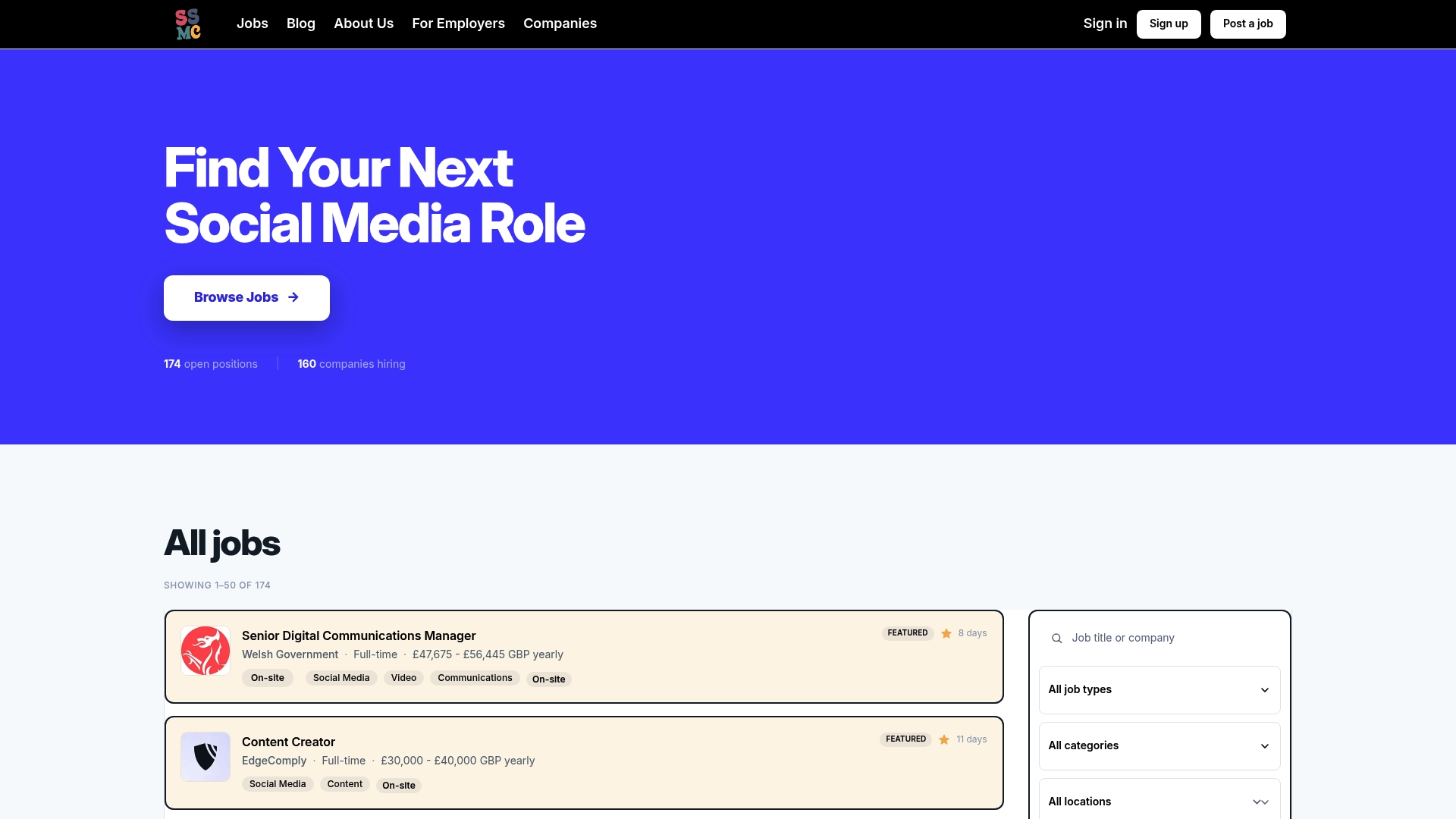
We built Sam's Social Media Club around transparent salaries and curated listings, so once you know which clusters to lead with, you can search for roles that actually state what they pay and what they expect.
| Where to go | What you get |
|---|---|
| Browse jobs | Curated social media and marketing roles with salary shown upfront |
| Advertise with SSMC | Listing options for employers hiring social and content talent |
| Enquiry page | Direct contact for job seekers or employers with questions |
FAQ
What skills are needed for social media?
Employers look for a mix across six areas: strategy and planning, content and creative production, community and communications, paid social and partnerships, analytics and optimisation, and operations or governance. The strongest resumes pick a handful of these and back each with a measurable result rather than listing every platform name.
How do I list social media skills on a resume?
Put your core skills in a dedicated skills section, then prove the two or three strongest ones inside your work experience bullets with a specific metric attached. Mirror the exact cluster language used in the job posting so both the applicant tracking system and the hiring manager recognise the match.
What are 10 examples of skills?
Ten practical examples are campaign planning, copywriting, video editing, community moderation, social listening, paid ad targeting, creator partnership management, performance reporting, A/B testing, and content calendar management. Each belongs to one of the six clusters employers screen resumes against.
What are the different types of social media skills?
Social media skills generally split into strategic skills (planning, targeting), creative skills (writing, editing, design), relational skills (community management, partnerships), technical skills (paid ads, analytics, UTM tracking) and operational skills (scheduling, compliance, cross-team collaboration). Most job postings expect a blend rather than depth in just one.
Sources
- Sprout Social — Social media skills
- CIM — Level 4 award in social media marketing (module specification)
- Skills England — Apprenticeship standard (digital marketer)
- Coursera — Social media manager skills (career guidance)