10 Ready-to-Copy Social Media Job Ad Examples for UK Recruiters

This page gives you ten ready-to-copy social media job ad examples across formats, three plug-and-play templates (short, mid, and long), and a posting checklist you can use today. It also covers flexible working, pay-transparency expectations, and responsible AI use in recruitment, so your adverts stay compliant and inclusive while you post.
TL;DR:
- Including a clear salary range and flexible working options in the top line of a job ad significantly increases qualified applications across all social media platforms.
- Using behaviour-based criteria instead of vague personality traits broadens the applicant pool and reduces unintentional filtering of qualified candidates.
- Displaying salary information from the first line and maintaining transparency can improve click-through rates, quality of applications, and reduce time-to-hire.
- Automated targeting and bidding on social media can skew applicant demographics, so reviewing AI and ad settings is essential for responsible recruitment.
- Curating the audience for each role ensures higher-quality applicants, while consistent use of honest, straightforward language improves candidate engagement regardless of format.
Want your ad in front of the right people? Sam's Social Media Club puts salary-transparent roles in front of social media, content, marketing and communications professionals. Advertise a role
Table of Contents
- 1. Top 10 social media job ad examples (ready-to-copy captions and ad copy)
- 2. Three plug-and-play templates and copy formulas (short, mid, and long)
- 3. Inclusive language, behaviour-based criteria, and screening cautions
- 4. Posting checklist and five sample posts ready to schedule
- 5. What running a curated job board taught us about social ads
- Why most "job ad tips" miss the real problem
- How Sam's Social Media Club can help you publish these ads
- FAQ
- Sources
1. Top 10 social media job ad examples (ready-to-copy captions and ad copy)
Each example below pairs a role hook with one concrete benefit and a clear call to action. Swap in your own job title, salary range, and link, and the structure holds.
- LinkedIn text post: "We're hiring a Social Media Manager, £38,000 to £45,000. Hybrid, 2 days in-office. Tell us about a campaign you're proud of. Apply: [link]." Pairs with a simple headshot-style photo or team image.
- Instagram static caption: "Content creator wanted. £32k-£38k, flexible hours from day one. Link in bio to apply." Use a bold, on-brand graphic with the salary visible.
- Instagram story: "We're hiring! Tap the link for our open Social Media Coordinator role, salary listed on the post." Use a quick poll sticker ("Would you thrive here?") to boost engagement.
- TikTok caption/video prompt: "POV: you finally found a marketing job with a published salary. Social Media Executive, £30k-£34k. Comment 'hire me' for the link." Pairs with a 15-second behind-the-scenes clip.
- X (formerly Twitter) short post: "Hiring: Social Media Lead. £42k-£48k. Remote-first. Apply by Friday: [link]." Keep it under 280 characters with no image required.
- Facebook paid ad headline and copy: Headline: "Social Media Strategist, £40,000." Copy: "Join a team that lists real salaries and means flexible working. Apply now: [link]." Pairs with a short video of current staff.
- Carousel slide text (4 slides): "Slide 1: The role. Slide 2: The salary. Slide 3: The team. Slide 4: How to apply." Works well on Instagram and LinkedIn with a branded template.
- Infographic headline: "5 reasons to apply for our Social Media Manager role" followed by bullet icons for salary, flexibility, benefits, team size, and growth path. Pairs with a single shareable graphic.
- Short video ad script (15 to 30 seconds): Open on a team member saying, "We publish our salaries because we think you deserve to know what you're worth." Cut to role details on screen, close with the apply link.
- Boosted post CTA: "Still scrolling? This Social Media Coordinator role pays £33k-£37k and offers 3 days remote. Apply here: [link]." Works as a small-budget boost on Facebook or Instagram targeting marketing and communications interests.
Keep the language behaviour-based rather than personality-based across every format: describe what someone will do, not who they supposedly are.
2. Three plug-and-play templates and copy formulas (short, mid, and long)
Use these as starting formulas and fill in the brackets with your own details.
- Short caption template (Instagram, X, boosted posts): "[Job title] wanted. [Salary range]. [One flexible working line]. Apply: [link]." Example: "Content Lead wanted. £36k-£41k. Hybrid, flexible start times. Apply: [link]."
- Mid-length LinkedIn template: "We're hiring a [job title] to [top responsibility]. You'll need [one measurable requirement, not a personality trait]. Salary: [range]. Flexible working available from day one. Tell us about a time you [relevant behaviour]. Apply: [link]." This format favours outcomes over adjectives and performs well with a recruiter photo or team shot.
- Long paid-ad template: "[Job title], [salary range]. We're looking for someone to [top responsibility] within a team of [size]. Benefits include [2-3 concrete benefits]. We list salary ranges on every role and support flexible and hybrid working. Apply: [link]." For the salary line, include at minimum a starting range, since the UK is moving toward requiring salary information in job adverts, and getting ahead of that now avoids a rewrite later.
Need more wording ideas for the pay line? See what to write instead of "competitive salary" and the six benefits every job ad should name.
3. Inclusive language, behaviour-based criteria, and screening cautions
Vague personality traits in job ads quietly filter out qualified candidates before they ever apply. Replacing them with observable, behaviour-based criteria is one of the more reliable ways to widen your applicant pool, according to CIPD inclusive recruitment guidance.
- Rewrite "a natural self-starter" as "has managed a project from brief to delivery without daily oversight."
- Rewrite "thrives under pressure" as "has hit a hard deadline on a live campaign at least once."
- Rewrite "a strong leader" as "has directed the work of at least one other person or freelancer."
- Rewrite "assertive" or "dominant" as "comfortable pushing back on a brief when the data doesn't support it," since removing masculine-coded words like these has a bigger effect on attracting female applicants than removing feminine-coded ones, per the same CIPD guidance.
Avoid reviewing a candidate's personal social media profiles before making an offer. CIPD research notes this practice can undo the benefits of an anonymised shortlisting process and tends to reduce call-backs for marginalised applicants; save any informal checks for after the offer stage. If you're running targeted social ads, be aware that automated bidding can skew who sees your advert, and GOV.UK guidance on responsible AI in recruitment recommends risk-assessing your targeting settings and clearly signposting where AI tools are used in the process.
Pro Tip: Before you publish, read your job ad out loud. If a sentence describes a personality rather than an action, rewrite it.

4. Posting checklist and five sample posts ready to schedule
Run through this list before you hit publish: salary or range, a flexible working line, an EDI statement that invites applicants rather than just stating policy, a link to the full role, an image sized for the platform, alt text describing the image, a clear CTA, and a budget and duration if you're boosting the post.
- Sample 1 (Instagram): "Social Media Executive, £29k-£33k. Flexible hours, hybrid welcome. Apply: [link]." Alt text: "Team celebrating around a laptop in a bright office." Hashtags: #SocialMediaJobs #MarketingCareers
- Sample 2 (LinkedIn): "We're hiring a Content Manager, £44k-£50k. Remote-first, flexible from day one." Alt text: "Content calendar on a whiteboard with team notes." Hashtags: #ContentJobs #RemoteWork
- Sample 3 (Facebook, boosted): "Community Manager wanted. £31k-£35k. Apply today: [link]." Alt text: "Phone screen showing a brand's social feed." Hashtags: #CommunityManager #NowHiring
- Sample 4 (X): "Social Media Coordinator, £28k-£32k, hybrid. Apply by Friday: [link]." No image required.
- Sample 5 (TikTok): "We pay fair and tell you upfront. Social Media Lead, £40k-£46k." Alt text not applicable for video; include an on-screen caption instead.
For timing, early-week mornings tend to draw stronger engagement for job content, and a small boost budget run over 3-5 days usually outperforms a single large spend, as noted in guidance on planning paid social campaigns.
5. What running a curated job board taught us about social ads
Working with employers across social media, content, and marketing roles, we've seen the same pattern repeat: ads that lead with a real salary range get stronger, more qualified applications than ads that bury pay below the fold. We watch three numbers most closely: click-through rate, quality-adjusted application rate, and time-to-hire. All three tend to move together when the salary is visible from the first line.

Why most "job ad tips" miss the real problem
Most advice on social media job ads focuses on format: use video, use a carousel, post at 9am. That's fine as far as it goes, but it treats the symptom, not the cause. The real reason job ads underperform is that they describe a type of person instead of a set of actions, and they hide the one piece of information every candidate actually wants first: the pay.
Flexible working and salary transparency aren't soft perks to mention after the job description. GOV.UK's own examples show how dramatically they change who applies, and that effect dwarfs anything a clever caption or trending audio can do. If you only have time to fix one thing before your next post goes live, fix the first line: put the salary and the flexibility in it, not the adjectives.
The industry's obsession with platform-specific "hacks" also distracts from a simpler truth: a well-written, honest ad works across every platform, because the thing that converts a scroller into an applicant isn't the format, it's whether they can tell in five seconds if the job is for them.
— Sam
How Sam's Social Media Club can help you publish these ads
Writing a good ad is only half the job: getting it in front of the right social media, content, and marketing professionals is the other half. We post your listing with mandatory salary visibility built in, so every candidate who clicks already knows the range, and share it with a targeted community of creative and communications professionals rather than a general audience.
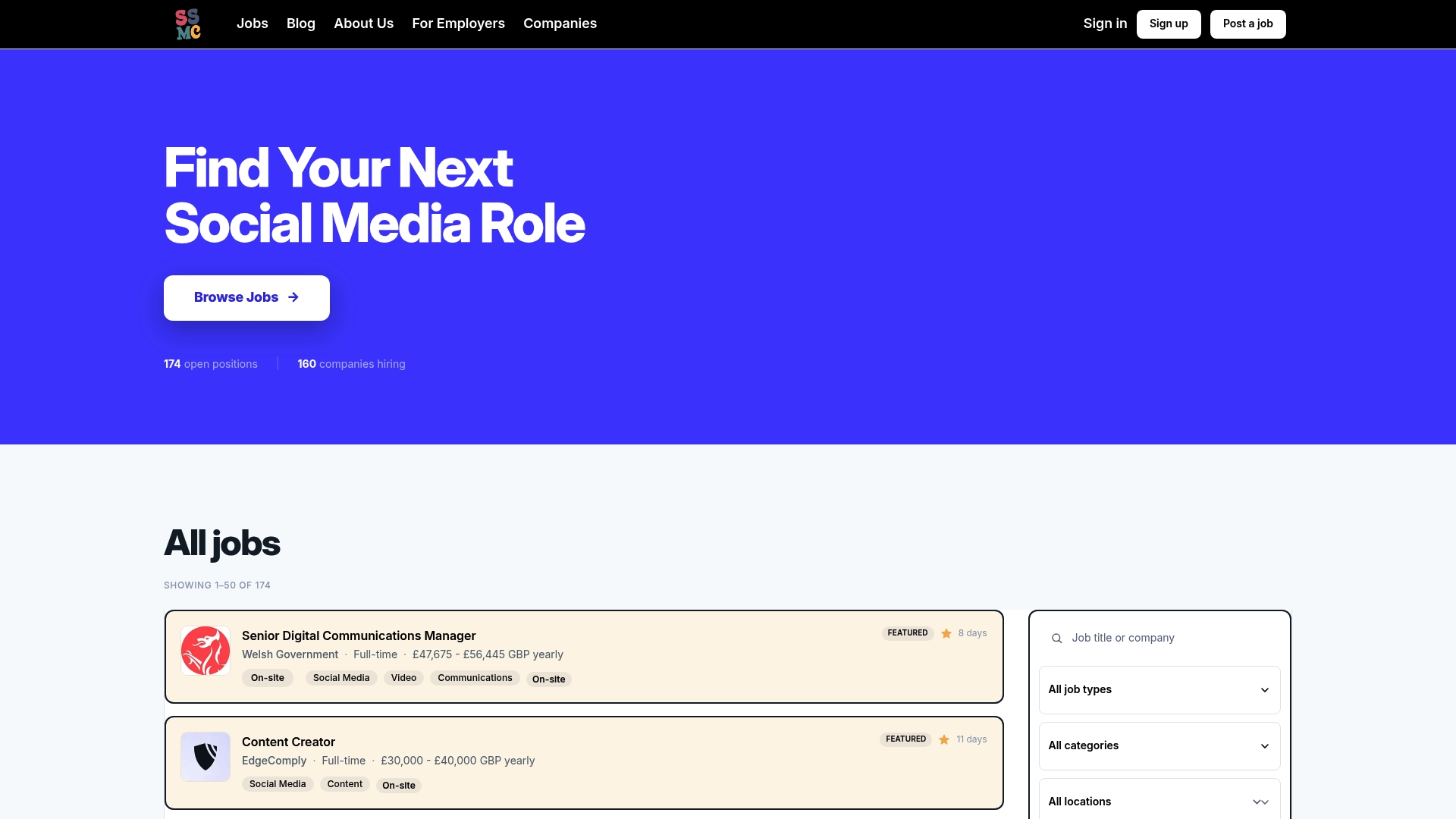
- Transparent salary ranges are included on every listing, so ads meet the same expectation this guide recommends.
- The audience for each role is curated, aiming for applicant quality over raw volume.
- Wider-reach packages are available for employers who want added distribution.
Pricing details are available on our pricing page, or you can get in touch if you'd like help tailoring a listing to a specific role.
FAQ
Can you give me some examples of social media job ads?
Yes: a short LinkedIn post stating the title, salary range, and a flexible working line; an Instagram caption with the same details paired with a branded graphic; and a boosted Facebook ad with a direct apply link all work well. The ten examples above cover ten different formats you can copy directly.
What should I put on a job advert?
Include the job title, a salary or salary range, location and flexible working options, the top two or three responsibilities, and a clear way to apply. Adding an inclusive EDI statement and behaviour-based requirements, rather than vague personality traits, tends to attract a wider range of applicants.
How do I write an effective social media job ad?
Lead with the role and salary in the first line, since that's what most candidates scan for first. Use behaviour-based requirements instead of personality traits, include a flexible working line, and end with a single clear call to action.
What are some examples of successful social media recruitment approaches?
Approaches that publish a clear salary range and a day-one flexible working option tend to draw a broader and more senior pool of applicants; GOV.UK cites examples where advertising flexibility by default significantly increased applications from women in senior roles. Pairing that transparency with a short video or team photo on the post adds context without adding clutter.
Do I need to worry about AI when targeting job ads on social media?
Automated ad bidding can unintentionally skew who sees your job post if it optimises purely for cost, so it's worth reviewing your targeting settings and signposting where AI tools are involved in your recruitment process. GOV.UK's responsible AI guidance recommends a mitigation plan rather than leaving targeting fully automated.