6 Benefits Job Ads Should Name to Attract UK Marketers

A good job advert always states a salary range and names the core benefits: pension type, holiday entitlement, sick pay, and flexible working status. Publishing that range is the single most impactful move an employer can make, since it drives more applications and fairer offers. The rest of this guide covers each benefit category, the evidence behind them, ready phrasing, and the legal boundaries around advert promises.
TL;DR:
- Clearly stating a salary range, specific pension contribution, and exact leave days significantly increases application quality and trust.
- Highlighting flexible work options with actual days or hours boosts diversity and applicant interest, especially among women.
- Vague benefit language, such as "competitive benefits," suppresses applications and creates ambiguity about core package details.
- Employers should avoid advertising benefits they cannot deliver and instead provide a written summary of pay and benefits before contract signing.
- Job boards like Sam's Social Media Club enforce salary transparency, helping employers attract suitable candidates and improve hiring outcomes.
Hiring a marketer? Every listing on Sam's Social Media Club shows the salary, so you reach social media, content and marketing people who already know the number works for them. Advertise a role
Table of Contents
- 1. Common benefit categories and what they mean
- 2. Why transparency works: what the research shows
- 3. Practical advert copy employers can adapt
- 4. How to read an advert as a candidate
- 5. Job adverts versus your legal employment particulars
- 6. How Sam's Social Media Club enforces salary transparency
- 7. Why clarity on benefits changes hiring outcomes
- Post transparent, salary-disclosing adverts that reach the right candidates
- Sources
- FAQ
1. Common benefit categories and what they mean
Most adverts mention benefits in passing. Few explain them well enough for a candidate to judge whether the role is worth applying for. Here is what each category should actually communicate.
Salary is the anchor point: a specific range (not "competitive") tells candidates whether to bother applying. Pension matters because the type, defined contribution or defined benefit, and the employer's contribution percentage change the real value of the package substantially. Annual leave should state the number of days, whether it includes bank holidays, and if it increases with tenure. Sick pay needs to distinguish statutory sick pay from any enhanced contractual scheme, since the gap between the two is often large. Flexible and hybrid work should say how many days at home or which hours are core, not just "flexible working available." Parental leave benefits from a headline figure such as enhanced maternity or shared parental pay rather than a vague mention. Private health cover and employee assistance programmes (EAP) are worth naming specifically rather than bundled into "wellbeing support." Learning and development budgets, bonus structures, and staff discounts round out the picture, but only when the advert says whether a bonus is guaranteed or discretionary.
- Pension: state the type and the employer's contribution headline, not just "pension scheme available."
- Sick pay: separate statutory sick pay from any enhanced company scheme.
- Flexible working: specify days, hours, or location rather than the single word "flexible."
- Bonuses: clarify whether they are fixed, performance-linked, or purely discretionary.
Creative and marketing roles often omit pension and sick pay details entirely, treating "competitive benefits" as sufficient. That gap is exactly where candidates lose trust.
2. Why transparency works: what the research shows
Vague benefit language is not a minor stylistic choice. It measurably suppresses applications and skews who applies.
CIPD's 2024 Pay, Performance and Transparency report found that only 41% of workplaces always publish a salary range in external adverts, and the same share always includes pension information. That gap tracks with a broader pattern: candidates read vague language as a warning sign, and specificity about pension calculations or what "hybrid" actually means increases trust and reduces drop-off before application.

Only 41% of employers always publish a salary range in job adverts, according to CIPD's transparency research, meaning most candidates are still applying blind.
A field experiment on flexible-work wording tested this directly across 176 job ads and 3,348 applications. Highlighting flexible hours or the option to work from home in job adverts produced a notable increase in applications per unique viewer, with flexible hours and work-from-home options boosting interest and the share of female applicants.
- Explicit salary ranges reduce the pay gap that opens up when candidates negotiate from an unknown starting point.
- Naming flexible working options measurably widens and diversifies the applicant pool.
- Specific pension and benefit language improves how candidates judge fit before they even apply.
3. Practical advert copy employers can adapt
Employers do not need a legal team to write a transparent advert. They need a short checklist and a few lines of copy, and recruitment post templates that attract the right profiles can help with structure.
Include these six items in every advert, with this level of specificity: a salary range with a floor and ceiling, pension type plus a headline employer contribution percentage, exact annual leave days, a one-line sick pay summary, a flexible working status with specifics, and two or three named perks rather than a generic list.
- Entry-level: "£24,000 to £27,000, pension at 5% employer contribution, 25 days holiday plus bank holidays."
- Hybrid marketing role: "£35,000 to £42,000, hybrid with 3 days in the office, core hours 10am to 3pm."
- Senior content lead: "£55,000 to £65,000 depending on experience, 8% employer pension contribution, private health cover from day one."
- Part-time social media coordinator: "£28,000 pro rata for 3 days a week, enhanced sick pay after probation, flexible start times."
- Freelance-to-permanent conversion: "Day rate negotiable, permanent salary £38,000 to £45,000 on conversion, EAP included."
- Remote-first copywriter: "£30,000 to £36,000, fully remote, 4% pension match, unlimited annual leave with a 25-day minimum expectation."
Pro Tip: Never write "competitive salary" alone. Quantify it, and if benefits only start after probation, say so explicitly rather than letting candidates assume day-one coverage. For more wording ideas, see what to write instead of "competitive salary".
4. How to read an advert as a candidate
Certain phrases are worth treating as warning signs rather than reassurance. "Competitive package" with no figures usually means the employer is not ready to commit to a number. "Benefits include pension, healthcare, and more" without any headline percentage or provider name is padding. Conditional language, such as benefits that only apply "after successful completion of probation" with no timeframe given, deserves a direct question before you accept.
- Ask what the employer pension contribution percentage is and when it starts.
- Ask whether sick pay is statutory only or includes a company top-up.
- Ask for the exact salary range if the advert only says "competitive" or "DOE."
- Ask how "flexible" or "hybrid" translates into actual days or hours.
Weigh perks against core benefits when comparing offers: a generous pension or enhanced sick pay is usually worth more over time than free snacks or a staff discount.
5. Job adverts versus your legal employment particulars
A job advert is marketing copy, not a contract. Once you accept a role, GOV.UK guidance requires employers to provide a written statement covering pay, hours, holiday entitlement, and other core terms, but there is no blanket legal requirement to include all of that detail in the advert itself.
Employers should avoid advertising a benefit they cannot actually deliver, since a misleading advert can create disputes even without a formal breach of contract. The safest approach on both sides: request a written summary of pay and benefits at offer stage, before signing anything, so the advert's claims and the contract match.

6. How Sam's Social Media Club enforces salary transparency
Sam's Social Media Club is a curated job board for social media, content, marketing, and communications roles, built around mandatory salary transparency on every listing. Employers cannot post a vague "competitive salary" line here, and that curation is what keeps the board focused on roles with real, checkable pay and benefit information. Employers can see how listings are structured on our pricing page before posting.
7. Why clarity on benefits changes hiring outcomes
The most common mistake I see in social media and marketing vacancies is not lying about benefits, it is saying nothing specific at all. "Great benefits package" tells a candidate nothing they can act on. Employers who name a pension percentage or a real hybrid schedule get better-matched applicants, faster. My advice to employers: write the number down. My advice to candidates: if the advert will not commit to specifics, ask before you apply, not after you accept.
— Sam
Post transparent, salary-disclosing adverts that reach the right candidates
Writing a transparent advert is only half the job. It also needs to reach people who value that transparency. Sam's Social Media Club curates every listing around mandatory salary disclosure, so employers who advertise here are already signalling the kind of clarity this guide recommends.
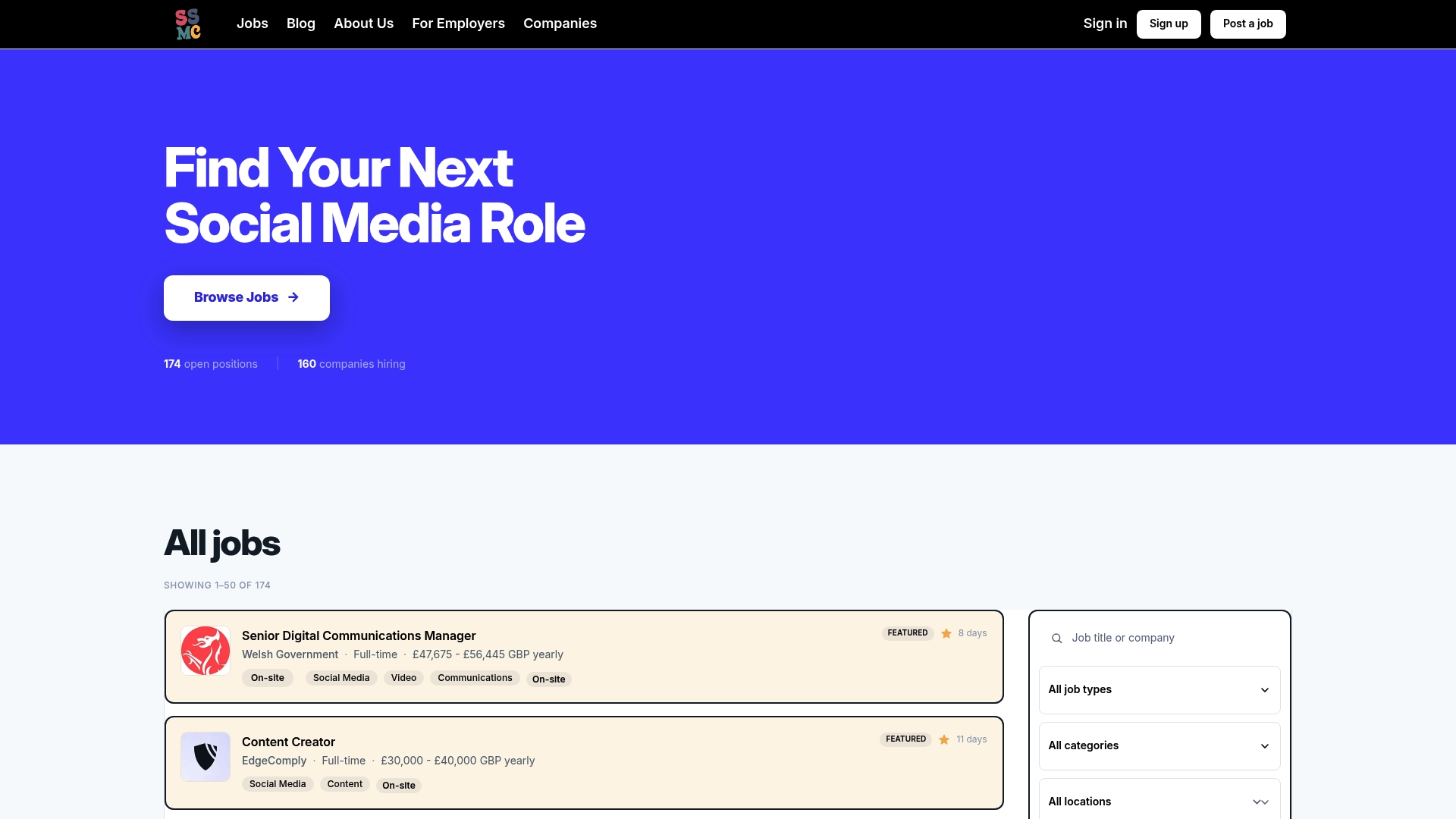
- Every listing requires a stated salary range before it goes live.
- Distribution reaches a targeted community of social media, content, and marketing professionals.
- Curation means employers hear from applicants suited to the actual role, not mass-CV volume.
Employers ready to post a transparent listing can see current options on our pricing page, or get in touch through the enquiry page to discuss a curated listing. Job seekers can browse open roles with the salary shown on every one.
Sources
- CIPD Pay, performance and transparency report 2024
- Field experiment on flexible-work wording in job adverts (Journal of Labor Economics)
- Written statement of employment particulars - GOV.UK
FAQ
What should a good job advert include?
A good job advert includes a salary range, pension type with a headline contribution percentage, annual leave days, a sick pay summary, and clear flexible working details. It should also name two or three specific perks rather than a generic list, since research from CIPD shows vague language lowers application intent.
What benefits can I claim with a job?
Benefits vary by employer but commonly include pension contributions, paid annual leave, sick pay above the statutory minimum, and sometimes private health cover or an employee assistance programme. Statutory entitlements like sick pay and parental leave apply regardless of what an advert states, but enhanced versions depend on the specific employer.
What are some examples of benefits?
Common examples include pension schemes with an employer contribution percentage, 25 to 28 days of annual leave, enhanced sick pay, hybrid or remote working arrangements, private health insurance, an employee assistance programme, and enhanced parental leave pay. Bonus schemes and staff discounts are also frequently listed, though they should be clearly marked as fixed or discretionary.
Is a job advert legally binding?
A job advert itself is not usually a binding contract. Once hired, employers must provide a written statement of employment particulars covering core terms, as set out in GOV.UK guidance, so it is worth requesting a written summary of pay and benefits before signing anything.