30/60/90 Plan and Paid Social Interview Questions for Candidates

This article gives you a categorized bank of paid social interview questions, model answer frameworks, and a short prep checklist you can run through before your next interview. Use it by practicing your answers aloud, preparing two portfolio stories with real numbers, and drafting a rough 30/60/90-day plan before you walk in.
TL;DR:
- Most interview questions revolve around strategy, tracking, and troubleshooting, requiring clear, outcome-focused answers supported by platform-specific details.
- Demonstrating technical fluency involves explaining how pixels and Conversion API work together, alongside validating conversions with source-of-truth checks.
- Structured testing frameworks and a 30/60/90-day plan help showcase process discipline, with emphasis on quick wins, scaling successful tactics, and setting clear guardrails.
- Candidates should stay updated on platform changes, articulate the business impact of recent shifts, and align responses with the company's size and role seniority.
- Success relies on clarity, concise storytelling, and the ability to explain complex concepts simply, avoiding platform blame and focusing on diagnostics and evidence-based fixes.
Find your next marketing role. Explore curated social media, content, marketing, and communications roles, with the salary listed on every job. Explore curated jobs
Table of Contents
- 1. Top Paid Social Interview Questions Grouped by Theme
- 2. Platform-Technical Questions: Pixels, Conversion API, and Attribution
- 3. Creative Testing Questions and Frameworks You Should Rehearse
- 4. Case and Scenario Prompts With a 30/60/90 Skeleton
- 5. Performance Drop Diagnostics: The Ordered Checks to Narrate
- 6. Answering Frameworks, Model Answers, and Interviewer Red Flags
- 7. How to Use Sam's Social Media Club Assets for Interview Practice
- 8. Tailoring Your Answers to Company Type and Seniority
- 9. Showing You Track Paid Social Trends and Platform Updates
- 10. What Separates Hireable Paid Social Candidates
- 11. Where to Find Sam's Templates and Curated Jobs
- 12. Authoritative Reading and Platform Docs to Follow Up On
- Sources
- FAQ
1. Top Paid Social Interview Questions Grouped by Theme
Interviewers move through five or six themes in a typical paid social interview, and knowing the pattern lets you prepare instead of improvising under pressure.
Behavioral questions probe how you work with people, not platforms. Expect prompts like "tell me about a time a client rejected your recommendation" or "describe a disagreement with a designer over creative direction." Strong answers name the stakeholder, the tension, and the specific compromise or decision, not just the happy ending.
Strategy and launch questions test how you plan with incomplete information. A common one: "how would you launch a new product with no historical data?" The answer interviewers want includes a phased rollout (broad targeting first, narrowing as signal accumulates), a defined learning budget, and a timeline for when you would call a test conclusive.
Tracking and measurement questions cover pixel setup, Conversion API, event schema, and attribution windows. These questions filter out candidates who can talk strategy but cannot explain how the data actually gets captured.
Bidding and budgeting questions ask you to compare cost cap versus lowest-cost bidding, describe how you pace spend across a launch, and explain how you split budget across platforms when results diverge.
Audience targeting questions dig into broad versus narrow targeting, lookalike construction, and audience layering, especially how you would decide between them for a given budget size.
Creative and testing questions ask you to describe a test design, explain learning velocity, and describe how you catch and fix creative fatigue before it tanks performance.
Troubleshooting questions hand you a scenario ("CPA doubled last week, walk me through your process") and score you on the order of your checks, not just your conclusion.

Reporting questions ask what belongs in a weekly update to a founder or client who does not live in the ad platform.
A quick reference for how these map to interview weight:
| Theme | What it tests | Typical seniority weight |
|---|---|---|
| Behavioral | Communication, stakeholder handling | Even across levels |
| Strategy and launch | Planning under uncertainty | Heavier for manager roles |
| Tracking and measurement | Technical fluency | Heavier for specialist roles |
| Bidding and budgeting | Cost discipline | Even across levels |
| Audience targeting | Platform mechanics | Heavier for specialist roles |
| Creative and testing | Iteration process | Even across levels |
| Troubleshooting | Diagnostic rigor | Heavier for senior roles |
| Reporting | Business translation | Heavier for manager roles |
A few practical notes for building your own answers:
- Lead with the outcome, then explain the mechanism, so a busy interviewer gets the point in your first sentence.
- Name the platform and feature you used (Meta's Advantage+ audiences, TikTok's Spark Ads) rather than describing tactics generically.
For the ordered checklist a strong troubleshooting answer follows, see the diagnostics section below. For a full walkthrough of general social media interview norms and a hiring rubric interviewers use, Sam's social media interview questions and hiring rubric breaks down what recruiters score beyond the paid-specific technical layer.
2. Platform-Technical Questions: Pixels, Conversion API, and Attribution
Technical questions exist to check whether you actually understand what happens after you click "publish," not to catch you out on jargon. Interviewers want you to explain the mechanics in plain language, the way you would to a founder who does not touch Ads Manager.
Start with the basics: the pixel is browser-based tracking that can be blocked by ad blockers or cookie restrictions, while the Conversion API sends event data server-side, which recovers signal the pixel alone misses. Good candidates mention deduplication, which prevents the same purchase from being counted twice when both the pixel and the Conversion API fire for the same event.
Attribution windows come up constantly. Explain them as the time period during which a click or view can be credited with a conversion, and note that shorter windows tend to undercount slower-moving purchases while longer windows can overstate paid social's role in a sale that involved several touchpoints.
When asked "how do you validate your conversions," a strong answer lists concrete checks:
- Fire test events in Meta's or TikTok's events manager before a launch goes live.
- Cross-check platform-reported conversions against GA4 or the client's CRM numbers.
- Use Tag Manager's preview mode to confirm the right triggers fire on the right pages.
- Flag any gap between platform and source-of-truth numbers before reporting results, rather than after.
Pro Tip: Say the words "source of truth" out loud in your answer. It signals you already know platform numbers and business numbers can disagree, and that you know which one wins.
3. Creative Testing Questions and Frameworks You Should Rehearse
Creative questions test whether you can run a repeatable process, not whether you have a "creative eye." A dependable framework to describe: hypothesis, design, metric, learn, scale. State the hypothesis ("static beats video for this cold audience because the offer needs a clear headline"), design one variable to isolate, pick the metric that proves or disproves it, record the learning, and only then scale the winner.
A common prompt is "walk me through a creative testing framework you have used." Model answer shape: name the hypothesis, the test structure (same audience, one creative variable changed), the primary metric you judged it on, and what you did with the losing variant. Avoid vague answers like "we just tried a few things and picked the best one."
You should also expect a question on creative fatigue: how you spot it and how you fix it. Declining click-through rate alongside rising frequency is the standard signal, and the fix is usually a rotation cadence rather than a full relaunch, refreshing one or two assets while keeping the winning angle intact.
Metrics worth naming when you discuss creative performance:
- Click-through rate, as your first fatigue and relevance signal.
- Conversion rate, to confirm the click is translating into the outcome that matters.
- Retention or early lifetime-value signals, when the role cares about post-purchase quality, not just volume.
A repeatable testing cadence, especially one that pairs organic creative validation with paid scaling, tends to reduce fatigue and improve ROAS over time. Mentioning that loop, test small on organic, scale the winner with paid, refine with paid data, shows interviewers you think beyond a single platform.
4. Case and Scenario Prompts With a 30/60/90 Skeleton
Take-home cases and live scenario questions almost always want structure over polish. A 30/60/90 skeleton built for a paid social hire keeps your answer organized and easy to follow:
- Days 1 to 30: audit existing accounts, tracking, and creative; fix any broken tagging or attribution gaps; document quick wins like pausing underperforming ad sets.
- Days 31 to 60: implement the quick wins, launch one or two structured creative tests, and set a baseline for the KPIs you will be judged on.
- Days 61 to 90: scale what worked, expand into a new audience segment or platform, and present a report showing the delta from day one.
Interviewers also want to hear guardrails, not just ambition. Name a cost-per-acquisition ceiling that triggers a pause, an audience-size floor below which you stop narrowing further, and a creative rotation cadence so fatigue does not creep back in.
A typical case prompt: "you inherit an account spending £10,000 a month with a rising CPA, what do you do in week one?" What interviewers expect: you name tracking validation first, then a creative and audience review, then a specific test you would launch, in that order, not a jump straight to "I would test new creative."
5. Performance Drop Diagnostics: The Ordered Checks to Narrate
A disciplined sequence to narrate:
- Confirm tracking integrity first: check for a broken pixel event, a Conversion API gap, or a recent tagging change before touching anything else.
- Review creative fatigue: rising frequency with falling click-through rate points here before you blame the audience.
- Check audience saturation: an audience that has seen the same ads repeatedly will show cost creep even with healthy creative.
- Look for auction or bid changes: a competitor entering the space or a manual bid adjustment can move costs independent of your account.
- Inspect the landing page: a broken page, a slow load, or a recent design change can quietly kill conversion rate while the ad itself looks fine.
Before you attribute the drop to the platform, always cross-check the numbers against GA4 or the client's CRM. This external validation step is what separates candidates who guess from those who diagnose methodically.
Pro Tip: Say "I would isolate one variable before reallocating budget" out loud. It tells the interviewer you will not panic-move spend before you know what actually broke.
Propose a specific fix once you find the cause: a small creative refresh, an audience expansion, or a landing page fix, tested against a control rather than rolled out to the whole account at once.
6. Answering Frameworks, Model Answers, and Interviewer Red Flags
Two frameworks cover almost every paid social interview question. STAR (Situation, Task, Action, Result) works well for behavioral questions. A metrics-first opener, stating the result before the story, works better for strategy and troubleshooting questions, because it shows you think in outcomes first.
A few model answer shapes worth rehearsing:
- Launching with little data: "I would start broad, cap the learning budget, and set a two-week checkpoint to decide whether to narrow or kill the test."
- Pixel setup: "I install the pixel and Conversion API together, deduplicate events, and confirm both fire correctly in test mode before launch."
- A scale case: "once CPA stabilized below target for two consecutive weeks, I increased budget in 20% increments rather than doubling spend overnight."
- A creative test: "I isolated one variable, judged it on click-through rate first and conversion rate second, and rotated in the winner within a week."
- Troubleshooting: "I checked tracking, then creative, then audience saturation, before touching the budget."
Candidates who present a short, metrics-first weekly report, one-line insight plus three KPIs plus a next action, consistently stand out in interviews for founder-facing roles.
Watch for the answers that make interviewers wince. Blaming the platform ("Meta's algorithm just broke") with no diagnostic process behind it is the fastest way to lose credibility. So is giving a result with no measurable outcome attached, or describing a fix with no plan to confirm it actually worked. If you cannot say how you would replicate a win on a different account, say so honestly rather than bluffing.
7. How to Use Sam's Social Media Club Assets for Interview Practice
Turn your prep into a schedule rather than a vague intention. A week out, pull two portfolio examples using Sam's portfolio templates so your stories have consistent structure: situation, action, measurable result.
Days seven through four: rehearse your answers to the behavioral and strategy questions above out loud, ideally with someone else asking them cold. Days three through two: run a mock interview focused only on the technical and troubleshooting sections, since those are where candidates freeze most often. The day before: read back through your two portfolio stories once, and stop there. Over-rehearsing the night before tends to make answers sound memorized rather than natural.
8. Tailoring Your Answers to Company Type and Seniority
The same question needs a different answer depending on who is asking. A startup interviewer usually wants speed and scrappiness: talk about launching tests fast with limited budget and making calls without a full data set. An agency interviewer wants proof you can manage several accounts and clients at once, so lean on stories about prioritization and client communication under pressure. A large in-house team wants process discipline: naming your QA steps, your reporting cadence, and how you collaborate with a bigger stakeholder group.
Seniority changes the expected depth, not the topic. For a specialist or coordinator role, interviewers want tactical fluency: can you actually build the campaign, set the pixel, and read the dashboard. For a manager or lead role, they want you to zoom out: how you'd structure a team's testing calendar, how you'd defend a budget request to a founder, how you coach a junior hire through a first troubleshooting scenario.
A practical habit: before the interview, note which type of company you are talking to and adjust which portfolio story you lead with. Save your scrappiest, most improvised win for a startup interview, and your most process-heavy, well-documented case for a larger in-house team or agency interview.
9. Showing You Track Paid Social Trends and Platform Updates
Interviewers ask some version of "what's changed recently in paid social" to check whether you keep learning after you leave a job, not to test your memory of a press release. The strongest answers name a specific platform shift and explain what it means for strategy, rather than reciting a headline.
A workable structure: name the change, name the practical adjustment it forces, and name how you would test around it. For example, note that automated bidding and broader targeting options have shifted more platforms toward giving the algorithm more control with less manual audience-building, and explain that this changes your job toward better creative and cleaner tracking data, since the algorithm needs strong signal to work well.
You do not need to speak like an industry newsletter. Reading a couple of solid sources regularly, rather than skimming headlines the morning of your interview, tends to produce better answers because you can speak to why a change matters, not just that it happened. If you are not sure of a specific detail, say so plainly and pivot to what you do know rather than guessing at a feature name.
10. What Separates Hireable Paid Social Candidates
The candidates who get hired are rarely the ones with the flashiest campaign screenshots. They are the ones who can say, in one sentence, what changed and why it mattered to the business, not just the account. Clarity beats cleverness in almost every answer I have heard work.
Pick portfolio examples with a clean before-and-after, not your most complicated project. Phrase results as a comparison, not a bare number: "CPA dropped after we fixed the tracking gap," not "CPA was £12."
Quick tip: rehearse your two best stories until you can tell each in under ninety seconds.
— Sam
11. Where to Find Sam's Templates and Curated Jobs
Interview prep only gets you halfway there. The harder part is finding roles worth preparing for in the first place, ones with a real salary range attached before you apply, not after three interview rounds.
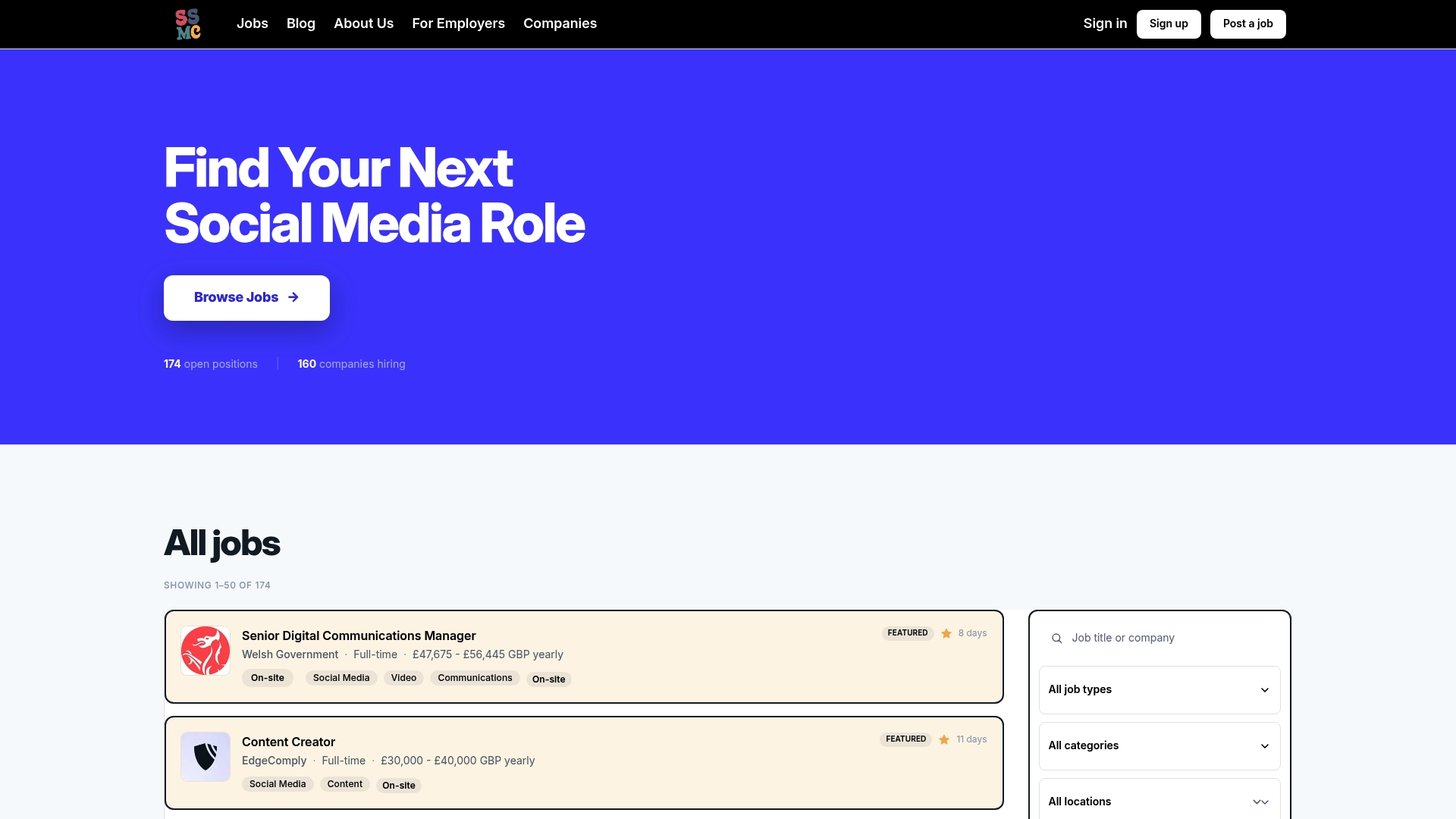
Sam's Social Media Club lists roles with pay ranges shown upfront. If you are further along and building a case for your next move, Sam's insider's guide to landing a social media job pairs well with the prep bank above. If you are on the hiring side and want to reach candidates who are actually ready for these questions, you can review advertising options or send an enquiry about a custom listing.
12. Authoritative Reading and Platform Docs to Follow Up On
A short list worth bookmarking before your interview:
- Later's breakdown of organic versus paid social strategy for the hybrid flywheel model interviewers like to hear referenced.
- Hootsuite's guide to organic versus paid social for how to frame timeline trade-offs in a strategy answer.
- Sprout Social's hybrid strategy piece for the paid scorecard structure (CPM, CTR, incremental lift, CPA, LTV/CAC).
- Stefano Mazzei's work on performance creative for a closer look at Meta Ads and DTC creative testing in practice.
Sources
- Organic vs. Paid Social Media: Which Strategy Is More Effective?
- Organic vs paid social media: Everything you need to know
- Organic vs. Paid Social Media: A Hybrid Strategy That Works | Sprout Social
FAQ
What is the 30-60-90 rule in an interview?
It is a structured plan candidates present showing what they would do in their first 30, 60, and 90 days on the job. For a paid social role, that typically means auditing accounts and tracking first, then implementing quick wins, then scaling what worked with clear guardrails.
What are some common questions asked during a social media interview?
Expect behavioral questions about working with stakeholders, strategy questions about launching with limited data, and technical questions about tracking, attribution, and reporting. Troubleshooting scenarios, like diagnosing a sudden CPA spike, are also common at every seniority level.
What are the 5 basic interview questions?
Most interviews cover some version of: tell me about yourself, why this role, describe a challenge you solved, where do you see yourself going, and do you have questions for us. For paid social roles, expect these paired with at least one technical or troubleshooting scenario specific to the platform work.
What are the 5 C's of interviewing?
Definitions vary by source, but a common version includes competence, character, communication, culture fit, and career direction. Frame your paid social answers around competence (technical fluency) and communication (translating metrics into business outcomes), since those two carry the most weight in this field.