Hire Social Media Managers With Pay Transparency: A UK Employer Guide

The fastest way to find social media managers is to combine a curated job board with a targeted freelance marketplace and a short paid trial before you commit. If you need someone this week, freelance marketplaces give you volume and speed. If you want higher match quality and salary clarity from the start, a curated board like Sam's Social Media Club filters out the noise before candidates ever reach your inbox.
TL;DR:
- Using curated job boards with salary transparency filters out unqualified applicants and speeds up the hiring process.
- A short paid trial helps assess practical skills and outcomes more effectively than interviews alone, ensuring candidates meet role expectations.
- Hourly, daily, or retainer rates vary with experience and scope; clear scope and output planning are essential to set accurate budgets.
- Employers should write detailed briefs, shortlist quickly, run paid trials, and stage onboarding to reduce hiring delays to two or three weeks.
- Relying on niche communities and referrals offers higher trust and relevance but may be slower without an existing professional network.
Reach curated social media talent. Share your role with professionals who expect transparent salary information across social media, content, marketing, and communications. Advertise a role
Table of Contents
- Where to look: marketplaces, niche job boards, talent communities and referrals
- How to evaluate candidates once you have a shortlist
- Pricing and rates: hourly, daily, retainer, and how to budget by scope
- Hiring process checklist: write the brief, shortlist, trial, contract, and onboard
- Why curated job boards and salary transparency speed hiring
- Common hiring mistakes and three quick wins
- How Sam's Social Media Club helps
- FAQ
Where to look: marketplaces, niche job boards, talent communities and referrals
Every sourcing channel trades speed for quality in a different way, and picking the wrong one for your timeline is the most common reason hiring drags on.
Freelance marketplaces are the fastest route when you need someone within days. Posting a job attracts a wide pool but also a flood of generic applications, since anyone with an account can bid. Hiring direct through a marketplace's search function usually gets you a more targeted shortlist faster, though you pay a service fee either way and vetting is largely left to you. Expect to spend real time sorting profiles that look strong on paper but have never managed a brand at your scale.
Niche and curated job boards flip that equation. Because listings require clear scope and, on boards like Sam's Social Media Club, mandatory salary ranges, applicants self-select before they apply. That single requirement removes a huge share of mismatched applications, since candidates who wouldn't accept your budget never bother. Curated boards also pre-screen for relevance to creative and marketing roles specifically, so you're not wading through generalist freelancers who happen to have a marketing keyword in their profile.
Talent communities and referrals work best when you already have some visibility into a professional network. LinkedIn posts asking your existing connections for referrals often surface people who've been vetted informally by someone you trust. Industry Slack and Discord groups, alumni networks, and even Reddit threads where employers discuss finding freelance help show a consistent pattern: when marketplaces return too many agencies pretending to be individual freelancers, employers fall back on personal networks and niche communities to find an actual person who'll do the work.
An agency or managed network makes more sense when you need coverage across multiple platforms with paid media built in, or when you don't have the internal capacity to manage a freelancer's output yourself. A digital marketing agency can bring a full team including a strategist, a designer, and a paid social specialist, which suits a business scaling fast but costs considerably more than a single freelance hire.
- Freelance marketplaces: fastest for volume, but expect heavier screening on your end.
- Curated job boards: higher match quality thanks to salary transparency and pre-screening.
- Referrals and communities: strongest for trust, weakest for speed if your network is thin.
- Agencies: best when you need a full team rather than one person managing everything.
How to evaluate candidates once you have a shortlist
A portfolio that looks polished doesn't tell you whether a candidate can grow an audience or convert followers into customers. Ask for evidence of outcomes, not just aesthetics: engagement trends over time, examples of a campaign that hit a specific goal, or a case where a content change moved a measurable number. A feed full of pretty graphics with no numbers attached is a red flag on its own.

Build a simple skills matrix before you start interviewing so you're comparing candidates against the same criteria rather than your gut reaction to their last three posts. Cover platform expertise (which channels they've actually run, not just used personally), content production (do they shoot and edit, or only plan), paid social basics, analytics literacy, and community management experience such as handling comments and messages during a busy period.
For interviews, Indeed's social media manager interview guide recommends checking for experience across multiple accounts, familiarity with scheduling tools, comfort with budget management, and how a candidate has handled a crisis moment online. Those four areas surface most of the practical gaps that a CV won't show you. Our own interview questions and scoring rubric works through the same territory with a structure you can reuse across candidates.
- Ask for two examples of content that underperformed and what they changed afterwards.
- Ask how they'd handle a negative comment thread going viral overnight.
- Ask which scheduling and analytics tools they use daily and why.
- Ask for a rough breakdown of how they'd split a week across planning, creating, and reporting.
- Watch for vague answers about "growing engagement" with no numbers attached.
Once you're down to two or three candidates, design a short paid trial rather than relying on the interview alone. Give them a real but limited brief, such as a 90-minute content plan plus one sample post, pay for the work, and score it against the same rubric you used for the interview. That comparison tells you more in one afternoon than three more rounds of conversation.
Pro Tip: Pay for every trial task, even a small one. Unpaid "tests" filter out exactly the experienced candidates you want to hire.
Pricing and rates: hourly, daily, retainer, and how to budget by scope
Rates vary enormously depending on experience level and how much of the job you're outsourcing. An entry-level freelancer managing one or two platforms with light posting typically costs far less than a senior manager running paid campaigns across four channels with reporting included. Our UK pay data breakdown sets out current pay bands for social media and marketing roles, and our guide to hiring a social media manager covers typical £500–£1,500 monthly retainers.
The number of platforms, your posting frequency, and whether you need paid ad management all push cost up independently of each other. Managing one Instagram account with three posts a week is a different job from running Instagram, TikTok, and LinkedIn with daily content plus a paid ad budget to optimise.
- Hourly rates suit ad hoc or low-volume work where scope changes week to week.
- Day rates work well for concentrated projects like a product launch or campaign sprint.
- Monthly retainers fit ongoing management where you want predictable cost and a set deliverable list.
- Per-project pricing suits a one-off asset like a content audit or a single campaign build.
Salary transparency changes the negotiation entirely. Listings that state pay upfront reduce negotiation friction and tend to attract applicants who are already comfortable with your budget, which cuts wasted screening time on both sides.
To translate cadence into budget, work backwards from output: decide how many posts per platform per week you actually need, multiply by the time a competent freelancer needs to plan, create, and publish each one, then add reporting time. A business posting daily across two platforms with monthly reporting is paying for meaningfully more hours than one posting twice a week on a single channel, even before ad spend enters the conversation.
Hiring process checklist: write the brief, shortlist, trial, contract, and onboard
A vague job post is the single biggest cause of a slow hire. Candidates apply blind, you spend hours filtering out mismatches, and the process drags well past your original timeline.
- Write the brief first. Define the platforms, posting cadence, whether paid social is included, and your KPIs before you write a single line of the job post. Our freelance job description guide walks through the fields worth including so applicants can self-select accurately, and state your rate or salary range upfront rather than leaving it to negotiation.
- Shortlist quickly. Triage portfolios against your skills matrix first, then run a short screening call to confirm availability, rate expectations, and basic communication fit. Ask for one reference you can actually call.
- Run the trial. Give your top two or three candidates a scoped, paid assignment and score it against the same rubric across all candidates.
- Contract clearly. Set out scope, deliverables, who owns the content and creative assets, payment terms, and notice period before work starts, whether you're hiring freelance, part-time, or full-time.
- Onboard in stages. Use the first 30 days for access setup, brand voice training, and a content calendar handover. Use days 30 to 60 for the manager to run independently with light check-ins. By day 90, you should be reviewing results against the KPIs set in the original brief.
Most employers can move from posting a brief to a confirmed hire within two to three weeks if the brief is clear and the trial step isn't skipped, though a senior or highly specialised hire can take longer.
Why curated job boards and salary transparency speed hiring
Curation works because it removes friction before a human ever reviews an application. When a board requires a salary range on every listing, candidates who wouldn't accept that pay simply don't apply, which means the applications you do receive are already qualified on the one point that ends most negotiations before they start.
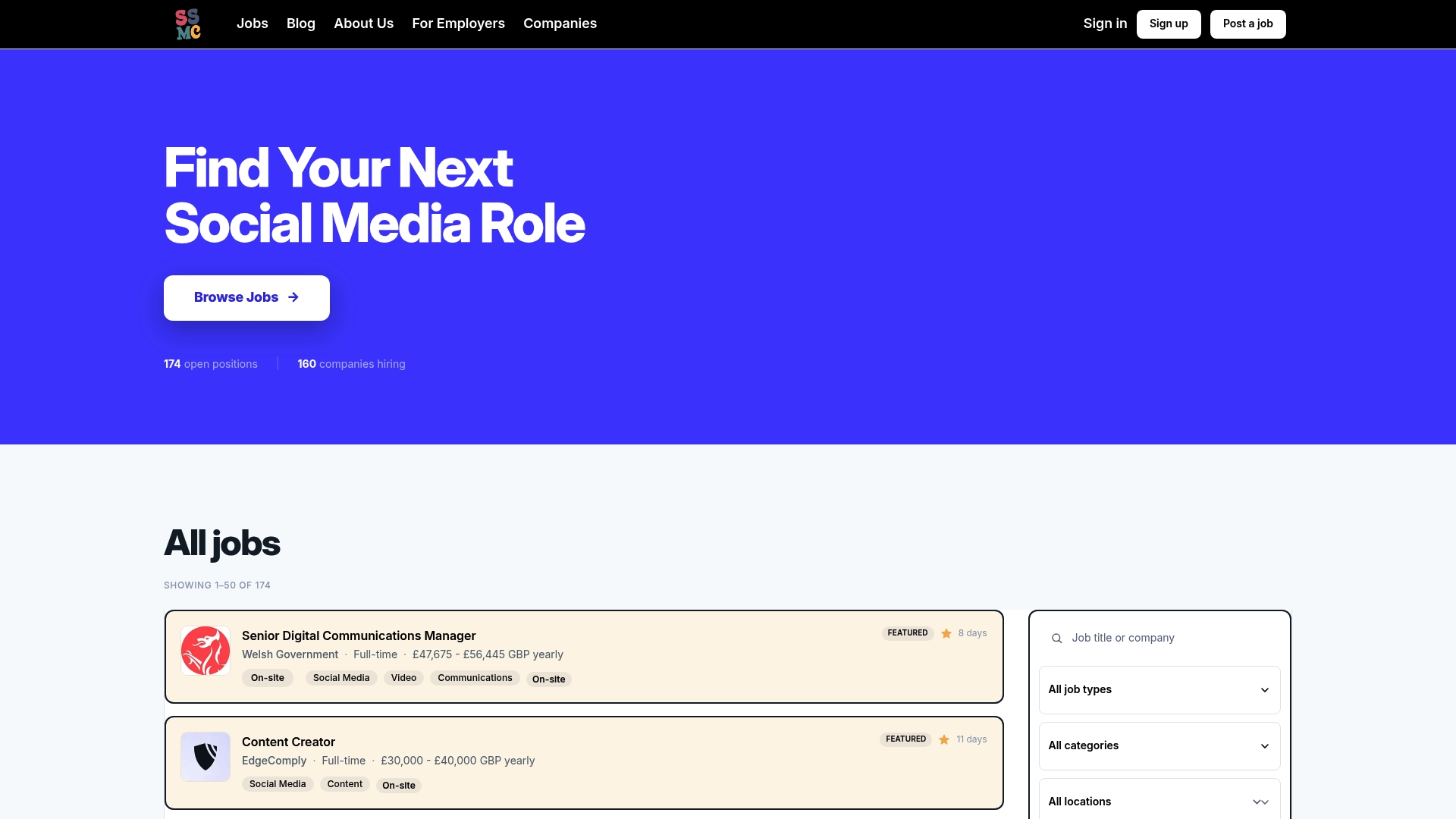
That's the model behind Sam's Social Media Club: mandatory salary listings paired with a curated selection process built specifically for social media, content, marketing, and communications roles, rather than a general job board where those roles get buried among thousands of unrelated postings.
Common hiring mistakes and three quick wins

The biggest mistake I see is employers posting a job with no salary range and a vague list of "responsibilities" instead of real KPIs, then wondering why every application looks the same. The second is skipping a paid trial because it feels like extra effort, then discovering three months in that the person can't actually produce content at the pace the role needs.
Three fixes: write a specific brief with a salary range attached, run a small paid trial before any long-term contract, and require candidates to show outcomes in their portfolio, not just a nice-looking feed.
— Sam
How Sam's Social Media Club helps
Posting on a curated board means every applicant already knows and accepts your pay range before they click apply, which cuts the back-and-forth that slows down hiring on broader marketplaces. Sam's Social Media Club focuses that curation specifically on social media, content, marketing, and communications roles, so listings reach people already working in the field rather than a generic freelancer pool.
- Choose curated, salary-transparent listing options when you want more targeted job posts rather than a broad marketplace post.
- Pricing and full plan details are available on our pricing page.
- Reach out through our enquiry page if you'd like help setting up a listing built for your role.
FAQ
How much does it cost to hire a social media manager?
Cost depends heavily on experience level, number of platforms, and whether paid ad management is included, with rates ranging from entry-level hourly work to senior monthly retainers covering full-channel strategy. Our UK pay data guide breaks down current bands so you can budget before posting a brief.
What is the 5 5 5 rule on social media?
Definitions of the 5 5 5 rule vary across marketers, but a common version suggests spending a few minutes each day liking, commenting, and following relevant accounts across a handful of profiles to build engagement organically. It's a content strategy habit rather than a fixed industry standard, so treat it as one tactic among many.
How much do you pay a social media manager per hour?
Hourly pay depends on experience and scope, with entry-level freelancers charging less than senior managers who handle paid campaigns and reporting. Day rates or monthly retainers often work out more predictable than hourly billing once posting volume increases.
How do I find the right social media manager?
Start with a clear brief that states platforms, cadence, and pay range, then source candidates through a curated job board or targeted freelance marketplace rather than a generic posting. Screen with a skills matrix, run a short paid trial before committing, and check at least one reference.
How long does it typically take to hire a social media manager?
Most employers move from posting a brief to a confirmed hire within two to three weeks when the brief is specific and a paid trial is included in the process. Senior or highly specialised roles can take longer, especially if paid ad management or multi-platform experience is required.