
Claim Unpaid Internship Wages in the UK and Find Paid Roles
If you’re doing real work for an employer on a set schedule, you’re almost certainly entitled to at least the National Minimum Wage, regardless of what your offer letter calls you. Gov that “intern” has no special legal status. Pay depends on whether you meet the legal test for a “worker,” and the only lawful exceptions are mandatory UK course placements, genuine volunteering, and pure shadowing with zero actual tasks.
TL;DR:
- Interns performing actual work on a set schedule are entitled to at least the national minimum wage, regardless of job title or label.
- The main exemption for unpaid internships applies only to mandatory UK course placements under one year, genuine volunteering, or pure shadowing with no tasks.
- Employers often wrongly assume short durations, perceived experience, or expense coverage exempt unpaid interns from pay obligations, which is not legally valid.
- Worker status can be triggered even in short placements if interns take on deliverables or work tasks instead of just observing.
- Paying the minimum wage and following worker protections is the safest legal approach for employers to avoid penalties and disputes.
Table of Contents
- Are You Entitled to the UK Internship Minimum Wage?
- When Is an Unpaid Internship Actually Legal?
- UK Internship Pay Rates and How to Work Out Your Wage
- What to Do if Your Internship Isn’t Paying You
- What Employers Must Do to Stay Compliant
- “Work Experience” vs. “Internship”: Why the Label Doesn’t Matter Legally
- Beyond Pay: Working Hours, Breaks, and Other Intern Protections
- Publisher Perspective: Paid Internships and Pay Transparency
- Find Paid Internships With Salary Transparency Listed Upfront
- Primary Sources and Further Reading
- Sources
- FAQ
Are You Entitled to the UK Internship Minimum Wage?
The law doesn’t ask what your role is called. It asks whether you fit the definition of a “worker,” and that test has three parts: is there a contract (even an unspoken one), do you personally perform the work, and are you clearly not running your own business on the side? Tick those boxes and you’re due the National Minimum Wage, full stop.
Employers and interns both get tripped up here because “unpaid internship” sounds like a category with its own rules. It isn’t. A few practical signs tend to convert a placement into paid work:
- You’re expected at fixed hours, not just “whenever suits you.”
- Someone supervises your output and assigns specific tasks.
- Missing a shift without notice would get you in trouble, the way it would any employee.
- You’ve been told there might be a job, bonus, or reference tied to performance.
- Your work is genuinely useful to the business, not just observational.
None of this depends on paperwork. A contract that says “unpaid” or a job title like “internship” doesn’t override the facts of how you’re actually treated day to day. HMRC and employment tribunals look at conduct, not labels, when they decide whether you’re due pay as an intern. If your daily reality looks like a job, the law treats it as one, regardless of what the letter offering the placement says.
When Is an Unpaid Internship Actually Legal?
Three narrow exemptions exist, and each has a strict boundary employers frequently misjudge.
- Mandatory student placements. If your UK-based further or higher education course requires the placement and it lasts no more than one year, your employer can lawfully skip paying the National Minimum Wage. Go past a year, or take on a placement your course merely recommends rather than requires, and the exemption disappears.
- Genuine volunteering. Charities and some statutory bodies can rely on unpaid volunteers, but genuine volunteering means you can turn up or not turn up as you choose, with no organizational dependence on your attendance. Commercial companies almost never qualify for this one, because a business that needs you there on Tuesday at 9 AM isn’t offering genuine volunteering.
- Pure work shadowing. Watching someone do their job, with zero tasks handed to you, can stay unpaid. The moment you start answering emails, drafting posts, or covering for someone on leave, you’ve crossed from observation into work, and pay obligations kick in immediately.
Employers commonly get this wrong in three ways: assuming short duration excuses non-payment, assuming “it’s good for their CV” counts as compensation, or assuming a friendly verbal agreement to work unpaid settles the matter legally. None of these hold up. Even a two-week stint creates worker status the instant tasks replace observation.
UK Internship Pay Rates and How to Work Out Your Wage
Rates change every April, so always check the current figures on GOV.UK’s minimum wage pages rather than relying on a number you saw last year. Which rate applies depends on your age:
- The National Living Wage covers workers 21 and over.
- The National Minimum Wage applies in stepped bands for workers 18 to 20 and under 18.
- Apprentices have their own separate rate for the first year of an apprenticeship or while under 19.
Pro Tip: Multiply your hourly rate by your weekly hours before you accept any placement. A 40-hour week at the adult rate gives you a clear gross-pay figure to compare against what you’re being offered, and it takes thirty seconds to check on GOV.UK.
Once you have your gross figure, GOV.UK’s income tax guidance explains how tax and National Insurance affect what actually lands in your bank account.
What to Do if Your Internship Isn’t Paying You
Start collecting evidence before you raise anything with your employer, because memory fades and messages get deleted. Keep records of your actual hours worked, any messages or emails describing your responsibilities, the original job advert or description, anything promising future paid work, payslips if you’ve received any at all, and the names of colleagues who could confirm what your role actually involved.
- Check Acas guidance on young workers and work experience to confirm your situation matches worker status.
- Ask your employer directly, in writing, why you’re not being paid, and keep their response.
- If the answer doesn’t hold up, report the issue to HMRC, which enforces National Minimum Wage compliance and can investigate unpaid claims.
- For related issues beyond pay, such as unfair treatment, Acas early conciliation or an employment tribunal claim may apply.
HMRC can demand employers pay arrears going back through the whole period of underpayment, issue financial penalties on top, and in serious cases publicly name the employer. That last consequence tends to concentrate minds faster than the fine itself.
What Employers Must Do to Stay Compliant
Employers carry the legal burden of getting this right, not the intern. That means assessing worker status honestly before the placement starts, paying the National Minimum Wage the moment that status applies, keeping accurate time and pay records, and never relying on a job title to dodge the obligation.
The excuses that come up again and again in disputes rarely survive scrutiny:
- “It’s only a few weeks” doesn’t create an exemption. Duration alone means nothing.
- “They’re getting valuable experience” isn’t compensation under the law.
- “We only cover expenses” doesn’t work if the person is doing real tasks on a set schedule.
Employment law commentary from DavidsonMorris is blunt about the fix: when there’s genuine doubt, pay the National Minimum Wage. It’s the lowest risk position available. Getting it wrong exposes a business to arrears payments, penalties, reputational damage from public naming, and the kind of employment tribunal claim that costs far more in legal fees than the wages would have. For UK founders juggling compliance across payroll, tax, and hiring simultaneously, a broader compliance guide for startups is worth a read alongside the wage-specific rules.
“Work Experience” vs. “Internship”: Why the Label Doesn’t Matter Legally
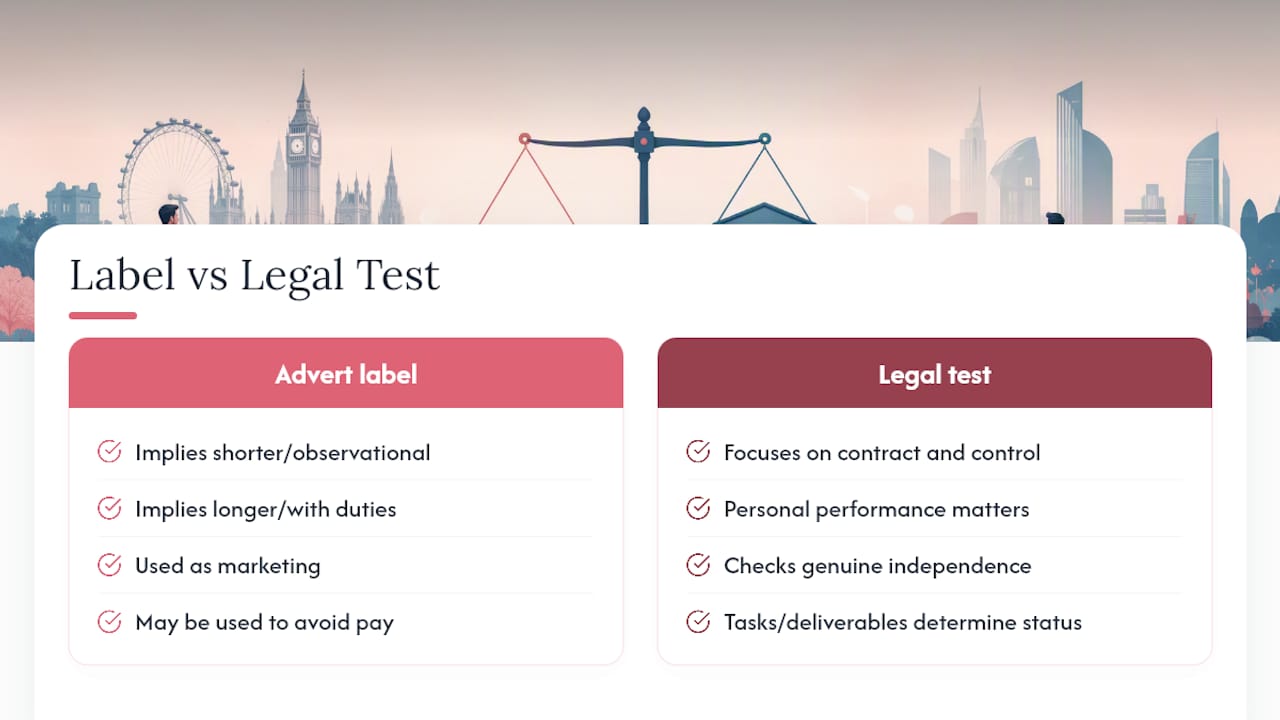
Both terms get used loosely in job adverts, and neither one has a fixed legal definition in UK employment law. “Work experience” often implies something shorter and more observational, while “internship” tends to suggest a longer stint with real responsibilities. In practice, employers use whichever word sounds better in the advert, and the law couldn’t care less which one they picked.
What actually matters is the same worker test covered earlier: contract, personal performance, genuine independence or lack of it. A two-day “work experience” placement where you’re answering client emails and hitting deadlines can trigger worker status just as fast as a three-month “internship” doing the same thing. Conversely, a month-long “internship” that consists purely of sitting in meetings and taking notes, with no assigned output, might genuinely fall under the shadowing exemption.
This distinction matters most when you’re negotiating terms before you start. If an employer describes the role as “work experience” to justify not paying you, ask directly what your day-to-day tasks will involve. If the answer includes deliverables, deadlines, or client-facing work, push back on the unpaid framing regardless of the label on the advert. Job titles are marketing. The legal test is behavior.
Beyond Pay: Working Hours, Breaks, and Other Intern Protections
Once you qualify as a worker, minimum wage is only one of the protections that follow. Acas guidance confirms that interns classed as workers get the same basic entitlements as any other employee on hours and rest.
That includes limits on weekly working time under the Working Time Regulations, a minimum daily and weekly rest period, and a paid break during longer shifts. Workers under 18 get stronger protections still, including shorter maximum hours and mandatory rest breaks that kick in sooner. If you’re a student intern under 18 working full days over the summer, these limits apply to you exactly as they would to a permanent junior staff member.
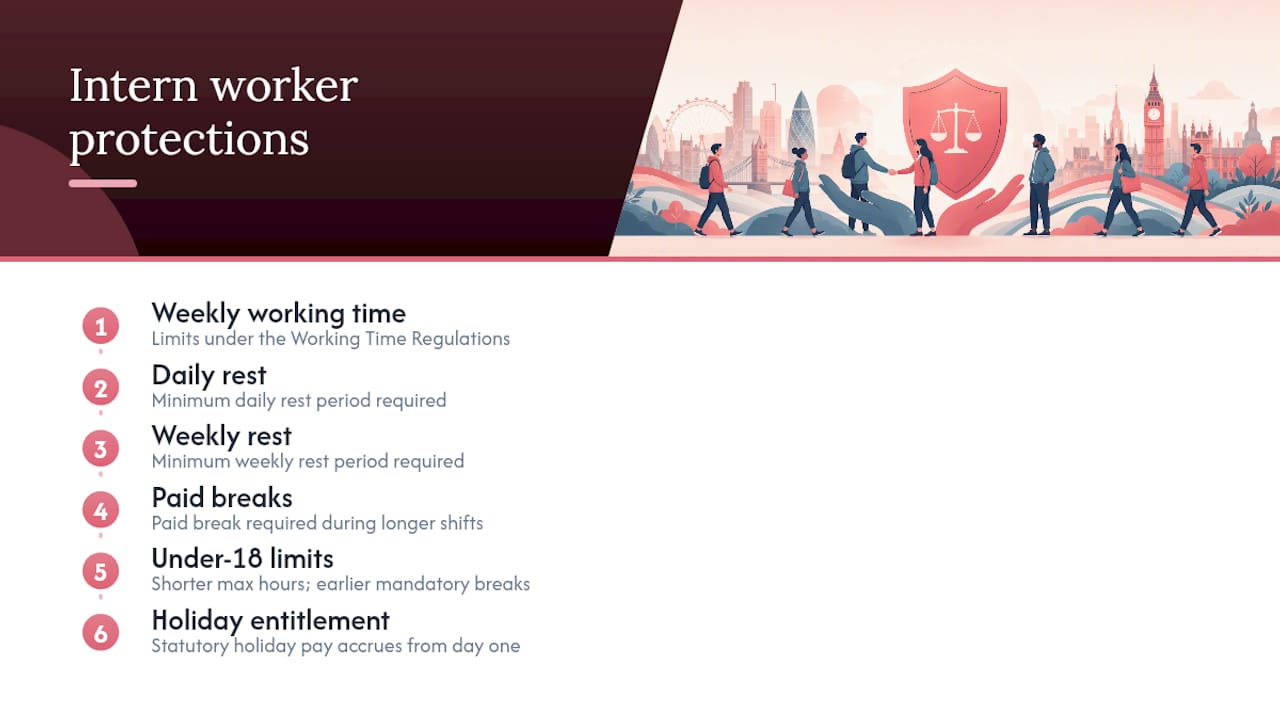
Holiday entitlement is another one people miss. Workers, including paid interns, accrue statutory holiday pay from day one, calculated proportionally for the length of the placement. If your internship runs three months and you haven’t taken any leave or been paid in lieu of it, that’s a separate underpayment on top of any wage issue. Acas recommends checking your status early precisely because so many of these entitlements stack on top of each other once worker status is established, rather than applying one at a time.
Publisher Perspective: Paid Internships and Pay Transparency
Salary transparency fixes a problem specific to creative careers: unpaid or vaguely paid internships have long acted as an informal filter, keeping the field open mainly to people who can afford to work for free. That’s a structural access problem in social media, content, and marketing, where entry-level roles carry outsized influence over who breaks in.
At Samssocialmediaclub, every listing requires a salary field before it goes live, which is a small policy choice with a real downstream effect on who applies. We’ve also covered the UK’s move toward mandatory salary transparency in job adverts, a shift that lines up with where enforcement and public expectation are heading. If you’re job hunting, the practical move is to search listings that already disclose pay and set alerts for new paid roles rather than combing through adverts hoping the number shows up later.
— Sam
Find Paid Internships With Salary Transparency Listed Upfront
There are alternative job boards designed to avoid pay being hidden until later interview stages. Some job boards require salary information on listings to help applicants understand pay details upfront.
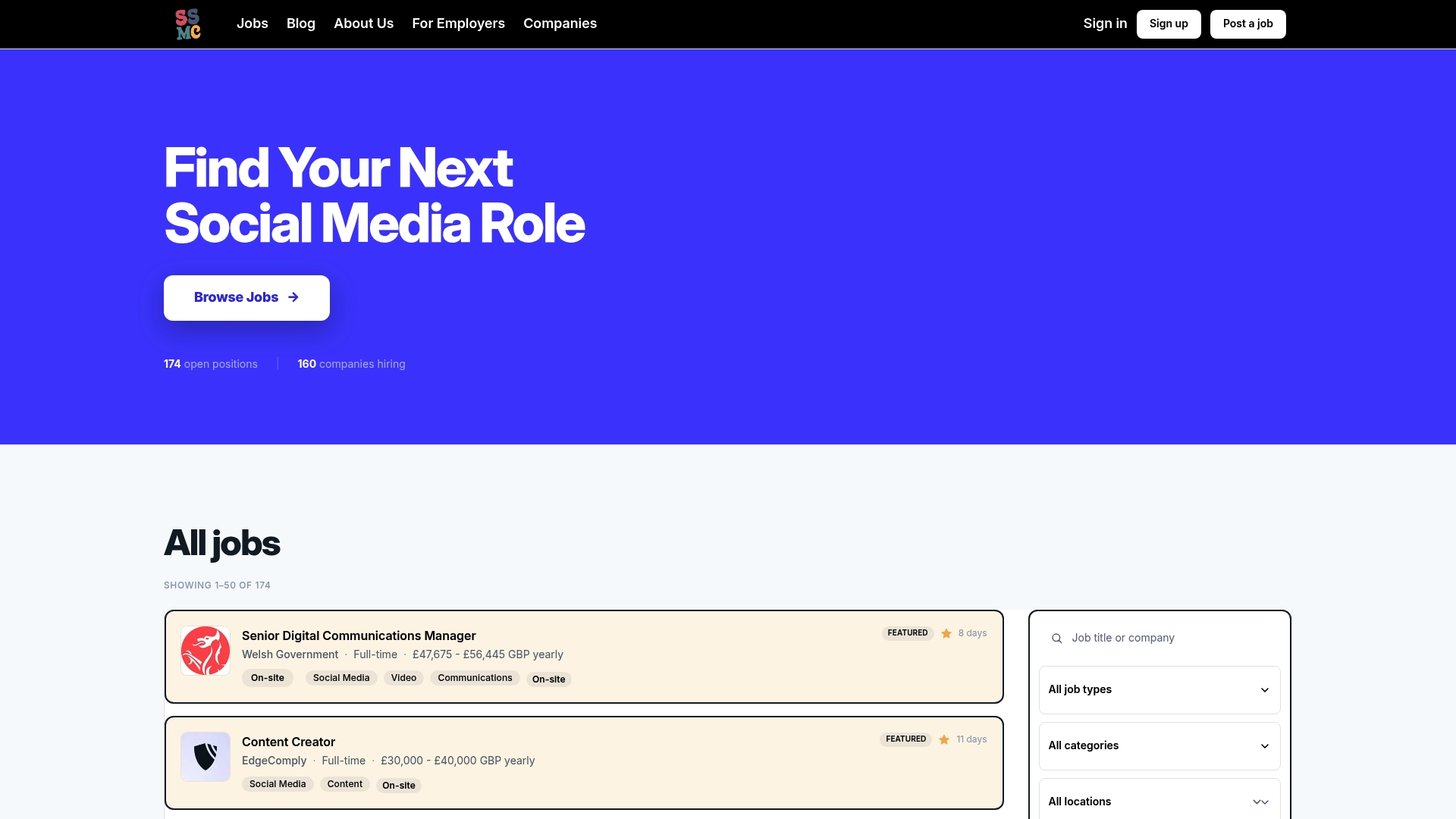
For jobseekers, that means you can browse content jobs across the UK or remote content roles and see the pay before you invest an hour writing a cover letter. A live example, like this paid social media and content internship, shows exactly how a compliant listing should look: clear pay, clear scope, no guesswork about whether you’re a “volunteer” on paper.
Employers posting roles may be encouraged to provide transparent salary details from the start. Check current listing options or get in touch if you’re hiring for a social media, content, or marketing internship and want it in front of candidates who are specifically looking for paid, disclosed roles.
Primary Sources and Further Reading
For the underlying rules, go straight to GOV.UK’s guidance on work experience and internships and the government’s response on tackling unpaid internships. For advice on your specific situation, Acas and Citizens Advice both offer free guidance, and HMRC handles enforcement once a claim is reported.
This article is general information, not a substitute for advice from a qualified lawyer. Consult a qualified legal professional about your own circumstances before acting on anything here.
Sources
- Minimum wage: work experience and internships
- Internships: A 2026 Employment Law Guide | DavidsonMorris
- Making Work Pay: call for evidence on unpaid internships (government response)
- Young workers, apprentices and work experience – working hours | Acas
FAQ
What Is the Minimum Salary for an Internship in the UK?
There’s no separate “internship salary.” If you qualify as a worker, you’re due at least the National Minimum Wage or National Living Wage for your age band, the same as any other employee.
Do You Get Paid for an Internship in the UK?
Yes, in most cases. Unless your placement falls under one of the narrow exemptions, mandatory student placement, genuine volunteering, or pure shadowing, you’re entitled to be paid for the work you do.
How Much Is 40 Hours a Week at Minimum Wage?
Multiply the current hourly rate for your age band by 40. Rates change every April, so check the exact figure on GOV.UK before doing the math, since using an old rate will give you the wrong total.
Is a Two-Week Placement Still an Internship Under the Law?
Duration doesn’t determine your legal status. Even a two-week placement can trigger worker status and full pay entitlement if you’re performing real tasks on a set schedule rather than purely observing.
Where Can I Find Paid Internship Listings in Social Media and Content Roles?
Samssocialmediaclub curates listings that require salary disclosure upfront, including content roles across the UK and remote positions, so you can filter for paid opportunities without guessing.