
Lead With a Metric: Marketing Cover Letters for Entry, Mid, and Senior
Write a one-page marketing cover letter built around a metrics-first opening: your strongest campaign number in sentence one, then business impact, method, and a closing call to action. That four-part structure beats a resume rehash because it proves you think like a marketer instead of just describing one. Aim for 300 to 380 words, tailored to the specific role, not a template you recycle for every application.
TL;DR:
- Including a clear, quantifyable metric in the opening line establishes credibility and aligns with what hiring managers value most.
- Demonstrating business impact by connecting the metric to revenue, engagement, or growth proves your campaign effectiveness beyond just numbers.
- Naming only 3 to 5 relevant tools or platforms in your method emphasizes focus and relevance to the specific role.
- Linking to a specific case study or project instead of a general portfolio enhances proof of your results and skills.
- Tailoring every sentence with keywords from the job description and avoiding filler ensures your application is both targeted and ATS-friendly.
Table of Contents
- What goes into a marketing cover letter that actually gets read
- Three annotated marketing cover letter examples: entry, mid, and senior
- How to write each paragraph: phrasing, metrics, and portfolio links
- Formatting a marketing cover letter so ATS and humans both read it cleanly
- Common marketing cover letter mistakes and how to fix them
- Where this guidance comes from: a job board built on transparency
- The advice that gets skipped, and the one thing to fix first
- Get matched to marketing roles that already show the salary
- Sources
- FAQ
What goes into a marketing cover letter that actually gets read
Hiring managers skim. You have maybe eight seconds before they decide whether to keep reading, and a generic opening (“I am writing to apply for…”) burns that window instantly. A metrics-first opening line increases instant credibility because it signals you understand what the role actually measures: leads, conversion rate, retention, revenue influenced.
The letter needs four things to do real work, in this order:
- A headline metric. One number, stated plainly, in the first sentence or two.
- Campaign impact. What that number meant for the business, not just for your team.
- Method and tools. How you did it, named specifically, in two or three sentences.
- A portfolio reference and close. A link to proof, plus a direct, confident ask.
Every paragraph should answer a specific question a hiring manager is silently asking. Paragraph one: “Can this person move a number that matters to us?” Paragraph two: “Do they understand our market or just their last job?” Paragraph three: “Would they fit how we actually work?” Paragraph four: “Are they easy to say yes to?”
Before you send anything, run through this checklist:
- Pull 3 to 5 keywords directly from the job posting and use them naturally in your sentences.
- Lead with a metric, not a job title or a company name.
- Pair every percentage with a real number or dollar figure (“35% lift” means little without “35% lift, worth $40,000 in added pipeline”).
- Name only 3 to 5 tools, chosen for relevance to this specific role.
- Save the file as Firstname_Lastname_CoverLetter.pdf.
- Link one portfolio piece or case study, not your entire body of work.
Career-services guidance is consistent on this point: tailor every letter, match keywords from the posting, and keep it to one page. Skip any of those three and the letter reads as mass-produced, even when it isn’t.
Three annotated marketing cover letter examples: entry, mid, and senior
Templates only help if you understand why each line exists. Here are three annotated samples, one per seniority level, with notes on what each sentence is doing and why.
1. Entry-level: Marketing Coordinator
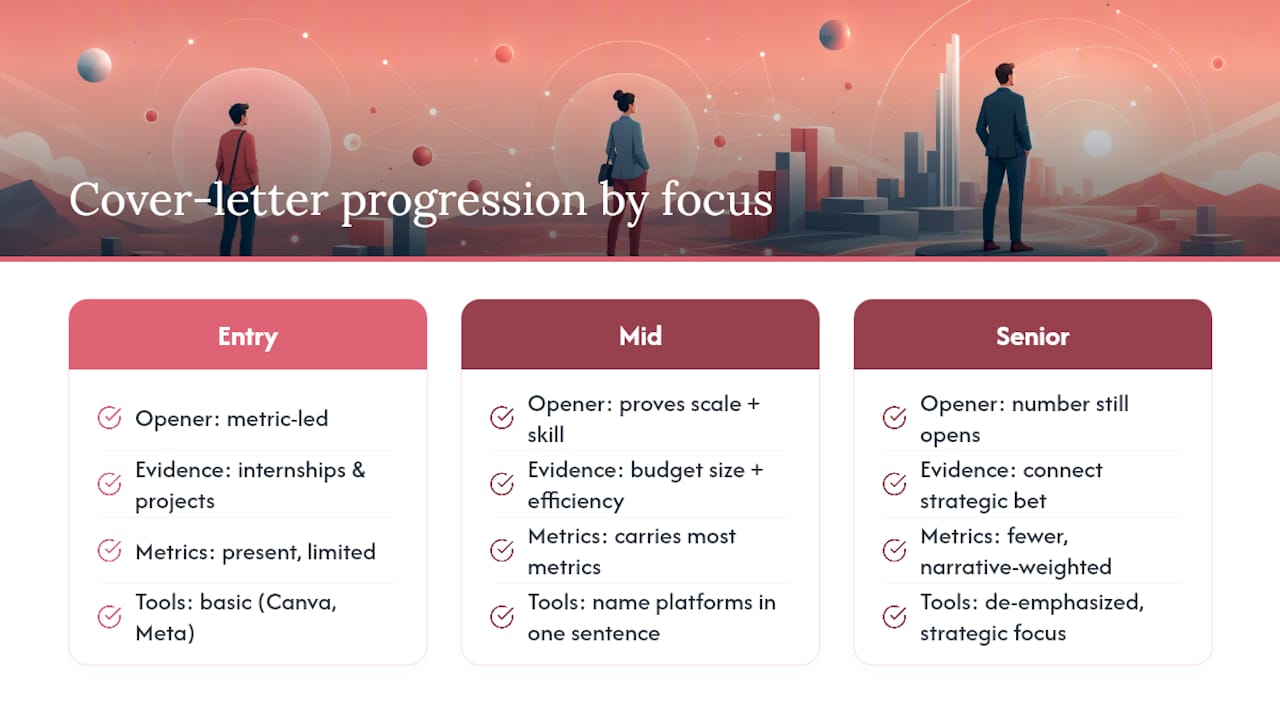
The opening leads with a metric even without years of experience. Internships, class projects, and freelance gigs all count if you attach a number to them. Notice there’s no “I am a hardworking recent graduate” anywhere. The second paragraph should connect that result to something the target company cares about: “I’d apply the same audience-first thinking to [Company]'s content calendar.” Close with enthusiasm plus a specific tool you’ve used, even at a basic level, like Canva or Meta Business Suite.
2. Mid-level: Performance/Digital Marketing
This opener does two jobs at once: it proves scale (budget size) and proves skill (efficiency despite growth, which is harder than efficiency at flat spend). The methodology paragraph should be tight. Cover letters should explain business impact with measurable results rather than restating duties, so name the platforms (Google Ads, Meta Ads Manager, GA4) in one sentence, not a bulleted list. Mid-level letters carry the most metrics because mid-level roles are judged almost entirely on execution.
3. Senior/Head of Marketing
Senior letters shift weight toward narrative and leadership, though the number still opens the letter. A head of marketing candidate should spend more of the letter on strategy and team-building than tool names. BrainStation’s guidance on treating the letter as storytelling applies most here: connect a past strategic bet to how you’d approach this company’s specific market position.
How to write each paragraph: phrasing, metrics, and portfolio links
The opening line carries the most weight in the whole letter. Here are formulas that work across seniority levels, adjusted for how much data you actually have:
- “I [action] that resulted in [metric] over [timeframe].” — the standard, works almost anywhere.
- “In my [X months] managing [channel/budget], I [specific result].” — good for short but focused experience.
- “[Number]% growth wasn’t an accident. Here’s how I engineered it at [context].” — punchier, works for confident senior candidates.
- “My last campaign moved [metric] from [X] to [Y] in [timeframe].” — shows before/after clearly.
- “I turned a [budget size] budget into [outcome], and I can show you exactly how.” — good when budget size is your proof point.
- “Most marketers chase [vanity metric]. I focus on [metric that ties to revenue], which is why [result].” — a contrarian angle for experienced candidates.
- “Before I applied here, I looked at [specific company detail], and it’s exactly the kind of problem I solved when [result].” — strongest for research-driven tailoring.
- “I’ve spent [X years] turning [channel] into a measurable revenue driver, most recently [specific metric].” — solid for specialists.
For the impact paragraph, keep it to two or three lines: state the metric, name the method in a few words, then state the business outcome.
When you name tools, pick the 3 to 5 that map directly to the job posting’s language, not your full software history. Selecting only the most relevant tools instead of an exhaustive list reads as focused rather than scattered.
Pro Tip: Link to one specific project or case study, by name, rather than a general portfolio homepage. “You can see the full breakdown of this campaign here” reads as proof; “check out my portfolio” reads as homework you’re assigning the reader.
Formatting a marketing cover letter so ATS and humans both read it cleanly
Applicant tracking systems parse plain text well and choke on complexity. Skip text boxes, tables, columns, and headers or footers that hold body content. A single clean column with standard fonts (Calibri, Arial, Georgia) at 10.5 to 11 points survives every parser.
- Match 3 to 5 keywords from the job description, worked into real sentences, not a keyword list.
- Name your file Firstname_Lastname_CoverLetter.pdf. “coverletter_final_v2.docx” tells a recruiter nothing and looks disorganized.
- Put your portfolio link in the header as live, clickable text, not a screenshot or embedded image.
- One accent color or a single bold subhead is fine for a marketing role; anything more elaborate risks breaking ATS parsing.
- Keep the whole letter to one page, roughly 300 to 380 words.
Prospects’ guidance on ATS-safe formatting treats these as basics, not extras, and that’s the right instinct. A beautifully designed letter that never reaches a human because a parser mangled it has accomplished nothing.
Common marketing cover letter mistakes and how to fix them
- Repeating the resume. If your letter restates your job titles and duties, cut it and write two sentences connecting one action to one business result instead.
- Vague metrics. “Significantly increased engagement” fixes into “increased engagement 40%, adding 12,000 monthly active users.” Pair every percentage with an absolute number.
- Generic openings. “I’m excited to apply for this position” becomes a line referencing something specific: a product launch, a rebrand, a stated company goal pulled from the posting itself.
- Tool overload. Listing fifteen platforms reads as unfocused. Cut to the 3 to 5 tools the job posting actually mentions or clearly implies.
Employment gaps and career changes deserve one honest sentence, not an apology. “After a year focused on freelance content strategy, I’m ready to bring that client-facing discipline to an in-house team” reframes a gap as relevant experience. If you’re moving from a related field, like journalism into content marketing, name the transferable skill directly: audience research, editorial judgment, deadline management under real pressure.
Where this guidance comes from: a job board built on transparency
Some job boards review marketing, content, and communications postings daily, curating listings that include actual salary ranges instead of “competitive pay.” That vantage point shapes this guidance: we see which job descriptions reward metrics-driven language and which roles genuinely need a portfolio link versus a work history summary.
Pairing a strong letter with the right listing matters more than either alone. A well-written cover letter aimed at a mismatched role still won’t land. Reviewing live postings, like a Content Marketing Coordinator role or a Content & Growth Marketing Manager posting, before you write gives you the exact language to mirror.
The advice that gets skipped, and the one thing to fix first
Most cover letter guides tell you to “show enthusiasm” and “highlight your skills.” That advice is technically true and practically useless. Enthusiasm doesn’t get you an interview. A number does. The gap between advice that sounds right and advice that changes outcomes is exactly the gap between “I’m passionate about digital marketing” and “I grew organic traffic 140% in six months.”
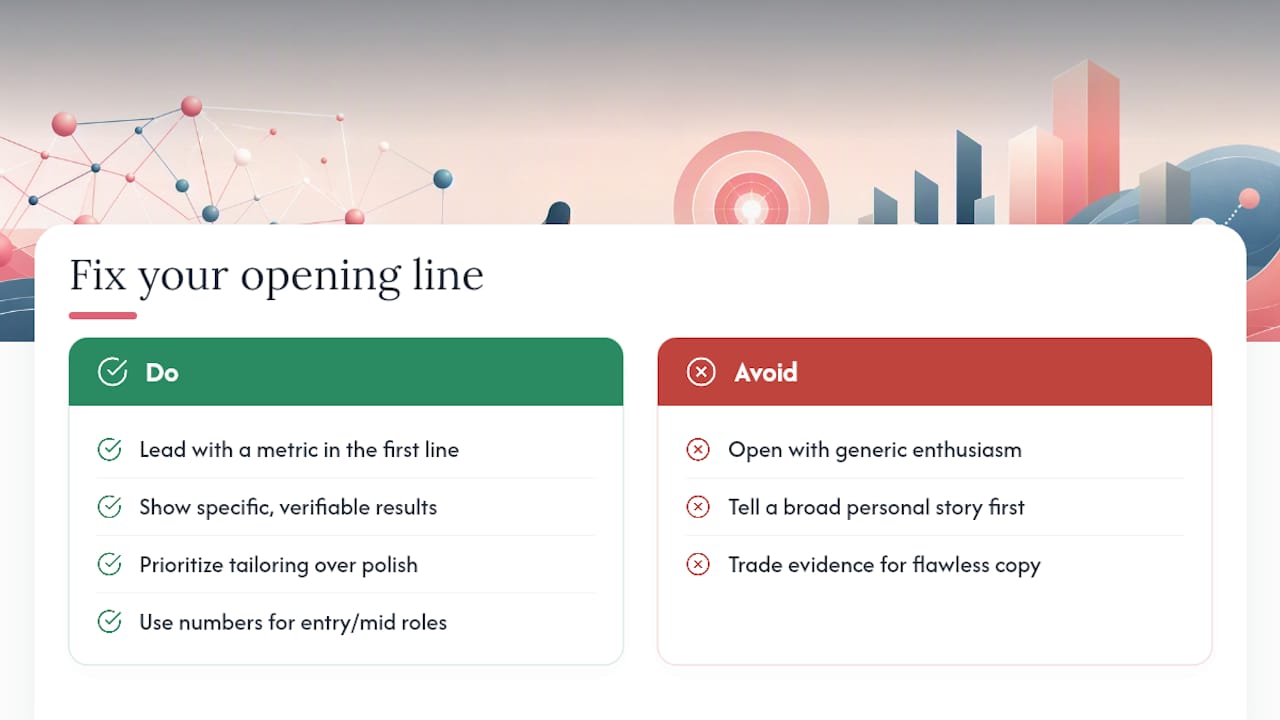
The most overrated piece of conventional wisdom is the idea that a cover letter should “tell your story.” Stories matter for senior roles where judgment and leadership carry weight. For entry and mid-level marketing jobs, a hiring manager wants evidence you can move a number, fast, in the first ten seconds of reading. Fix your opening line before you touch anything else. If sentence one doesn’t contain a metric or a specific, verifiable claim, nothing else in the letter will compensate for it.
Prioritize tailoring over polish. A letter with one grammatical hiccup but sharp, specific evidence beats a flawless letter full of generic phrases every time.
— Sam
Get matched to marketing roles that already show the salary
Some job boards differ from most by showing salary before applying, so candidates avoid writing metrics-first cover letters for roles that pay far less than expected. That transparency, paired with a curated screening process, means the postings you see have already been vetted for legitimacy and fit rather than scraped from a dozen other sites.
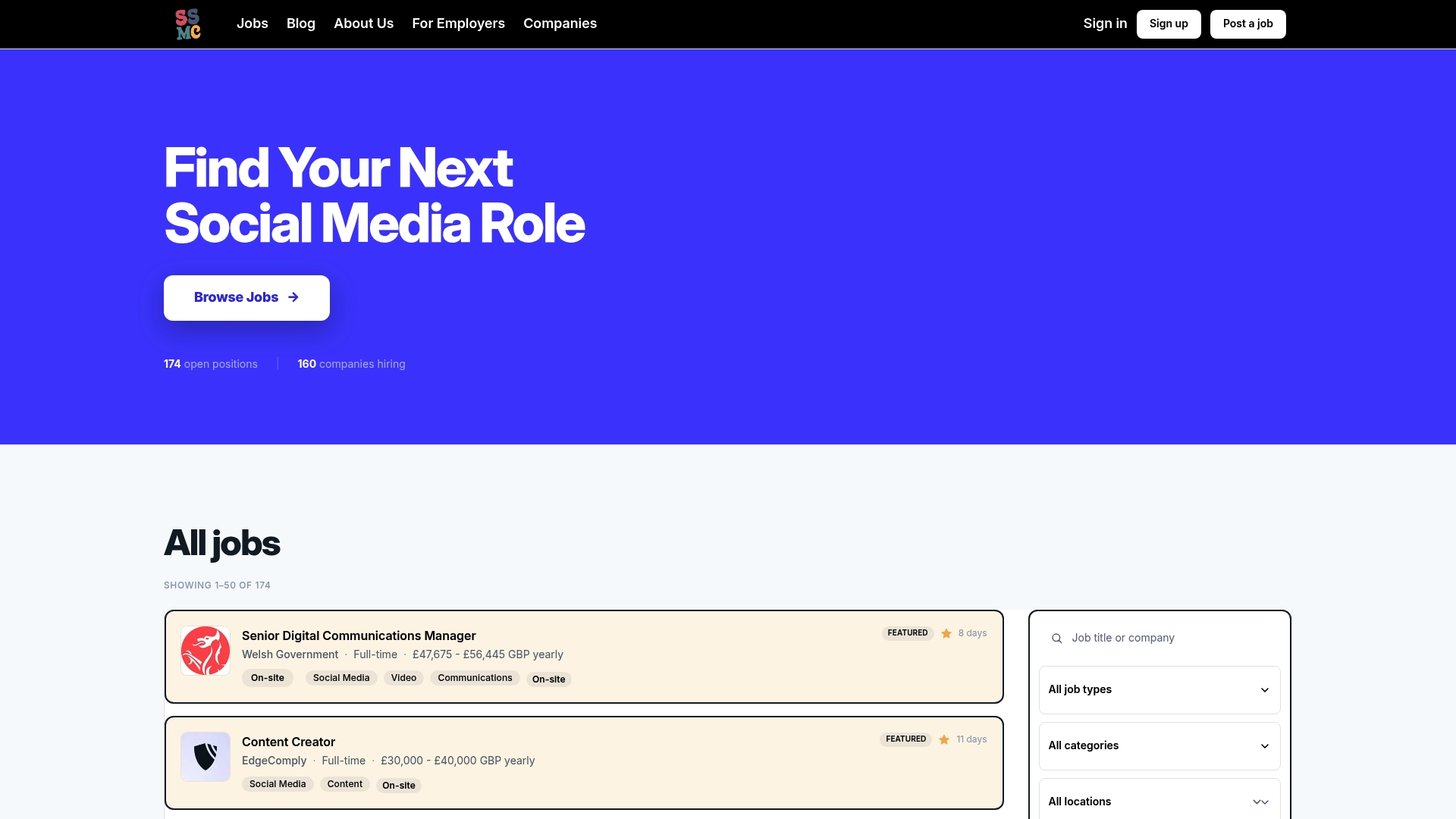
Once your letter is drafted, the next step is finding roles worth sending it to. Browse current openings and submit an enquiry to learn more about how the curated listings and direct application access work, whether you’re targeting your first coordinator role or a head of marketing search.
Sources
- Marketing Cover Letter Examples: Coordinator to Director (2026) | Resume Optimizer Pro
- Digital marketing cover letter templates and examples | BrainStation
- Cover letters | Prospects
FAQ
What five things should a cover letter include?
A strong marketing cover letter includes a metrics-first opening, a business-impact statement, relevant tools or methods, a portfolio reference, and a clear closing call to action.
Can employers tell if you use ChatGPT for a cover letter?
Generic, overly polished phrasing with no specific metrics or company details is a common tell; hiring managers notice when a letter could apply to any company because it lacks tailored, verifiable detail.
What are five common cover letter mistakes?
The most frequent are repeating the resume instead of adding new evidence, using vague metrics without real numbers, opening with a generic line, listing too many tools, and ignoring the job posting’s specific keywords.
What is a marketing cover letter?
A marketing cover letter is a one-page application document that demonstrates marketing skill through its own structure, using a metrics-first opening and concise storytelling rather than simply repeating your resume.