
Founders: The Two Condition Rule for Your First Marketing Hire
Founders: The Two Condition Rule for Your First Marketing Hire

Hire a hands-on builder only when two things are both true: you have a repeatable channel and you can write a one-page brief describing exactly what they’ll do each week. If either is missing, don’t hire full time yet. Buy hours from a contractor or fractional operator instead, and revisit the decision once the channel proves itself.
TL;DR:
- Only hire a full-time marketing person when you have a confirmed repeatable channel for at least eight weeks and can clearly describe the expected weekly outputs in a one-page brief.
- The first marketing hire should be a growth generalist with proven execution skills, rather than a specialist, especially if your business is still testing multiple channels or lacks a mature team.
- Candidates must demonstrate rapid execution ability, including creating content, landing pages, running paid ads, and understanding analytics, with prior experience building channels from scratch.
- Use a detailed 30/60/90-day plan and real mini-projects during interviews to verify candidates’ capacity to deliver results without extensive supervision.
- Hiring should be stage-dependent, with fractional or contractor work suitable before you have a proven channel or budget, and full-time hires only when the channel and expectations are well established.
Table of Contents
- When Should You Make Your First Marketing Hire?
- Which Marketing Role Should You Hire First?
- What Skills and Traits Should the Hire Have?
- How Do You Write the Brief and JD for This Hire?
- Full-Time Hire vs. Fractional CMO vs. Contractor
- How Do You Interview and Onboard the Right Candidate?
- Where to Find Candidates and Run the Search
- What I’ve Learned Watching Founders Get This Hire Right and Wrong
- Let Sam’s Social Media Club Help You Fill This Role
- Sources
- FAQ
When Should You Make Your First Marketing Hire?
Most founders get the timing wrong, and almost always in the same direction. They hire too early, hoping a smart generalist will figure out distribution from scratch. That rarely works. Research on seed-stage hiring found most founders make this hire about six months too early, which burns runway on a role nobody yet knows how to define.
The fix is the two-condition rule. Condition one: you have a repeatable channel. That means 8 to 12 weeks of consistent pipeline or conversions, not a single lucky spike. Concrete examples: 15 outbound meetings booked per week for two straight months, an SEO cluster reliably sending five qualified leads a week, or a referral loop that converts without your personal touch.
Condition two: you, the founder, can write a one-page brief. If you can’t describe the channel, name the weekly outputs, and set success signals for day 30, 60, and 90, you don’t yet know what you’re hiring for. A hire without that brief spends their first quarter doing your job of discovery, at a much higher cost.
Stage cues that usually track with this decision: seed to Series A companies with early signs of product/market fit, or founders spending more than half their week on marketing tasks they can’t delegate.
- Repeatable channel confirmed for 8+ weeks
- Founder can write the weekly-output brief without guessing
- Founder time on marketing tasks exceeds 15 hours a week
- Budget exists for a market-rate salary plus 3 to 6 months of runway cushion
Pro Tip: If you can’t finish the one-page brief in under an hour, that’s your answer. The channel isn’t repeatable enough yet, so don’t hire.
Which Marketing Role Should You Hire First?
The right first hire depends on your business model and what “repeatable” looks like for you, not on what title sounds impressive. A growth generalist who can execute end-to-end usually beats a specialist at this stage, because there’s no team yet to hand off the parts they can’t do.
- Growth generalist: best for B2B SaaS and consumer companies still testing multiple channels; owns copy, landing pages, paid tests, and reporting.
- Product marketer: right when you have product/market fit and need positioning, launch cadence, and sales enablement, common in PLG companies moving upmarket.
- Content lead: fits when your channel is organic, SEO, or founder-led content that needs a steady production engine.
- Demand gen specialist: makes sense only once you have a defined ICP and a sales team that needs qualified pipeline, not before.
Seniority matters more than most founders assume. A director-level or senior individual contributor from a company 2 to 5 times your size usually outperforms a CMO at seed stage. A CMO title often signals someone who manages teams and budgets, not someone who builds a channel from zero with no support.
Pick one function where the candidate has a genuine “spike,” paid acquisition, SEO, or lifecycle, and pair it with solid generalist skills everywhere else. A jack-of-all-trades with no depth anywhere rarely moves the metrics fast enough to justify the salary.
What Skills and Traits Should the Hire Have?
Screen for execution ability first, strategy second. A first marketing hire who can talk about frameworks but can’t ship a landing page in a day will cost you months you don’t have.
- Writing and content production: can draft copy, emails, and simple pages without a copywriter on standby.
- Basic design and landing pages: comfortable in tools like Webflow, Unbounce, or Framer without waiting on a designer.
- Paid acquisition basics: has run and optimized a Meta or Google Ads account with real budget, not just observed one.
- Analytics and CRM literacy: reads a dashboard, sets up UTM tracking, and reports numbers without hand-holding.
- AI-assisted workflows: increasingly expected, since modern marketers lean on AI tools for marketing teams to boost productivity with content drafts and reporting automation.
Beyond skills, test for founder mentality: coachability, ownership without a manager checking in daily, and the discipline to say no to distractions. Ask for evidence, not claims. A candidate who built a channel from nothing predicts success better than one who managed an existing budget someone else built.
Pro Tip: Ask candidates to walk through a channel they built from zero, not one they inherited. The story reveals whether they can survive the ambiguity of a first hire role.
How Do You Write the Brief and JD for This Hire?
The one-page brief is the single most important document you’ll produce before this hire starts. It should cover:
- The channel they’ll own and current baseline metrics
- Weekly outputs expected (e.g., “20 outbound emails sent, 3 pieces of content published”)
- Tools and systems they’ll use (CRM, ad platforms, analytics)
- Decision rights: what they can approve alone vs. what needs your sign-off
- Success criteria at day 30, 60, and 90
The job description needs the same specificity. Skip vague mission statements and list the outcome-based KPIs the role owns. A strong JD structure always names must-have tools, gives a compensation range, and includes an explicit 30/60/90 section, which candidates increasingly expect and use to judge whether you know what you’re hiring for.
A sample 30/60/90 for a growth generalist:
- Days 1 to 30: audit current channels, ship two landing page tests, publish a content cadence baseline.
- Days 31 to 60: launch one new paid channel test with a fixed budget, hit a defined lead or pipeline number.
- Days 61 to 90: scale the channel that worked, kill the one that didn’t, report a clear cost-per-lead trend.
If you can’t yet write this brief with confidence, test the channel with a contractor first. It’s cheaper than discovering the gap after a full-time salary is already committed. Job listings like this content and growth marketing role show what a well-scoped JD looks like in practice.
Full-Time Hire vs. Fractional CMO vs. Contractor
Not every founder needs a full-time salary commitment on day one. The right choice depends on how far along your channel actually is.
- Fractional CMO: right when you need strategy before execution, typically in the £4,000 to £12,000 per month range. Expect a documented playbook and help hiring your first operator, not hands-on daily execution.
- Contractors or agencies: make sense for specific, well-scoped deliverables, like SEO content production or paid media management, where you can define exact outputs in a scope of work.
- Full-time hire: only once you have a repeatable channel, budget for salary plus runway cushion, and the capacity to hand off the brief without babysitting it daily.
A fractional engagement lets you buy senior strategic thinking without the salary and equity cost of a full-time executive, which matters when every dollar of runway counts before Series A.
How Do You Interview and Onboard the Right Candidate?
Skip resume theater. Build a short process that tests real execution under stage-appropriate constraints.
- Mini project: require a 90-day plan against a fixed budget, say a £10,000 quarterly spend, with a two-page execution roadmap.
- Technical checks: a writing sample, a landing page mock, or a budgeted ad plan reviewed live.
- Reference checks: ask former managers specifically whether the candidate built the channel or inherited it.
- Onboarding weeks 1 to 4: hand off the one-page brief immediately, set a week-one goal (audit and quick win), and schedule a week-four checkpoint against the 30-day plan.
Red flags to watch: vague answers about past results, no examples of channels built from scratch, and discomfort committing to numbers in the interview itself.
Where to Find Candidates and Run the Search
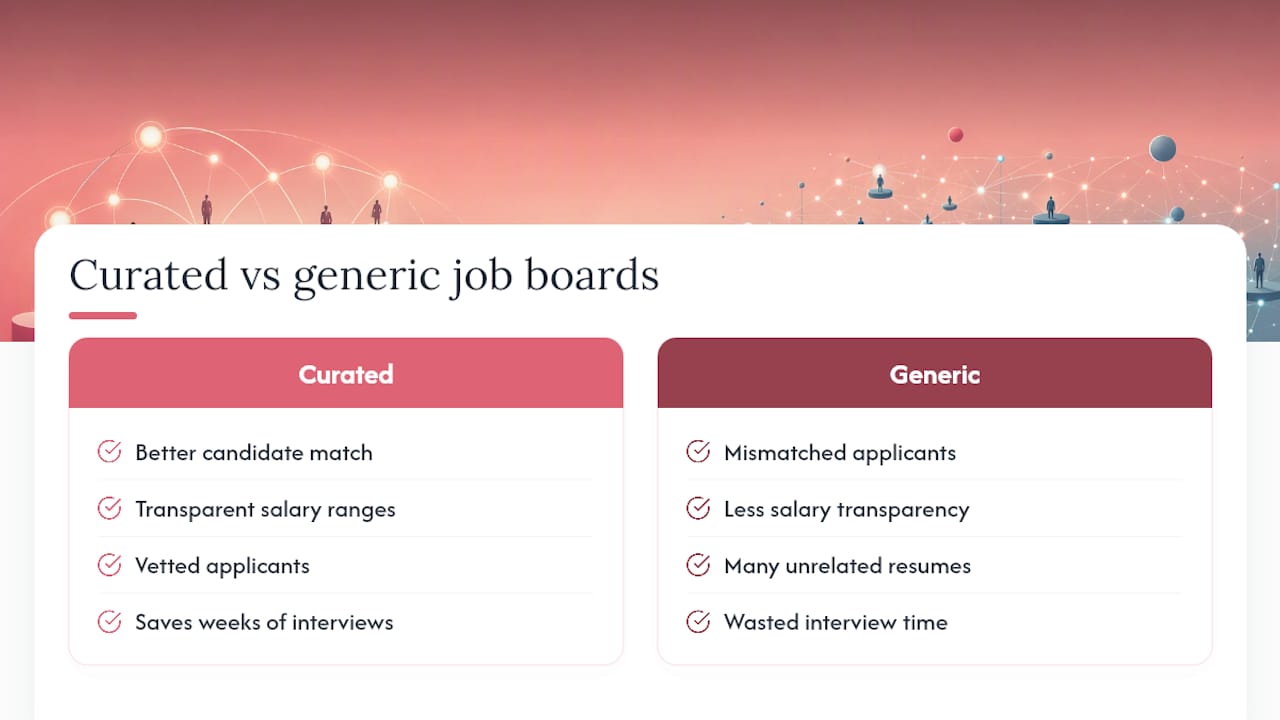
Sourcing quality candidates for a first marketing hire usually beats generic job boards cluttered with mismatched applicants. Curated platforms, niche marketing communities, and warm referrals tend to surface people who’ve actually built channels, not just managed them.
A curated platform focusing on social, content, and marketing roles with transparent salary listings can cut down on wasted interviews over compensation mismatches. Employers get a smaller, more relevant applicant pool instead of hundreds of generic resumes.
A practical checklist to run the search:
- Post the JD with salary range and 30/60/90 outcomes visible upfront
- Screen for evidence of channel-building, not job titles
- Run the mini project before a final interview
- Keep a hiring folder: JD, brief, candidate notes, reference call summaries
What I’ve Learned Watching Founders Get This Hire Right and Wrong
The founders who get this right stay involved even after hiring. They don’t disappear the day someone new starts. The best first hires I’ve seen run the playbook the founder already validated, they don’t invent one from scratch.
The founders who get it wrong treat this hire as a rescue move, hoping a good marketer will save a channel that never worked. It never plays out that way. Hiring is a stage decision, tied to evidence, not a reaction to panic or a board meeting.
If you take one action this week, write the one-page brief. If you can’t finish it, you have your answer already.
— Sam
Let Sam’s Social Media Club Help You Fill This Role
Once your JD and one-page brief are ready, the next bottleneck is usually finding candidates who match the specificity you just built. That’s where a curated approach beats a generic job board flooded with mismatched applicants.
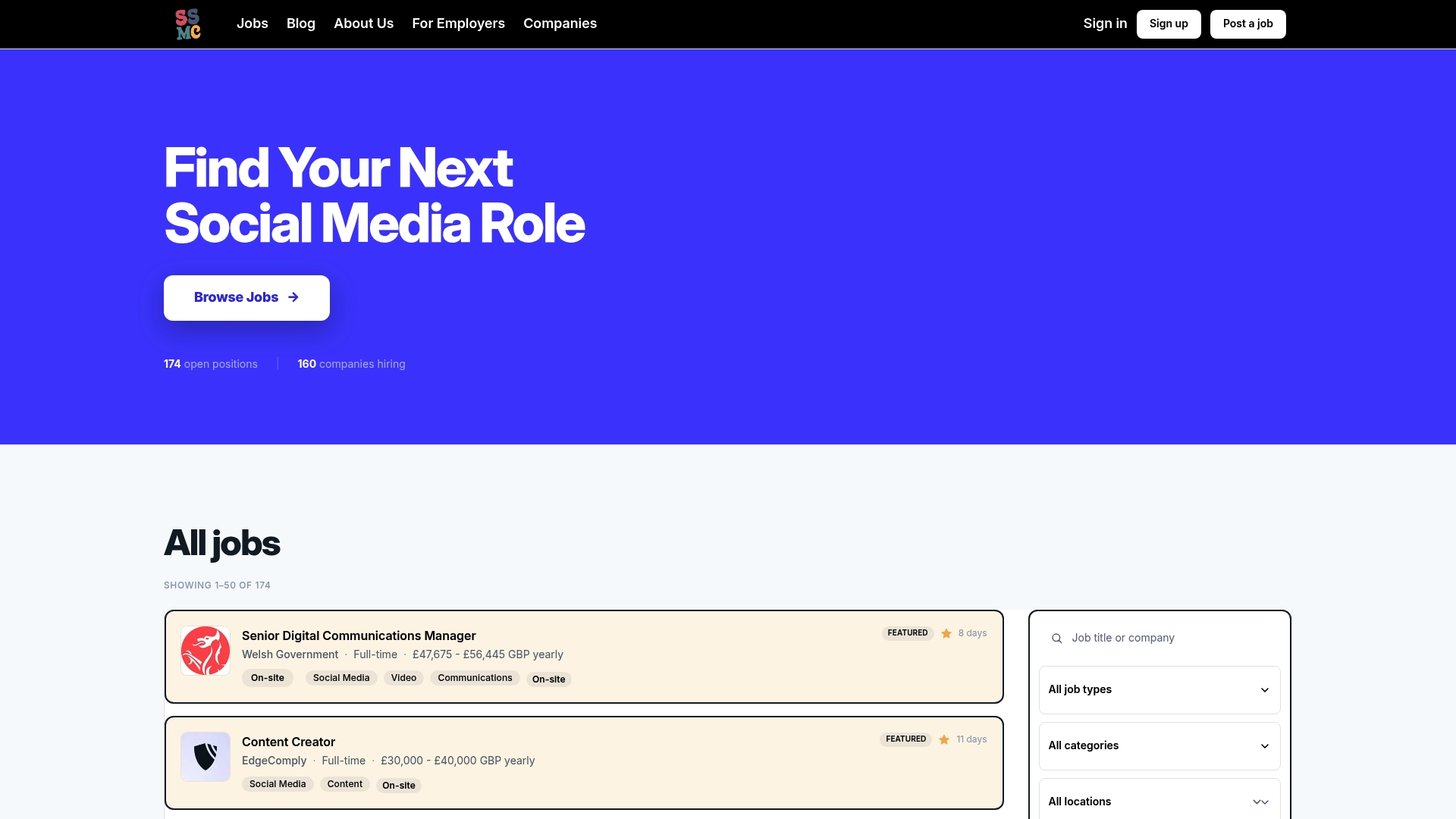
Some curated job boards list roles in social media, content, marketing, and communications with transparent salary ranges attached to postings. That transparency can filter out candidates who might walk away at the offer stage over compensation, saving weeks of wasted interviews. A vetting process may ensure applicants better fit the skill profile being screened for, rather than receiving many unrelated resumes to sort through manually.
If you’ve got the brief and JD ready, submit an employer enquiry to get your role in front of vetted marketing talent actively looking for transparent, well-scoped opportunities.
Sources
For deeper guidance on this decision, the Causo Hub seed-stage hiring guide breaks down the two-condition rule in more depth. TechStars’ founder advice on first marketing hires covers skill requirements candidates should demonstrate. For interview design, ProductiveShop’s startup hiring guide walks through mini-project structures. On fractional costs, vCMO’s pricing breakdown covers current market bands.
- First marketing hire seed 2026: when (and when not) to do it | Causo Hub
- Everything startups should know before hiring their first marketer | TechStars
- How much does a fractional CMO cost | vCMO (resource)
- First marketing hire: A guide for startups | ProductiveShop
FAQ
What Is the 3-3-3 Rule for Marketing?
It’s a content framework some marketers use for planning output, typically three pieces across three formats over three weeks, though exact definitions vary by team and aren’t a fixed industry standard.
How Much Does It Cost to Hire a Marketer?
Full-time salaries vary widely by stage and location, but a fractional CMO alternative typically runs £4,000 to £12,000 per month, which lets you test the role before committing to full-time compensation and equity.
How Do I Get a Marketing Job With No Experience?
Build a visible portfolio of self-directed projects, like a content channel or small campaign you ran yourself, since founders hiring their first marketer prioritize evidence of execution over formal credentials. Sam’s Social Media Club has a guide for entry-level candidates breaking this down further.
Which Pays More, HR or Marketing?
It depends heavily on seniority and specialization in both fields, marketing roles with a proven channel-building track record often command higher pay at early-stage startups specifically because that skill set is scarce and directly tied to revenue.
Should I Hire a Generalist or a Specialist First?
Choose a growth generalist with one functional spike, since early-stage companies rarely have the team structure to support a narrow specialist who can’t cover gaps across content, paid, and analytics.