Where Your Data Lands: Direct Apply Meaning for UK Jobseekers

Direct apply means your application goes straight to the employer, whether through their careers page, an official email address, or a job-board button that forwards your details to their own systems rather than storing them elsewhere. It describes the application route, not your future employment status. The practical upshot: you have more control over where your information lands, but you also carry the full weight of tailoring your application yourself.
TL;DR:
- Direct apply routes can involve employer websites, official email addresses, or job-board buttons that send your data straight into the company's systems.
- Many employer portals request account creation and structured responses, making the process more formal than a simple "apply now" button.
- Applying directly bypasses recruitment agents and third-party platforms, leading to faster visibility but less personalised support during the hiring process.
- Employers favour direct applications to retain control over branding and candidate data, but internal delays remain unaffected.
- Tailoring your CV and cover letter specifically to the role and following application instructions closely increases your chances of success.
Find roles worth applying for. Explore curated social media, content, marketing, and communications roles with transparent salary listings in one focused job board. Explore current roles
Table of Contents
- What direct apply means in practice
- How direct apply differs from agency and easy apply routes
- Employer perspective: why companies ask for direct applications
- Benefits and drawbacks of applying directly
- How to apply directly: steps that actually improve your odds
- What to expect after you submit
- Example: how a curated job board supports direct apply
- When direct apply is worth prioritising
- Find direct-apply roles worth tailoring for
- Sources
- FAQ
What direct apply means in practice
A direct-apply route can take several forms, and recognising them helps you avoid confusion when a job advert uses vague language. Sometimes it means clicking through to an employer's own careers page and filling out their form. Sometimes it's an email address listed in the advert where you send your CV and cover letter directly to a hiring manager. Sometimes it's a button on a job board that looks like "easy apply" but actually forwards your data straight into the employer's applicant tracking system.
Schema.org's directApply property offers a useful operational test for job postings: it flags whether the posting's URL lets an applicant initiate an application directly through that page, rather than being redirected to a third party that holds the data separately. That distinction, where the application starts and where it ends up, is the cleanest way to tell a genuine direct-apply route from an indirect one.
Direct routes often come with more formality than you'd expect from a single "apply now" button.
- Many employer portals require you to create an account before you can submit anything.
- Structured questions replace a simple CV upload, asking you to describe specific skills or experience in text boxes.
- Applicant tracking systems parse your documents and answers before a human ever sees them.
How direct apply differs from agency and easy apply routes
The agency route puts a recruiter between you and the employer. That person represents you, negotiates on your behalf, and often has an existing relationship with the hiring manager. The direct route removes that layer: you submit your application straight to the company, and nobody advocates for you once it's in.
Job-board "easy apply" buttons sit in a grey area. Some genuinely forward your data straight into the employer's system, making them a form of direct apply. Others simply store your application on the board's own database, where the employer logs in separately to review candidates. The only reliable way to know which you're dealing with is to check where your data actually goes, not what the button is called.
This distinction has real consequences.
- Direct submissions typically reach the hiring team without a middleman, which can mean faster visibility but no one chasing on your behalf.
- Agency-managed applications benefit from a recruiter's coaching and negotiation, at the cost of less direct contact with the employer.
- Data privacy differs too: a direct submission usually sits inside the employer's own systems, while a board-stored application may be shared across multiple employers using that platform.
Employer perspective: why companies ask for direct applications
Employers often prefer direct applications because it keeps branding, data, and candidate experience under their own control rather than an agency's. According to GOV.UK's employer guidance, an employer can recruit directly or use an agency, and choosing to recruit directly means managing advertising, selection, and appointment entirely in-house.
That control doesn't translate into a faster process. The CIPD's recruitment factsheet breaks recruitment into stages: defining the role, attracting applicants, managing applications, running selection, and making the appointment. Cutting out an agency removes one layer of coordination, not the internal approvals, panel reviews, or structured selection steps that still have to happen. A direct application can sit in a queue for weeks while a hiring manager waits on budget sign-off, regardless of how quickly you submitted it.

Benefits and drawbacks of applying directly
Applying direct has real upsides, but it isn't automatically the better choice for every vacancy.
- Your data has a clearer, shorter path, often straight into the employer's own tracking system.
- Some employers list vacancies exclusively on their own site before or instead of using boards or agencies.
- You control the exact wording and format of your application rather than an agency reshaping it.
- Direct routes carry lower exposure to recruitment scams that sometimes hide behind vague third-party postings.
The drawbacks are just as concrete. There's no recruiter chasing a decision or coaching you through an interview. Portal-based shortlisting can be stricter, screening out CVs that don't match keyword criteria. And without clear, job-related selection criteria, internal bias can creep into decisions more easily, a risk CIPD's inclusive recruitment guidance specifically flags.
Pro Tip: Favour direct apply when you can genuinely tailor your materials to the role and the employer publishes clear, job-related selection criteria; save agency-assisted applications for roles where negotiation or advocacy matters more than speed.
How to apply directly: steps that actually improve your odds
Direct applications reward preparation more than volume. A few deliberate steps make the difference between a form that gets skimmed and one that gets shortlisted.
- Tailor your CV to the specific role rather than sending a generic version to every employer.
- Write a new cover letter for each application, naming the exact job title and reference number where one is given.
- Complete every portal question in full, since some employers shortlist on written answers rather than the attached CV.
- Save your progress, attach every requested document, and confirm where your data is being sent before you hit final submit.
The National Careers Service's cover letter guidance recommends matching the language used in the advert itself, which helps your application read as a direct response to that specific role rather than a copy-paste effort. Reviewing marketing cover letter examples for entry, mid, and senior roles can give you a starting template to adapt.
Portal mechanics matter too. Employer sites like Norwich City Council's recruitment portal show a common pattern: you register an account, save your progress across sessions, and complete structured questions that often carry more shortlisting weight than the CV you upload.
- Check your email for a confirmation message immediately after submitting.
- Log back into the portal periodically to check your application status.
- Send one polite follow-up email if a stated response window has passed, referencing the job title and the date you applied.
What to expect after you submit
Timelines vary widely because internal approvals, applicant volume, and role complexity all move at different speeds, and a direct application doesn't bypass any of them. Once submitted, most employers run your application through an applicant tracking system that parses your CV and portal answers. Structured answers to screening questions often carry more weight in that first pass than the document you attached, since they're easier for the system and the reviewer to compare across candidates.
Your best move as an applicant is patience paired with light monitoring: confirm you received an acknowledgement email, check the portal for status updates, and send one brief, polite follow-up if a stated timeline has clearly passed.

Example: how a curated job board supports direct apply
There are job boards built around curated listings for social media, content, marketing, and communications roles, with mandatory salary transparency on every posting. Listings link directly to employer applications rather than routing candidates through a generic inbox, so the application path stays clear from the first click. Curation and required pay ranges work together to cut down on vague or low-quality postings, which matters most to applicants who want to spend their effort on roles that actually match their skills. You can browse how this works in practice through the 2026 guide to finding transparent roles.
When direct apply is worth prioritising
Direct apply earns its place when you can genuinely tailor a CV and cover letter to one specific role, not when you're trying to cover as much ground as possible. Pair it with a referral where you have one. Relying on direct apply alone across dozens of generic applications wastes the format's biggest advantage: precision.
— Sam
Find direct-apply roles worth tailoring for
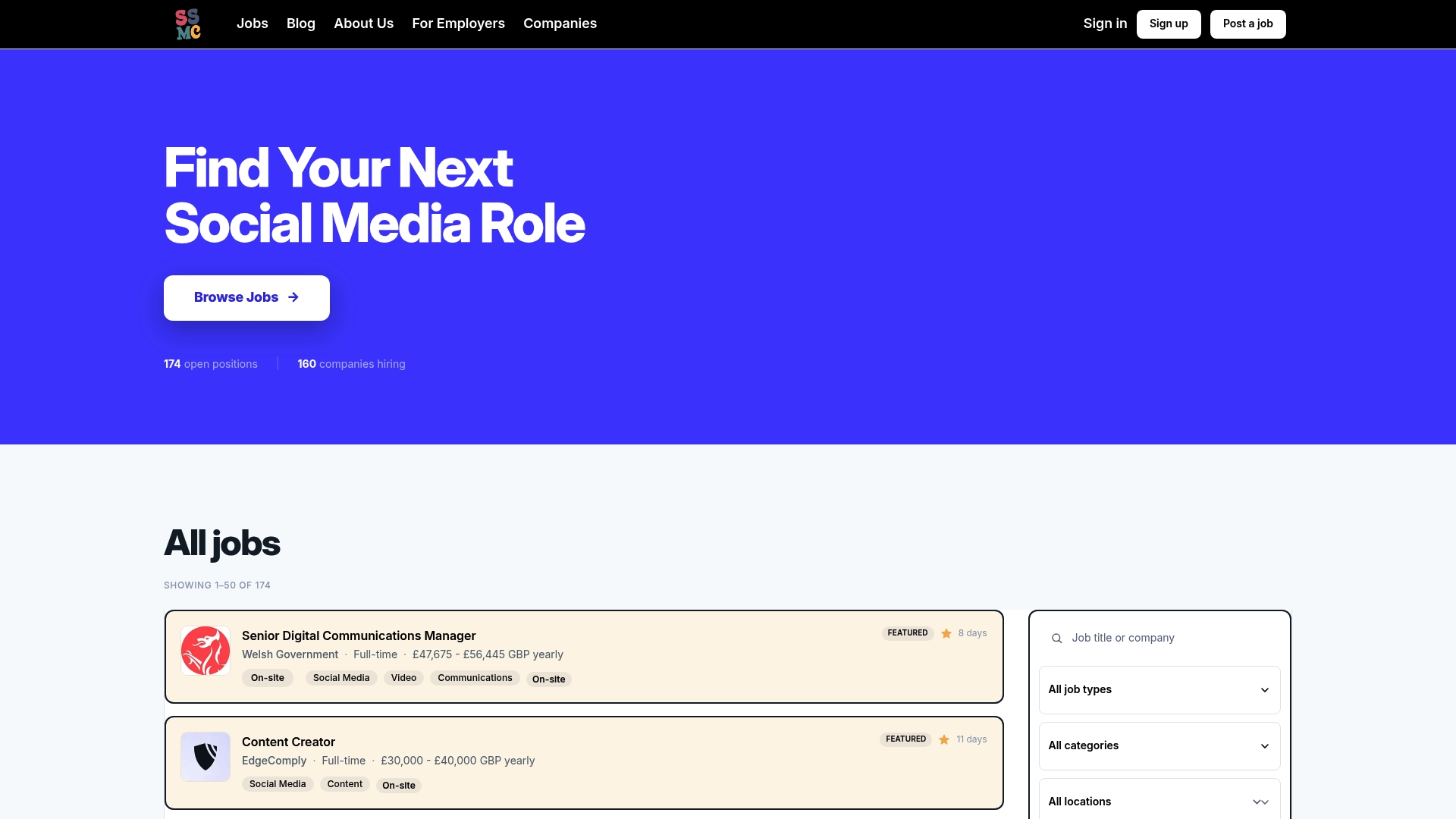
Sam's Social Media Club lists social media, content, marketing, and communications roles with salary ranges shown upfront and direct links into each employer's own application process. That combination means less time filtering out vague postings and more time writing the tailored application that direct apply rewards. Browse open roles. If you're an early-career applicant, the guide on landing your first marketing job with no experience pairs well with this approach. Employers looking to post a curated, direct-apply listing can check plan details on the pricing page.
Sources
This article draws on GOV.UK's employer recruitment guidance, the CIPD recruitment factsheet, Schema.org's directApply property, and the National Careers Service's cover letter guidance. Applicants working on CV alignment may also find a purpose-driven CV framework useful for structuring their experience around a target role.
- Employing people - GOV.UK
- directApply - Schema.org
- Recruitment: An introduction - CIPD
- How to write a cover letter - National Careers Service
FAQ
What does direct apply mean?
Direct apply means your application is sent straight to the employer, either through their own careers page, an official email, or a job-board feature that forwards your details into their system rather than storing them separately. It describes the submission route, not the type of job or contract you'll end up with.
How long does direct hire take?
Timelines vary because internal approvals, the number of applicants, and role complexity all affect the pace, and applying directly doesn't remove those steps. The CIPD's recruitment stages still apply in full even when there's no agency involved.
What does "Direct Applicant" mean?
A direct applicant is someone who submitted their application straight to the employer rather than through a recruitment agency or a third-party platform that holds the data separately. It's a description of how the application arrived, not a judgement on the candidate's suitability.
What does direct recruitment mean?
Direct recruitment means the employer manages the entire hiring process itself, from advertising the role to selecting and appointing candidates, without using an external agency. GOV.UK's guidance confirms employers can choose this route or use an agency, and the choice affects who handles the process, not the legal nature of the job offered.