
Hire for Culture Add: 30–90 Day Scorecard Hiring Managers Can Copy
Culture add hiring means hiring a capable candidate who fills a measured gap in your team’s makeup, not one who simply mirrors your current staff. The action is simple to state and harder to skip: map your team’s composition, name the specific gap, and hire against it. Sources like AIHR and Harvard Business Review back this approach, and platforms like Samssocialmediaclub can help you reach candidates who fit the gap you’ve named.
TL;DR:
- Culture add hiring requires clearly identifying a measurable skill or perspective gap before posting the role; vague diversity goals are insufficient.
- Focus on candidates who meet the capability standards first, then assess how their unique background or working style can contribute to the team.
- Structured interviews should ask for specific examples related to the gap, with independent scoring based on evidence, not opinions.
- Onboarding must explicitly foster psychological safety and set measurable goals to ensure culture add hires contribute effectively.
- Using targeted, transparent job platforms like Samssocialmediaclub improves sourcing for niche skills and diverse perspectives that traditional channels may overlook.
Table of Contents
- What Is Culture Add, Exactly?
- Culture Add vs Culture Fit: When to Use Each
- Why Culture Add Hiring Matters for Business Results
- How to Build Culture Add Into Your Hiring Process
- Culture-Add Interview Questions and a Simple Scoring Rubric
- Common Pitfalls in Culture Add Hiring
- Onboarding Culture-Add Hires So They Actually Contribute
- How Samssocialmediaclub Helps You Find Culture-Add Candidates
- A Hiring Manager’s Quick Take
- Ready to Hire for the Gap You’ve Named?
- Sources
- FAQ
What Is Culture Add, Exactly?
Culture add is a formula, not a feeling: a measured gap plus a candidate who has the capability to fill it. AIHR’s definition frames it as prioritizing candidates who bring skills, perspectives, or working styles the team currently lacks, while still meeting the bar for the job itself.
Three principles make this workable day to day:
- Shared values are the floor, not the differentiator. Everyone still needs to meet your core standards of respect, accountability, and collaboration.
- Name the gap before you post the role. “We want diversity” is not a hiring brief. “We have no one with paid-media experience” is.
- Measure first, hire second. A quick audit of your team’s skills, working styles, or backgrounds turns a vague goal into a specific target.
A common example: a content team stacked with extroverted brainstormers might be missing someone who prefers deep, solo research. That’s a measurable gap, and it’s fillable.
Culture Add vs Culture Fit: When to Use Each
Culture fit vs culture add isn’t a binary choice between “safe” and “risky.” Each lens solves a different problem, and knowing which one your team needs right now matters more than picking a side permanently.
- Culture fit protects shared values and smooths onboarding, but overused, it produces sameness. HBR’s research on hiring for fit shows this can quietly narrow a team’s thinking over time.
- Culture add widens the range of skills and viewpoints on a team, but it only works if capability standards stay firm.
- Decision rule: when you have multiple candidates who all clear the capability bar, weight the decision toward add. When you’re short on qualified candidates, fit still matters, but don’t let it become an excuse to hire clones.
Early-stage teams often need both at once. Small teams need enough shared footing to move fast, but they also can’t afford five people who think identically. Scaling teams, by contrast, usually have the cultural fit baseline nailed down and need to actively hunt for add.
Why Culture Add Hiring Matters for Business Results
The case for culture add isn’t philosophical. HBR’s research on diverse teams links varied perspectives to sharper problem solving and stronger innovation outcomes, largely because homogenous teams tend to agree with each other too quickly and miss blind spots.
The talent pool feeding your pipeline is also shifting. Pew Research’s early benchmarks on post-millennials show younger generations trending toward being the most diverse and best-educated cohort yet, which means a fit-only hiring strategy will increasingly filter out strong candidates for no good reason.
Culture add hiring also reduces groupthink directly. When everyone on a team shares the same instincts, disagreement starts to feel like a threat instead of useful friction. Adding people with different working styles or backgrounds reintroduces that friction on purpose.
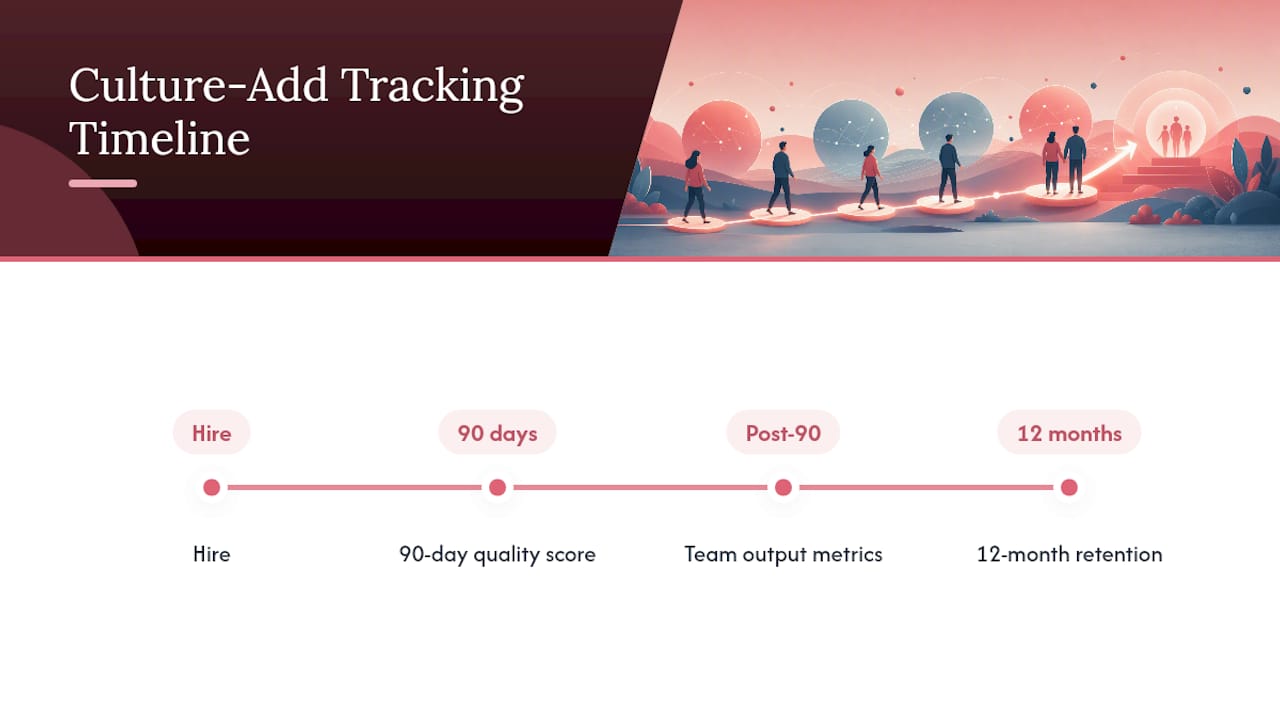
Once you’ve made a culture-add hire, track it like any other investment: quality-of-hire scores at 90 days, voluntary retention at 12 months, and whether team output measures (idea volume, error rates, client satisfaction) shift after the hire settles in.
How to Build Culture Add Into Your Hiring Process
Culture add hiring works when you treat it as a repeatable process, not a mood you bring to interviews. Here’s the sequence.
- Baseline your team. Map current skills, working styles, and backgrounds. Be specific: “no one with crisis-communications experience” beats “we’re not diverse enough.”
- Name the gap in the job brief. Write it directly into the ad. If you need someone who challenges consensus thinking, say so, and describe the strengths already on the team so add candidates know where they’d land.
- Source deliberately. Look outside your usual channels, industries adjacent to yours, career-changers, or transferable-skill hires who wouldn’t apply to a generic posting. If the gap is in content production, resources like content strategy breakdowns can help you define exactly what capability you’re sourcing for.
- Design structured interviews. AIHR recommends asking every candidate the same set of questions tied directly to the named gap, so you can compare answers objectively instead of relying on gut feel.
- Score independently, then decide. Capability is pass or fail first. Only after a candidate clears that bar should “add” enter the scoring conversation.
Before you interview anyone, run this checklist:
- Is the gap written down in one sentence, not a paragraph?
- Does the job ad mention the gap, or just generic “diversity” language?
- Do all interviewers use the same question set?
- Is there a scorecard that separates capability from add?
Pro Tip: Run your baseline audit on a spreadsheet with categories like “primary skill,” “working style,” and “industry background.” If a category has zero variation across your whole team, that’s your gap.
Culture-Add Interview Questions and a Simple Scoring Rubric
Good culture-add interview questions dig for evidence, not opinions. Ask candidates to describe a specific moment, not a general philosophy.
- Tell me about a time you disagreed with your team’s approach and how you made your case.
- Describe a project where your background gave you a different read on the problem than your teammates.
- What’s a skill or working style you have that your last team didn’t?
- How do you know when to push back versus when to defer to the group?
- Give an example of adapting your communication style to work with someone very different from you.
- Describe a time your idea got rejected. What did you do next?
- What would your closest coworker say is your biggest blind spot?
- Tell me about a process you changed because it wasn’t working for you specifically.
Score in two stages: a capability pass/fail (does this person clear the technical bar for the role, full stop), then a 1 to 5 evidence scale for how directly their answers map to the gap you named in step two of your baseline. A candidate who talks vaguely about “valuing diversity” scores lower than one who gives a specific, bridged example. Independent scoring by each panelist before group discussion keeps the loudest voice in the room from setting the outcome.
Common Pitfalls in Culture Add Hiring
Culture add hiring goes wrong in predictable ways. Three mistakes show up again and again.
- Hiring difference without capability. Mitigate this with hard capability filters and work samples before the “add” conversation even starts.
- Leaving “add” vague. If you can’t name the gap in one sentence, don’t put it in the job ad yet. Go back to the baseline audit first.
- Skipping onboarding prep. A culture-add hire dropped into a team that isn’t ready to hear a different perspective usually goes quiet within weeks. Manager coaching and early feedback loops prevent that.
Onboarding Culture-Add Hires So They Actually Contribute
The hire is only half the work. AIHR notes that leadership needs to signal, explicitly, that challenge and difference are welcome, not tolerated. Onboarding rituals that protect psychological safety matter here.
- Set a measurable 30 or 60 day goal tied directly to the gap they were hired to fill.
- Build in structured check-ins, not just a generic first-week welcome, where the new hire can flag friction early.
- Coach managers to respond to pushback with curiosity, not defensiveness, especially in the first month.
Pro Tip: Ask new culture-add hires directly, in week two, “What’s something you’ve noticed that no one else has mentioned?” It signals you actually want the perspective you hired for.
How Samssocialmediaclub Helps You Find Culture-Add Candidates
Sourcing for a specific gap is easier when your listing reaches people who wouldn’t otherwise see it. A curated job board for social media, content, marketing, and communications roles features mandatory salary transparency on listings, which tends to attract candidates who might skip a vague posting entirely.
- Salary transparency signals respect upfront, which mission-driven and cross-discipline candidates often screen for first.
- A curated, targeted distribution to a creative-industry audience raises the odds that a candidate with the exact missing skill actually sees your role.
- Direct application access can reduce time spent filtering resumes that do not match the gap.
A Hiring Manager’s Quick Take
A hire I once brought on for pure skill turned out to slow every meeting down with careful, structured questions the rest of the team skipped. We adjusted our process to build in that pause deliberately. The lesson: don’t just tolerate the friction you hired for. Build a place for it.
— Sam
Ready to Hire for the Gap You’ve Named?
This platform serves as an alternative to generic job boards for employers hiring social media, content, and marketing talent who need to reach candidates outside their usual network. Listings carry transparent salary information, which helps attract candidates who value honesty, and the curated distribution targets a creative community built for cross-discipline hires, not just repeat applicants.
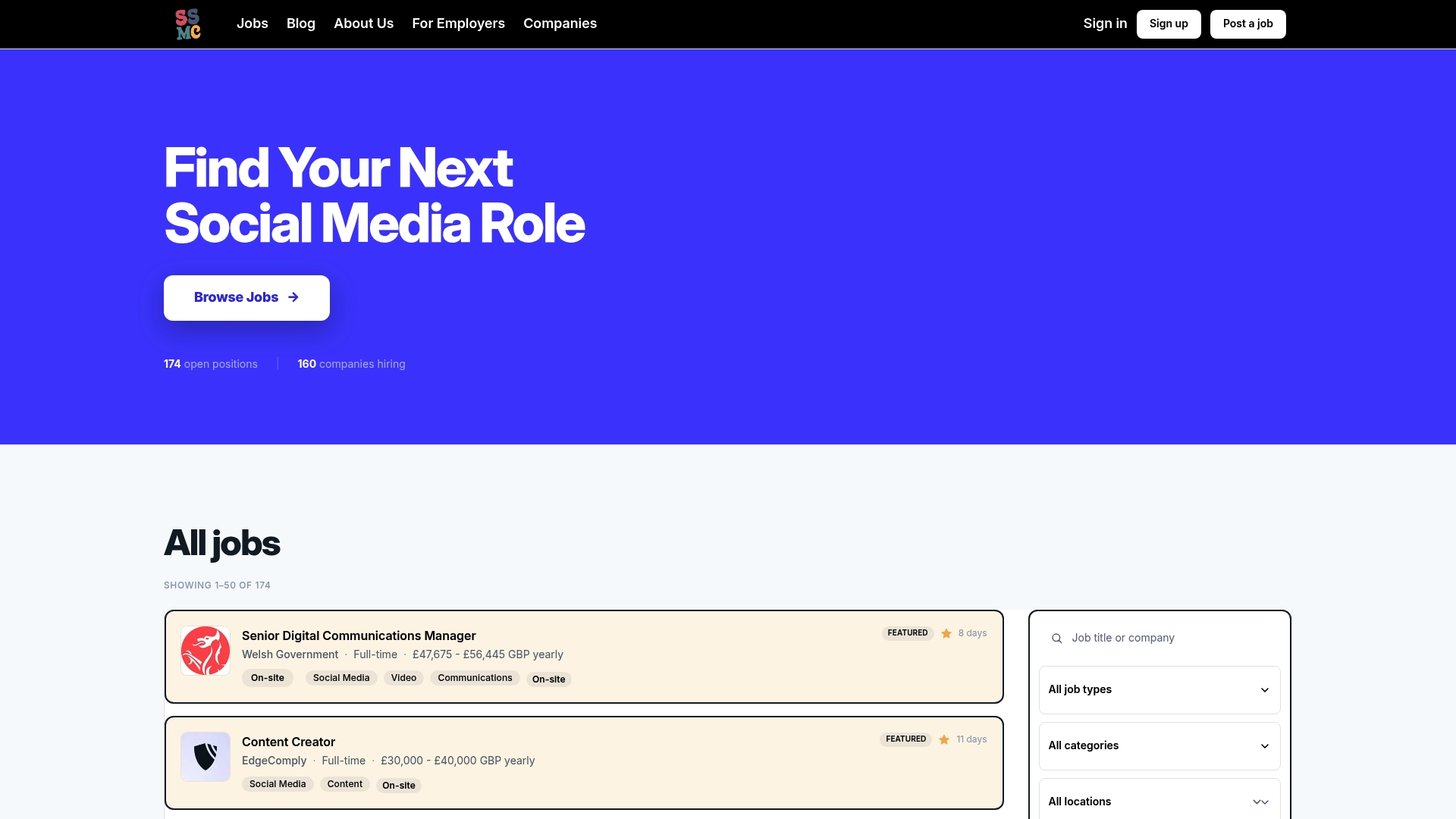
Once you’ve mapped your team’s gap and drafted the job brief using the checklist above, post it through Advertise with SSMC or SSMC SUPER to reach a targeted pool of mission-driven candidates. If you want to talk through a custom listing or have questions about fit for your role, reach out through the enquiry page. Whoever applies, run them through the structured interview questions and scoring rubric from this guide before you decide.
Sources
FAQ
What Does “Culture Add” Mean in an Interview?
In an interview, culture add means you’re evaluating whether a candidate brings a skill, perspective, or working style your team currently lacks, not just whether they’d blend in. It only applies after the candidate has already cleared your capability bar for the role, according to AIHR.
What’s the Difference Between Culture Fit and Culture Add Hiring?
Culture fit hiring looks for candidates who align closely with your team’s existing values and style, while culture add looks for candidates who share your core values but bring something the team is missing. HBR’s analysis of culture fit argues that over-relying on fit alone tends to produce sameness and weaker decision-making over time.
What Is Elon Musk’s Hiring Strategy?
Public reporting on Musk’s approach at companies like Tesla and X has emphasized rapid technical screening and a strong bias toward demonstrated hands-on ability over credentials. That’s a capability-first filter, similar in spirit to the capability threshold culture-add hiring requires before “add” ever enters the conversation.
How Do You Pass a Culture Fit Interview?
Passing a culture fit interview usually means showing, with specific examples, that you share the team’s core values around collaboration, communication, and accountability. Prepare one or two concrete stories that demonstrate those values in action rather than describing yourself in general terms.
Does Samssocialmediaclub Help With Culture-Add Hiring?
Yes. Samssocialmediaclub’s curated, salary-transparent listings reach a targeted creative community, which increases the odds a candidate with the specific missing skill or perspective actually applies. Current pricing for Advertise with SSMC and SSMC SUPER is available on the site.