
£440 Day Rate: Calculator and Checklist For UK Content Hires
£440 Day Rate: Calculator and Checklist For UK Content Hires

The median day rate for a UK freelance content writer sits at £440, according to ProCopywriters’ 2026 survey of 383 freelancers, with most falling between £300 and £1,800 depending on experience and specialism. Budget £300 to £450 a day for a competent generalist, and £550 or more for a specialist in a technical or regulated sector. Actual rates shift with seniority, sector, and how you structure the work, which is exactly what the rest of this guide unpacks.
TL;DR:
- Freelance content writers in the UK typically charge a median rate of around £440 per day, with experienced specialists earning £550 or more daily.
- Rates vary by seniority, ranging from £150 to £300 for juniors, £300 to £450 for mid-level, and over £450 for senior or niche experts.
- To determine a sustainable day rate, freelancers should base it on a target annual income, divided over 200 billable days, with additional overhead costs.
- Fixed project pricing is preferable for clearly scoped deliverables, while day rates suit ongoing or embedded work, with explicit deliverable and rights clauses.
- Freelancers should set aside 25-30% of their invoice for taxes and business costs to ensure net income matches their salary goals after deductions.
Table of Contents
- How Much Do Content Writers Charge in the UK?
- Who Charges What: Seniority Bands and Sector Premiums
- How to Calculate a Sustainable Day Rate
- Day Rate, Project Price, or Retainer: Which Fits?
- Negotiating a Fair Rate Without the Awkwardness
- A Copy-Ready Pricing Checklist
- Tax Implications and How to Factor Them Into Your Day Rate
- Contract Terms Every UK Freelance Writer Should Know
- Sam’s Perspective: Why Transparent Pay Speeds Up Hiring
- Post a Role With Clear Pay Expectations
- Sources
How Much Do Content Writers Charge in the UK?
The £440 median from ProCopywriters is the single most useful anchor for anyone budgeting a UK content project this year. It’s drawn from a large enough sample (383 respondents) to smooth out outliers, and it covers freelancers working across blog content, web copy, and long-form articles rather than one narrow niche.
Other sources land in a similar zone but not identically, and the gap tells you something. CalcKit’s day-rate benchmarks put content professionals at roughly £300 to £550, a tighter and slightly lower band than ProCopywriters. Cambria Digital references an average nearer £480, while breaking pricing down further into per word (10p to 50p) and per article (£150 to £600). YunoJuno’s contractor data skews toward agency and in house contract bookings, which tend to run higher than solo freelance quotes because they often include project management and brand immersion time.
Why the spread? Three reasons stand out:
- Sample composition. A survey weighted toward senior specialists will report a higher median than one that includes newer writers.
- Contractor versus freelance data. Contract bookings via a platform often carry a premium over direct freelance hires.
- Median versus mean. A handful of £1,500 day rates can drag a mean upward without changing what most writers actually charge.
The number that matters most: if you’re commissioning a single UK content writer for standard blog or web copy, £440 a day is your realistic center point, not your ceiling and not your floor.
Who Charges What: Seniority Bands and Sector Premiums
Rates track experience almost as tightly as they track niche. A junior writer, someone one to three years into freelancing, typically charges £150 to £300 a day and produces a solid 800 to 1,200-word article or two to three shorter posts in that time. Mid level writers, roughly three to seven years in, land closer to £300 to £450, matching the lower half of the ProCopywriters range, and can usually deliver one well researched long-form piece (1,500 to 2,500 words) or several shorter assets with SEO work built in.
Senior and specialist writers charge higher rates, often commanding premiums typical of niche work as noted by CalcKit and Cambria Digital. That premium isn’t arbitrary. Specialist copywriters working in B2B SaaS, finance, or legal content combine writing skill with domain fluency that shortens the client’s own editing and fact checking cycle.
| Level | Typical day rate | Typical daily output |
|---|---|---|
| Junior | £150 to £300 | 1 short article or 2 to 3 social posts |
| Mid level | £300 to £450 | 1 long-form article or 2 to 3 shorter pieces |
| Senior / specialist | £450 to £800+ | 1 deeply researched piece or strategic advisory work |
For context on what mid-level roles look like in practice, browsing current remote content jobs in the UK gives a live sense of how employers frame scope against pay.
How to Calculate a Sustainable Day Rate
Freelancers who price purely off a survey median often underprice themselves, because a median doesn’t account for your own overheads. Freelance Toolkit’s calculator recommends working from roughly 200 billable days a year rather than 260 working days, which accounts for holidays, admin, marketing your own business, and the inevitable gaps between contracts.
Here’s the method:
- Set a target annual income. Use a comparable salaried role as your starting point. PayScale’s UK data puts average content writer base salaries around £24,000, though specialist digital roles run considerably higher.
- Add employer-equivalent costs. A salaried employee comes with pension contributions, sick pay, and National Insurance paid by the employer, none of which shows up in a headline salary figure.
- Divide by your billable days. Take your adjusted target and divide by 200, not 260.
- Add business overheads. Software subscriptions, insurance, accountancy fees, and unpaid admin time all need to be baked in before you quote a number.
The Creators’ Rights Alliance framework illustrates this well: a £324 day rate roughly equates to a £25,000 salary once you strip out the hidden costs of self-employment. Run your own numbers before accepting any client’s idea of “fair.”
Pro Tip: Build a simple spreadsheet with your target income, 200 as the divisor, and a separate overhead percentage you can adjust each year. Revisit it annually, because software costs and insurance premiums creep up quietly.
Day Rate, Project Price, or Retainer: Which Fits?
A day rate works best for open ended or embedded work, things like running a content workshop, shaping a tone of voice guide, or sitting inside a marketing team for a sprint. Clearly scoped deliverables, like a set of ten blog posts with a defined word count, are almost always better priced per project, since both sides know exactly what “done” looks like.
If you’re commissioning day-rate work, put these into the brief:
- Deliverables per day. State roughly what output is expected in a single billed day.
- Acceptance criteria. Define what counts as a completed draft versus a revision.
- Cancellation terms. Agree notice periods for both sides if the engagement ends early.
Retainers suit ongoing, predictable volume, a set number of articles each month, for instance, and reward both parties with stability. They make less sense for one-off strategic input, where a day rate keeps costs proportional to actual time spent.
Negotiating a Fair Rate Without the Awkwardness
Quoting a benchmark during negotiation removes a lot of the guesswork on both sides. Referencing the ProCopywriters median directly, whether you’re the freelancer or the client, gives the conversation a shared, credible reference point instead of two people guessing at each other’s expectations.
Watch for these red flags before accepting a lowball offer:
- A quote well under £300 a day with no clarity on scope, hours, or revision limits.
- Vague language around usage rights, especially who owns the final copy.
- No mention of turnaround time, which often signals the client hasn’t thought through their own deadline.
Ask directly about scope, revision rounds, rights transfer, and turnaround before agreeing a number. And a genuinely underused tactic: after stating your rate, stop talking. Letting a quote sit in silence for a beat often does more to hold your price than any justification would.
Pro Tip: Package outcomes rather than hours where you can, “a finished 2,000 word guide, two revision rounds, delivered in five days” reads as far more concrete than a bare day rate.
A Copy-Ready Pricing Checklist
Before you sign anything, run through this six point checklist:
- Confirm the scope of work in writing.
- Define exactly what a “day” means (hours, deliverables, or both).
- List expected deliverables per day or per engagement.
- Clarify who owns the intellectual property once payment clears.
- Set the number of revision rounds included.
- Agree invoicing terms, including payment window and late fees.
Urgent turnaround or heavy research work justifies a premium on top of any band, typically 20 to 30% above the standard rate for the same seniority level.
Tax Implications and How to Factor Them Into Your Day Rate
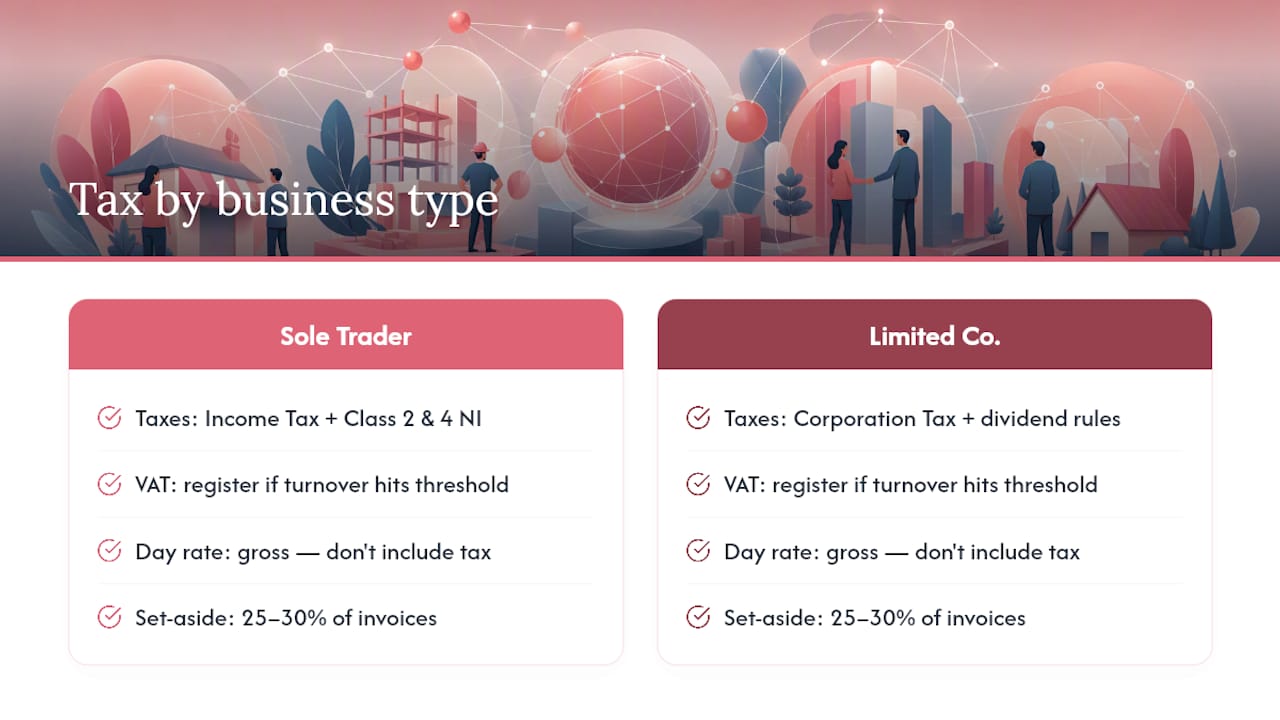
A day rate is gross income, not take-home pay, and that distinction trips up a lot of newly self-employed writers. Once you clear the personal allowance, income falls into the standard Income Tax bands, and you’ll also pay Class 2 and Class 4 National Insurance contributions as a sole trader. If your annual turnover crosses the VAT registration threshold, you’ll need to register and start charging VAT on invoices, which changes how you present your day rate to VAT registered clients.
None of this should get folded into the headline day rate you quote a client. Instead, treat tax as a separate line in your own financial planning. A common approach is setting aside 25 to 30% of every invoice into a separate account the moment it lands, so tax season never becomes a scramble. Freelancers operating through a limited company face a different structure entirely, with Corporation Tax and dividend rules replacing sole trader Income Tax, which is one reason many writers consult an accountant once turnover climbs past a few tens of thousands of pounds.
The practical takeaway: your day rate needs to be high enough that, after tax, National Insurance, and business costs, what’s left actually matches the salaried-equivalent income you were aiming for in your original calculation. Skipping this step is how freelancers end up earning less than they think.
Contract Terms Every UK Freelance Writer Should Know
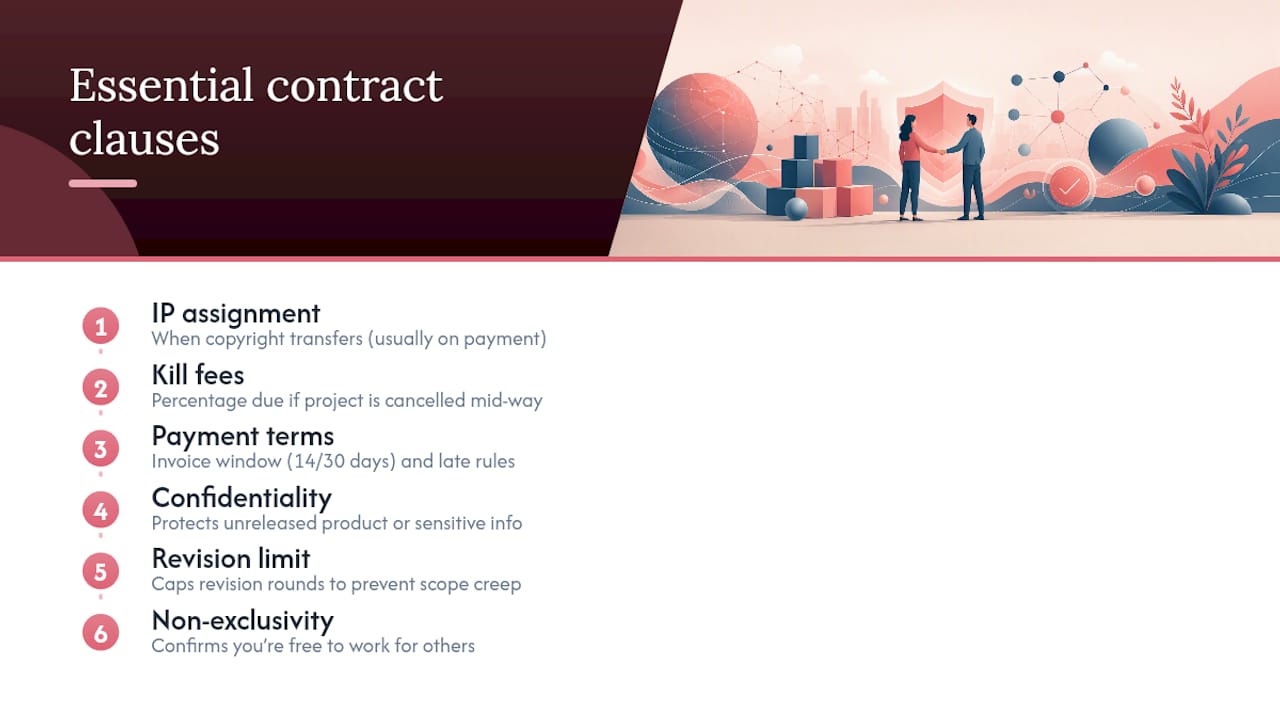
A clear written agreement protects both sides, and a handful of terms come up again and again in UK freelance content work. IP assignment clauses state when copyright transfers to the client, usually on full payment rather than on delivery, which matters if a client delays paying but still wants to use the work. Kill fees cover what happens if a project is cancelled midway, typically a percentage of the agreed fee for work already completed.
Payment terms should specify the invoice window, commonly 14 or 30 days, and what happens if payment runs late. Under the Late Payment of Commercial Debts Act, UK freelancers are entitled to statutory interest on overdue invoices, though few enforce it in practice.
Other clauses worth including: a confidentiality clause if you’re handling unreleased product information, a revision limit so unlimited “just one more tweak” requests don’t erode your effective day rate, and a non-exclusivity clause confirming you’re free to work with other clients unless a specific retainer says otherwise. The Society of Authors publishes model terms that many UK freelance writers adapt rather than draft from scratch, which is a sensible shortcut if you’re new to contracting.
Sam’s Perspective: Why Transparent Pay Speeds Up Hiring
Matching a writer to a budget only works when both sides know the number up front. Curated listings with visible pay cut through the back and forth that stalls most hiring, and they filter out mismatched applicants before either side wastes a week on it. That’s the whole logic behind pairing transparent salary data with quality-controlled candidate pools instead of an open, noisy job board.
— Sam
Post a Role With Clear Pay Expectations
This platform offers an alternative to guesswork hiring for content and copywriting talent in the UK. Listings feature transparent salary or rate ranges to help align expectations between employers and writers.

A curated vetting process helps to deliver applicants who are better matches to briefs, saving screening time for hiring managers. If you’re weighing a broader marketing or website brief alongside your content hire, pairing a writer with support from a web and SEO agency can round out the project. And if you want a clearer sense of how employer costs stack up against a quoted rate, an employment cost calculator is a useful gut check before you finalize a budget.
Ready to hire? Post your role or send an enquiry and get in front of writers who already know what they’re worth.
Sources
- ProCopywriters — What you should expect to pay
- Freelance Day Rate Guide 2025 – Creators’ Rights Alliance
- Content Writing Cost UK: Prices, Rates and Packages (2026) | Cambria Digital
- UK Freelance Day Rate 2026: Formula + Role Benchmarks | CalcKit